

If you’ve ever stood up after a long meeting, car ride, or desk session and felt a sharp, nagging ache in your hip, you’re not alone. Hip pain that worsens after sitting is one of the most common complaints we hear from patients here in Castle Hills, TX. It’s frustrating, confusing, and often gets brushed off as “just part of getting older.” But the truth is, your hip pain after sitting isn’t normal—and it’s definitely not something you have to live with. Understanding why it happens and what you can do about it is the first step toward feeling better and moving more freely.
In this article, we’ll break down the real reasons your hip starts hurting after you’ve been seated, explore the biomechanics behind the discomfort, and share practical, research-backed strategies that actually help. Whether you’re dealing with a dull ache or sharp pain that radiates down your leg, you’ll walk away with a clearer picture of what’s going on—and how chiropractic care at Castle Hills Chiropractic can support your recovery.
What Is Hip Pain After Sitting?
What does hip pain after sitting actually mean?
Hip pain that worsens after sitting refers to discomfort, stiffness, or sharp pain in or around the hip joint that becomes more noticeable when you stand up or move after prolonged sitting. This pain may be felt deep in the joint, on the outer hip, in the groin, or even radiating into the lower back or thigh. It often improves with movement but returns after the next sitting session.
Table of Contents
- Why Sitting Makes Hip Pain Worse
- Common Causes of Hip Pain After Sitting
- How Your Body Reacts to Prolonged Sitting
- How Chiropractic Care Fits In
- Practical Tips to Reduce Hip Pain When Sitting
- When to See a Chiropractor
- Myths vs. Facts About Hip Pain
- Final Thoughts
Why Sitting Makes Hip Pain Worse
Sitting might seem like a rest position, but biomechanically, it’s anything but restful for your hips. When you sit, your hip flexor muscles—the group of muscles at the front of your hip—stay in a shortened, contracted position for extended periods. Over time, this creates tightness and imbalance. Meanwhile, the muscles that support your pelvis and lower back, like your glutes and core stabilizers, essentially turn off because they’re not being used.
When you finally stand up, those tight hip flexors don’t easily release. They pull on the pelvis, alter your gait, and create abnormal stress on the hip joint itself. The result? Pain, stiffness, or a catching sensation. This isn’t just discomfort—it’s your body signaling that something in the kinetic chain is out of balance.
Additionally, sitting compresses the soft tissues around the hip joint, including bursae (fluid-filled sacs that cushion the joint) and tendons. Compression reduces blood flow and can lead to inflammation. When you stand and move, that inflamed tissue is suddenly asked to stretch and work again, which can feel sharp or achy.
Here in Castle Hills, many of our patients spend hours at desks, in cars, or on couches. Modern life is largely sedentary, and our bodies simply aren’t designed for it. The hip joint is built for movement, not stillness. When we deny it that movement, dysfunction follows.
Common Causes of Hip Pain After Sitting
Understanding the root cause of your hip pain is essential for effective treatment. While every case is unique, several common culprits frequently show up in our practice.
Hip Flexor Tightness and Muscle Imbalance
As mentioned, prolonged sitting shortens the hip flexors. Over weeks, months, or years, this chronic shortening can lead to muscle imbalance. Tight hip flexors pull the pelvis forward (a condition called anterior pelvic tilt), which changes the alignment of your entire lower body. This misalignment puts extra strain on the hip joint and surrounding muscles, creating pain that worsens with sitting and standing.
Hip Bursitis
The bursa is a small, fluid-filled sac that reduces friction between bones, tendons, and muscles. When you sit for long periods, especially on hard surfaces or with poor posture, the bursa can become compressed and irritated. This is called trochanteric bursitis, and it typically causes pain on the outer side of the hip. The pain often worsens at night and after sitting.
Piriformis Syndrome
The piriformis is a small muscle deep in the hip that helps rotate your thigh. It sits right next to the sciatic nerve. When the piriformis becomes tight or irritated—often due to prolonged sitting—it can press on the sciatic nerve, causing pain in the hip, buttock, and even down the leg. This is sometimes mistaken for sciatica, but the root cause is different.
SI Joint Dysfunction
The sacroiliac (SI) joint connects your pelvis to your spine. Poor posture while sitting, especially slouching or sitting unevenly, can cause the SI joint to become misaligned or hypomobile. This dysfunction often presents as lower back or hip pain that gets worse after sitting and improves with walking or stretching.
Degenerative Joint Changes
Osteoarthritis or general wear and tear in the hip joint can make sitting painful. When the joint is at rest, fluid can accumulate, and when you stand, that stiffness becomes pronounced. While degenerative changes are common as we age, they don’t have to mean a life of pain. Conservative care can significantly improve function and comfort.
Postural Distortion and Spinal Misalignment
Your spine and hips are intimately connected. If your pelvis is tilted, rotated, or your lumbar spine is out of alignment, your hips will compensate. Over time, this compensation creates strain, muscle fatigue, and joint irritation. Many patients don’t realize that their hip pain is actually being driven by dysfunction further up the chain.

How Your Body Reacts to Prolonged Sitting
Let’s zoom out and look at what happens to your entire musculoskeletal system when you sit for hours on end. Your body is incredibly adaptive, but not always in ways that serve you long-term.
First, your hip flexors shorten and tighten. Second, your glutes—the powerhouse muscles of your hips—become weak and underactive. Third, your hamstrings may also tighten to compensate. Fourth, your core stability decreases because your abdominal and lower back muscles aren’t engaged. Fifth, your posture shifts forward, rounding your shoulders and increasing neck tension. All of these changes create a cascading effect that impacts your hips.
Blood flow also decreases when you sit. Your circulatory system relies on movement to pump blood efficiently. Sitting restricts that flow, especially around the hips and pelvis. Reduced circulation means less oxygen and fewer nutrients reaching your muscles and joints, which slows healing and increases stiffness.
Finally, sitting increases pressure on your intervertebral discs. Research published in Spine indicates that sitting can increase disc pressure by up to 40% compared to standing. If a disc in your lower back becomes irritated or bulges, it can refer pain into your hip or leg, mimicking hip joint pain.
Your nervous system also plays a role. When joints and muscles are out of alignment, they send distress signals to your brain. Your brain responds by tightening muscles as a protective mechanism. This creates a feedback loop: tightness leads to pain, pain leads to more tightness, and the cycle continues.
How Chiropractic Care Fits In
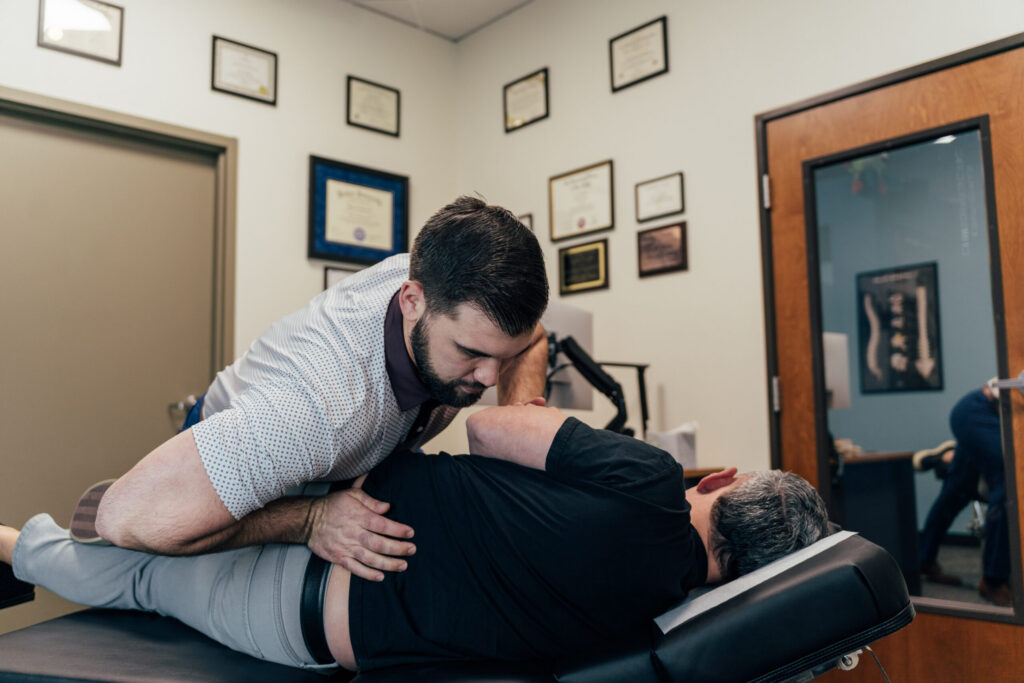
Chiropractic care offers a natural, non-invasive approach to addressing the root causes of hip pain after sitting. At Castle Hills Chiropractic, Dr. Brent Johnson takes a whole-body approach, understanding that hip pain is rarely just about the hip itself.
During your initial visit, Dr. Brent Johnson will conduct a thorough assessment, including a review of your posture, gait, range of motion, and spinal alignment. He’ll also ask about your daily habits—how long you sit, your work setup, your activity level, and any previous injuries. This comprehensive evaluation helps identify the underlying dysfunction driving your pain.
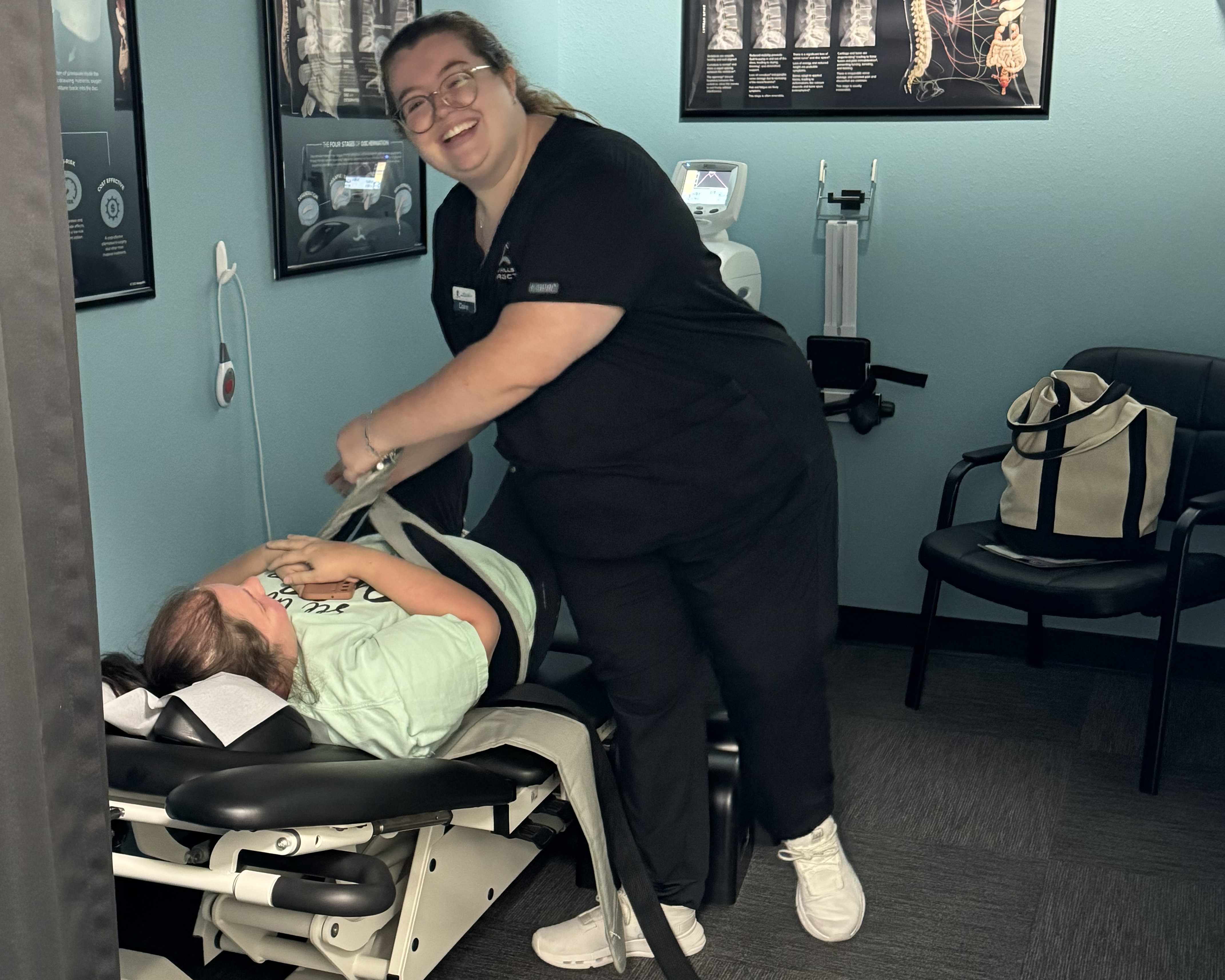
Chiropractic adjustments are designed to restore proper alignment to the spine and pelvis. When your pelvis is properly aligned, the hip joint can move more freely and without compensatory strain. Adjustments also help improve nervous system function, reducing pain signals and improving muscle coordination.
In addition to spinal adjustments, Dr. Brent Johnson may use soft tissue techniques to release tight muscles, including the hip flexors, piriformis, and IT band. These techniques improve flexibility, reduce inflammation, and restore normal movement patterns.
Chiropractic care is supported by a growing body of evidence. A systematic review published in the Journal of Manipulative and Physiological Therapeutics found that manual therapy, including chiropractic adjustments, can effectively reduce hip pain and improve function in patients with musculoskeletal complaints. Another study in BMC Musculoskeletal Disorders indicated that chiropractic care combined with exercise therapy showed significant improvements in hip pain and mobility.
What you’ll experience at Castle Hills Chiropractic is individualized care. No two patients are the same, and Dr. Brent Johnson tailors each treatment plan to your specific needs, goals, and lifestyle. The goal isn’t just to reduce pain—it’s to help you move better, feel stronger, and prevent future problems.
Practical Tips to Reduce Hip Pain When Sitting
While professional care is essential, there are also several things you can do at home and at work to reduce hip pain and prevent it from getting worse.
Set a Movement Timer
Sitting for more than 30-45 minutes at a time puts your hips at risk. Set a timer on your phone or computer to remind you to stand, stretch, or walk for at least two minutes every half hour. This simple habit can make a dramatic difference.
Optimize Your Chair Setup
Your chair should support a neutral pelvis. Your hips should be level with or slightly higher than your knees. Avoid crossing your legs, which tilts the pelvis and creates uneven strain. If your chair is too low, use a cushion to raise your hips. Make sure your feet are flat on the floor or on a footrest.
Stretch Your Hip Flexors Daily
A simple kneeling hip flexor stretch can counteract the shortening effect of sitting. Kneel on one knee, with the other foot forward in a lunge position. Gently push your hips forward until you feel a stretch in the front of your hip. Hold for 30 seconds on each side, twice daily.
Strengthen Your Glutes
Weak glutes contribute to hip pain. Incorporate exercises like bridges, clamshells, and side-lying leg lifts into your routine. Even five minutes a day can help reactivate and strengthen these critical stabilizers.
Use a Lumbar Support
A small lumbar roll or cushion placed at the curve of your lower back helps maintain proper spinal alignment while sitting. This reduces stress on your pelvis and hips.
Avoid Sitting on Your Wallet or Phone
Sitting on objects in your back pocket tilts your pelvis and creates uneven pressure on your hips and SI joint. Keep your pockets empty when you sit.
Stand or Walk During Calls
If you spend a lot of time on the phone, use that time to stand or walk. It’s an easy way to reduce total sitting time without disrupting your workday.
Consider a Sit-Stand Desk
Alternating between sitting and standing throughout the day can significantly reduce hip and back pain. If a full sit-stand desk isn’t an option, even a simple desktop riser can help.
When to See a Chiropractor
Hip pain after sitting is common, but that doesn’t mean it’s something you should ignore. Here are some signs that it’s time to schedule an appointment with Dr. Brent Johnson at Castle Hills Chiropractic.
If your hip pain has lasted more than two weeks despite rest and self-care, it’s time to get evaluated. Chronic pain is your body’s way of telling you that something needs attention. If the pain is getting progressively worse, especially if it’s starting to affect your sleep, work, or daily activities, don’t wait.
If you notice clicking, popping, or catching sensations in your hip, this could indicate a structural issue that requires professional assessment. If the pain radiates down your leg, into your groin, or up into your lower back, this suggests nerve involvement or referred pain from the spine.
If you’ve tried stretching, changing your sitting habits, and using heat or ice with no improvement, a chiropractor can identify and address underlying dysfunctions you might be missing. Early intervention often leads to faster recovery and prevents the problem from becoming chronic.
There are also red flags that warrant immediate medical attention. If you experience sudden, severe hip pain after a fall or injury, fever along with hip pain, inability to bear weight on the affected leg, or loss of bowel or bladder control, seek emergency care right away. These symptoms may indicate a fracture, infection, or serious neurological issue.
Comparison Table: Common Hip Pain Triggers vs. Relief Strategies
| Common Trigger | Why It Causes Pain | Relief Strategy |
|---|---|---|
| Prolonged sitting (over 1 hour) | Hip flexors shorten, glutes weaken, circulation decreases | Stand and move every 30-45 minutes, stretch hip flexors |
| Poor chair ergonomics | Pelvis tilts, uneven pressure on hips and SI joint | Adjust chair height, use lumbar support, feet flat on floor |
| Crossing legs while sitting | Rotates pelvis, compresses hip joint unevenly | Keep feet flat, hips level, avoid crossing legs |
| Weak glutes and core | Hip joint compensates, leading to strain and misalignment | Strengthen glutes and core with targeted exercises |
| Spinal or pelvic misalignment | Alters hip mechanics, increases joint stress | Chiropractic adjustments to restore alignment |
Myths vs. Facts About Hip Pain
Myth: Hip Pain After Sitting Is Just Part of Getting Older
Fact: While age-related changes can contribute to hip discomfort, pain is not a normal part of aging. Many younger patients also experience hip pain from sitting due to poor posture, muscle imbalances, and sedentary lifestyles. With the right care and movement habits, people of all ages can significantly reduce or eliminate hip pain.
Myth: You Should Rest and Avoid Movement If Your Hip Hurts
Fact: While acute injuries may require short-term rest, prolonged inactivity usually makes hip pain worse. Gentle movement, stretching, and strengthening are essential for recovery. Movement increases blood flow, reduces stiffness, and helps restore normal joint mechanics. The key is finding the right balance and avoiding movements that aggravate the pain.
Myth: Chiropractic Care Is Only for Back Pain
Fact: Chiropractors are trained to assess and treat the entire musculoskeletal system, including the hips, knees, shoulders, and extremities. At Castle Hills Chiropractic, Dr. Brent Johnson regularly helps patients with hip pain by addressing spinal alignment, pelvic dysfunction, and muscle imbalances that contribute to discomfort.
Myth: Surgery Is the Only Real Solution for Hip Pain
Fact: The vast majority of hip pain cases can be managed successfully with conservative care, including chiropractic adjustments, physical therapy, exercise, and lifestyle modifications. Surgery is typically reserved for severe cases of structural damage, fractures, or end-stage arthritis. Many patients find significant relief without ever needing surgery.
Myth: Stretching Alone Will Fix Hip Pain
Fact: Stretching is helpful, but it’s only one piece of the puzzle. If your pelvis is misaligned or your movement patterns are dysfunctional, stretching alone won’t address the root cause. A comprehensive approach that includes alignment correction, strengthening, and ergonomic changes is far more effective for long-term relief.
Final Thoughts
Hip pain that worsens after sitting is frustrating, but it’s also a clear signal from your body that something needs to change. Whether it’s your posture, your movement habits, or underlying alignment issues, addressing the root cause is the key to lasting relief. You don’t have to accept hip pain as your new normal.
Here in Castle Hills, TX, Dr. Brent Johnson and the team at Castle Hills Chiropractic are committed to helping you understand your body, restore proper function, and get back to the activities you love. We believe in empowering our patients with education, personalized care, and practical tools they can use every day.
If you’ve been dealing with hip pain after sitting and you’re ready for answers, we’re here to help. Our goal is to support your journey toward better movement, less pain, and a healthier, more active life.
Frequently Asked Questions
Can sitting on a hard surface cause hip pain?
Yes, sitting on hard surfaces can compress the bursae around your hip joint, leading to irritation and inflammation. Over time, this can contribute to trochanteric bursitis, which causes pain on the outer hip. Using a cushion or choosing a softer seat can help reduce this pressure.
How long does it take for hip pain from sitting to improve?
The timeline varies depending on the underlying cause and how long you’ve been experiencing symptoms. Many patients notice improvement within a few weeks of starting chiropractic care, stretching, and ergonomic changes. Chronic cases may take longer, but consistent care and movement habits make a significant difference.
Is it bad to sit cross-legged if I have hip pain?
Sitting cross-legged can place uneven stress on your hips and pelvis, especially if one side is tighter or weaker than the other. If you already have hip pain, this position may worsen symptoms. It’s better to sit with both feet flat on the floor and your hips level until your alignment and flexibility improve.
Can hip pain after sitting be a sign of sciatica?
Hip pain can sometimes be related to sciatica, especially if it radiates down your leg. However, true sciatica is caused by irritation of the sciatic nerve, often from a herniated disc or spinal stenosis. Piriformis syndrome, SI joint dysfunction, or hip joint issues can mimic sciatica. A thorough evaluation can help determine the true source.
Will losing weight help my hip pain?
For some people, excess weight can increase stress on the hip joints and contribute to pain. However, weight is just one factor. Alignment, muscle balance, posture, and movement patterns are equally important. Focusing on overall health, including movement and strength, often provides the most benefit regardless of weight.
Are standing desks better for hip pain?
Standing desks can be helpful, especially if you alternate between sitting and standing throughout the day. However, standing for too long without movement can also cause hip and lower back discomfort. The key is variety—changing positions frequently and incorporating movement breaks is more beneficial than standing or sitting all day.
TL;DR: Key Takeaways
- Hip pain after sitting is often caused by tight hip flexors, weak glutes, pelvic misalignment, or compressed soft tissues around the hip joint.
- Prolonged sitting shortens muscles, reduces circulation, and creates imbalances that lead to pain when you stand or move.
- Chiropractic care at Castle Hills Chiropractic focuses on restoring alignment, improving muscle balance, and addressing the root causes of hip pain.
- Simple changes like standing every 30-45 minutes, stretching hip flexors, strengthening glutes, and optimizing your chair setup can make a big difference.
- If your hip pain lasts more than two weeks, worsens over time, or radiates into your leg or back, it’s time to see Dr. Brent Johnson for a comprehensive evaluation.