
If you’ve been dealing with sharp hip pain that just won’t quit, you’re not alone. Here in Castle Hills, TX, we see patients every week who’ve tried everything from ice packs to over-the-counter pain relievers, only to find themselves still wincing when they stand up or climb stairs. Hip pain can be incredibly frustrating because it affects so many daily activities—walking, sitting, sleeping, even getting in and out of your car. The good news? Understanding why your hip pain persists is the first step toward finding relief that actually lasts. In this article, we’ll explore the common reasons sharp hip pain becomes chronic, what’s really happening in your body, and what evidence-based approaches actually work to address the root cause.
What is sharp hip pain? Sharp hip pain is a sudden, intense discomfort in or around the hip joint that can range from a stabbing sensation to a piercing ache. It may occur with specific movements like standing, walking, or rotating the leg, and often signals underlying joint dysfunction, muscle imbalance, or nerve irritation rather than simple muscle soreness.
Table of Contents
- Why Hip Pain Becomes Chronic and Won’t Go Away
- Common Causes of Sharp Hip Pain
- The Biomechanics Behind Hip Pain: What’s Really Happening
- How Chiropractic Care Addresses Hip Pain
- Practical Steps You Can Take Today
- When to See a Chiropractor for Hip Pain
- Myths vs. Facts About Hip Pain
- Final Thoughts
Why Hip Pain Becomes Chronic and Won’t Go Away
Many people assume that hip pain will simply resolve on its own with rest. While acute injuries sometimes do heal naturally, sharp hip pain that lingers for weeks or months usually indicates something more complex is at play. The hip joint is remarkably sophisticated—it’s a ball-and-socket joint that bears significant weight and allows for a wide range of motion. When something disrupts the normal mechanics of this joint, compensation patterns begin to develop.
Your body is incredibly adaptive. When one area isn’t functioning properly, surrounding muscles and joints try to pick up the slack. This might work temporarily, but over time these compensations create their own problems. The muscles around your hip may become chronically tight or weak. Your pelvis might shift out of alignment. Your lower back may start to ache as it attempts to stabilize movements your hip should be handling.
This is why surface-level treatments often fail. If you’re only addressing symptoms—taking pain medication or applying ice—you’re not correcting the underlying dysfunction that’s causing your hip to hurt in the first place. The pain might decrease temporarily, but it returns because the root problem remains unresolved.
Another reason hip pain persists is inflammation that becomes self-perpetuating. When tissues around the hip are repeatedly irritated due to poor mechanics or excessive strain, the inflammatory process can become chronic. This creates a cycle where inflammation causes pain, pain causes muscle guarding and altered movement, and altered movement causes more inflammation.
Common Causes of Sharp Hip Pain
Understanding what’s actually causing your hip pain is crucial to finding effective treatment. At Castle Hills Chiropractic, we frequently see several common culprits behind persistent sharp hip pain.
Hip Joint Dysfunction and Restricted Mobility
When the hip joint itself isn’t moving properly through its full range of motion, certain movements can create sharp, catching sensations. This restriction may develop gradually due to poor posture, repetitive movement patterns, or previous injuries that never fully healed. The joint capsule—the thick connective tissue surrounding the hip—can become tight and irritated, limiting motion and causing pain with specific activities.
Sacroiliac Joint Problems
The sacroiliac joints connect your pelvis to your spine, and dysfunction here frequently masquerades as hip pain. Many patients who come to our Castle Hills office pointing to their hip are actually experiencing referred pain from SI joint misalignment. These joints are meant to have limited movement, but when they become too restricted or too mobile, the resulting instability can create sharp pain that radiates into the hip, groin, or buttock.
Piriformis Syndrome
The piriformis muscle runs from your sacrum to the outer hip and plays a key role in hip rotation. When this muscle becomes tight or inflamed, it can compress the sciatic nerve, creating sharp pain deep in the buttock that many people describe as hip pain. This condition is particularly common in people who sit for extended periods or have muscle imbalances in their hips and pelvis.
Hip Flexor Strain and Imbalance
Your hip flexors—the muscles that lift your thigh toward your chest—can become chronically shortened and tight, especially if you spend much of your day seated. Tight hip flexors alter pelvic alignment and change how forces are distributed through the hip joint. This can create sharp anterior hip pain, particularly when standing up after sitting or during activities like climbing stairs.
Greater Trochanteric Pain Syndrome
This condition involves irritation of the bursa or tendons on the outer part of your hip. It typically causes sharp pain on the outside of the hip that worsens with pressure (like lying on that side), walking up inclines, or after prolonged standing. While once commonly called “hip bursitis,” research indicates that tendon irritation is often the primary problem rather than bursa inflammation alone.
Labral Issues
The labrum is a ring of cartilage that lines the hip socket, providing stability and cushioning. Tears or degeneration of the labrum can cause sharp, catching pain in the groin or front of the hip, often accompanied by clicking or locking sensations. These issues may develop from acute injury, repetitive motions, or structural variations in hip anatomy.
The Biomechanics Behind Hip Pain: What’s Really Happening
To understand why your hip pain won’t go away, it helps to understand the biomechanical chain reaction that often develops. Your body functions as an interconnected system where problems in one area inevitably affect others.
The hip joint doesn’t operate in isolation. It works in concert with your pelvis, lower back, and knee to create smooth, efficient movement. When proper alignment is lost anywhere in this kinetic chain, compensations ripple throughout the system. For example, if your pelvis is rotated due to muscle imbalances or joint restrictions, your hip joint must work outside its optimal position. This places abnormal stress on joint surfaces, muscles, and connective tissues.
Consider what happens during something as simple as walking. Your hip should smoothly flex and extend, rotate internally and externally, and move side to side in a coordinated pattern. If joint restrictions limit this motion, your body finds workarounds. Your lower back might extend more than it should. Your knee might rotate inward excessively. These compensations allow you to keep walking, but they create abnormal wear patterns and stress that eventually cause pain.
Muscle imbalances play a huge role in chronic hip pain. Modern lifestyles—with prolonged sitting, repetitive movement patterns, and limited variation in how we use our bodies—create predictable muscle imbalances. Hip flexors and internal rotators often become tight and overactive. Glutes and external rotators often become weak and underactive. This imbalance alters how forces are transmitted through the hip joint during movement.
The nervous system also factors into persistent pain. When an area is painful, the brain may develop protective movement patterns that persist even after the initial injury has healed. These patterns can maintain muscle tension, restrict joint motion, and perpetuate pain long after the original problem has resolved. This is why addressing the neurological component—restoring proper joint mechanoreceptor input through chiropractic adjustments—can be so effective.
How Chiropractic Care Addresses Hip Pain
At Castle Hills Chiropractic, we take a comprehensive approach to hip pain that addresses the underlying biomechanical dysfunction rather than just masking symptoms. This conservative, non-invasive approach has helped many Castle Hills residents find lasting relief.
Our evaluation begins with understanding your specific pain pattern, movement limitations, and how your hip pain affects your daily life. We assess not just your hip, but your entire pelvis, lower back, and lower extremity mechanics. This thorough examination helps identify the root causes of your pain—whether that’s joint restrictions, muscle imbalances, alignment issues, or a combination of factors.
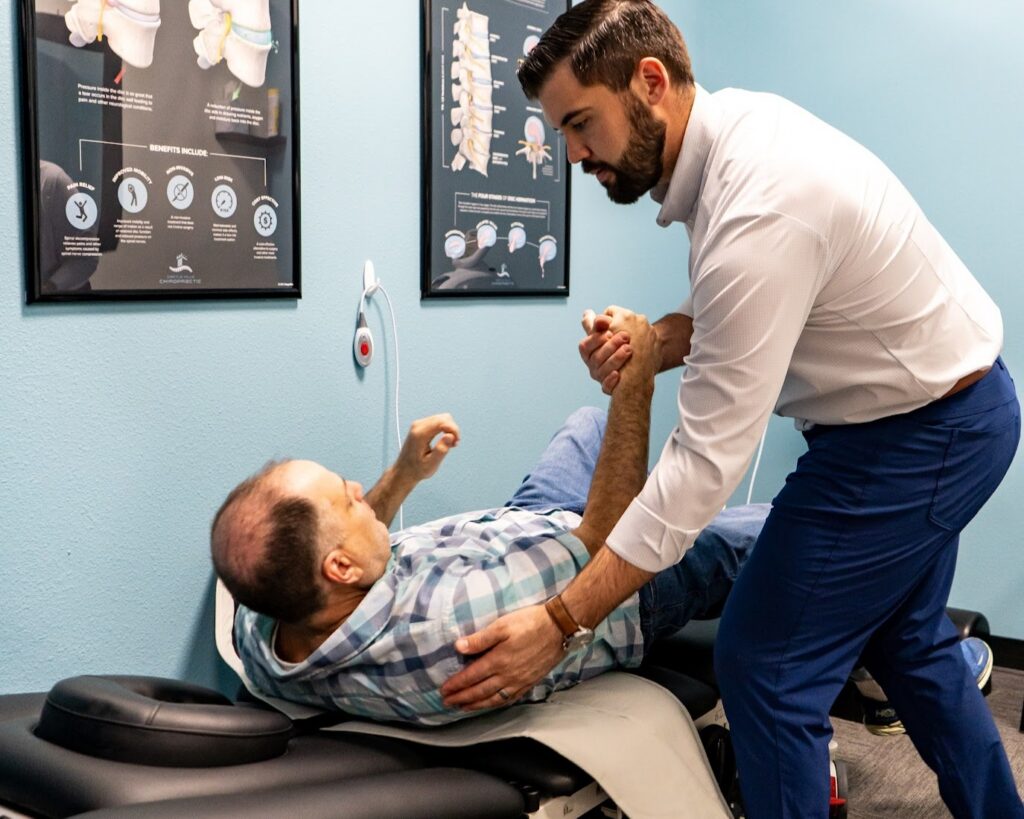
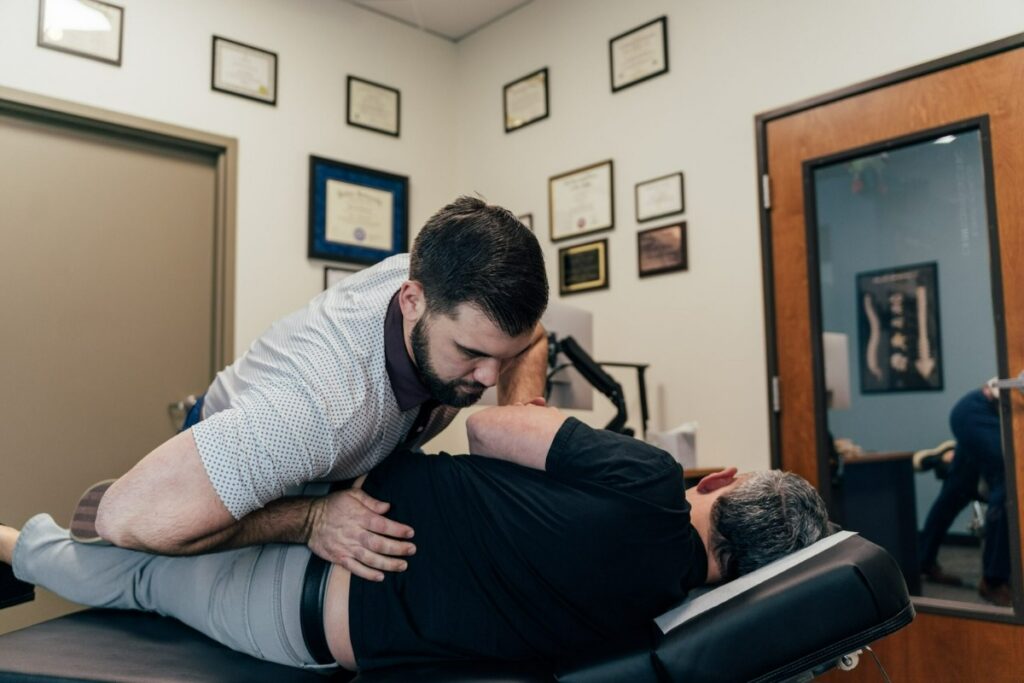
Chiropractic adjustments restore proper motion to restricted joints. When your hip joint, SI joints, or lumbar spine aren’t moving correctly, specific adjustments can restore mobility and reduce pain. These gentle, controlled movements help reset normal joint mechanics and improve communication between your joints and nervous system. Research suggests that chiropractic adjustments may help reduce pain and improve function in patients with various musculoskeletal conditions, including hip pain.
We also address the soft tissues that support and move your hip. Muscle tension, trigger points, and fascial restrictions all contribute to hip pain and dysfunction. Through various soft tissue techniques, we work to release tension, improve tissue quality, and restore balance between opposing muscle groups.
Rehabilitation exercises are a crucial component of care. While adjustments restore joint motion and reduce pain, therapeutic exercises rebuild strength, endurance, and proper movement patterns. We provide individualized exercises that target your specific imbalances and weaknesses, helping ensure that improvements gained through treatment are maintained long-term.
What makes chiropractic care particularly valuable is its focus on function and biomechanics rather than just symptom management. We’re not simply trying to make your hip feel better temporarily—we’re working to correct the underlying problems that caused your pain to develop and persist in the first place.
Practical Steps You Can Take Today
While professional evaluation and treatment are important for persistent hip pain, there are practical steps you can implement right away to support your recovery.
Modify Your Sitting Habits
Prolonged sitting is one of the biggest contributors to hip problems in our modern society. If your work requires extended sitting, set a timer to stand and move every 30-45 minutes. When sitting, keep your hips and knees at roughly 90-degree angles with your feet flat on the floor. Avoid sitting with your wallet in your back pocket, as this creates pelvic asymmetry. Consider using a standing desk for part of your day to reduce total sitting time.
Pay Attention to Sleep Position
How you sleep significantly impacts hip pain. If you’re a side sleeper and experience hip pain, place a pillow between your knees to maintain proper hip and pelvic alignment. This prevents the top leg from rolling forward and stressing the hip and SI joints. If you sleep on your back, placing a pillow under your knees can reduce stress on your hips and lower back. Avoid sleeping on your stomach, as this position forces your hips into extension and rotation for extended periods.
Incorporate Gentle Hip Mobility Work
Gentle movement can help maintain hip mobility and reduce stiffness. Simple hip circles, figure-four stretches, and gentle hip flexor stretches can be beneficial when done correctly. The key is gentle, controlled movement—not aggressive stretching that might irritate already-inflamed tissues. Focus on achieving full, smooth ranges of motion rather than pushing into pain.
Strengthen Your Glutes
Weak gluteal muscles are incredibly common in people with hip pain. These large, powerful muscles stabilize your pelvis and hip joint during movement. Simple exercises like bridges, clamshells, and side-lying leg lifts can help activate and strengthen these important muscles. Start with basic versions and progress gradually as your strength improves.
Assess Your Footwear
Worn-out shoes or footwear with inadequate support can alter your gait mechanics and contribute to hip pain. Examine your shoes for uneven wear patterns, which may indicate biomechanical problems. Replace athletic shoes every 300-500 miles of use. If you wear dress shoes regularly, consider supportive options or custom orthotics if appropriate.
Modify High-Impact Activities Temporarily
If certain activities consistently aggravate your hip pain, temporarily modify or substitute them while you address the underlying problem. This doesn’t mean becoming sedentary—movement is important for healing—but choosing activities that don’t repeatedly stress already-irritated tissues. Swimming, cycling, or walking may be better options than running or high-impact sports during the initial healing phase.
Apply Ice or Heat Appropriately
Ice can help reduce acute inflammation and sharp pain, particularly after activities that aggravate your hip. Apply for 15-20 minutes at a time with a barrier between ice and skin. Heat can be beneficial for chronic muscle tension and stiffness, helping improve blood flow and reduce muscle guarding. Experiment to see which provides more relief for your specific situation.
| Contributing Factor | How It Affects Hip Pain | Correction Strategy |
|---|---|---|
| Prolonged Sitting | Shortens hip flexors, weakens glutes, reduces hip extension | Take standing breaks every 30-45 minutes, use proper chair height |
| Poor Sleep Position | Stresses hip joint, creates pelvic asymmetry during extended periods | Side sleepers: pillow between knees; back sleepers: pillow under knees |
| Muscle Imbalances | Alters joint mechanics, creates uneven force distribution | Targeted strengthening of weak muscles, release of tight muscles |
| Joint Restrictions | Limits normal motion, forces compensations in surrounding areas | Chiropractic adjustments to restore joint mobility |
| Worn Footwear | Changes gait mechanics, alters force transmission through kinetic chain | Replace worn shoes, consider supportive footwear or orthotics |
When to See a Chiropractor for Hip Pain
Many people wait far too long before seeking professional help for hip pain, hoping it will simply resolve on its own. While some minor hip discomfort may improve with rest and self-care, certain situations warrant professional evaluation and treatment.
Consider seeking chiropractic care if your hip pain has persisted for more than a few weeks despite rest and home care measures. Chronic pain indicates an underlying problem that requires attention. The longer dysfunction persists, the more likely compensatory patterns will develop in surrounding areas, making recovery more complex.
If your hip pain is affecting your daily activities—making it difficult to walk, climb stairs, get in and out of your car, or perform your job duties—it’s time to seek help. Pain that limits function shouldn’t be normalized or ignored. The goal is to maintain your quality of life and independence.
Sharp pain with specific movements often indicates joint dysfunction or structural problems that respond well to chiropractic care. If certain positions or activities consistently trigger sharp, catching, or stabbing pain in your hip, this suggests mechanical problems that can be addressed through proper treatment.
Pain that’s gradually worsening rather than improving is another clear sign you need professional evaluation. Progressive pain suggests the underlying problem is advancing, whether due to increasing inflammation, worsening biomechanical dysfunction, or developing compensatory issues in other areas.
If you’ve noticed changes in your gait or posture due to hip pain, this indicates your body is developing compensation patterns to avoid pain. These patterns can lead to problems in your lower back, knee, or opposite hip if not addressed promptly.
It’s important to note that certain symptoms warrant immediate medical evaluation rather than conservative chiropractic care. Seek emergency care if you experience severe pain following trauma, inability to bear weight on the affected leg, obvious deformity, signs of infection like fever and redness, or symptoms suggesting a fracture or dislocation. Additionally, if you have a history of cancer, unexplained weight loss, or night pain that doesn’t improve with position changes, medical evaluation is appropriate to rule out serious underlying conditions.
Myths vs. Facts About Hip Pain
Myth: Hip Pain Is Just Part of Getting Older
Fact: While certain structural changes occur with aging, pain is not an inevitable consequence of getting older. Many older adults remain active and pain-free because they maintain good movement patterns, strength, and joint mobility. Hip pain at any age usually indicates dysfunction that can be addressed, not simply the passage of time. Research shows that conservative care approaches can be effective for hip pain across age groups.
Myth: Rest Is the Best Treatment for Hip Pain
Fact: While avoiding activities that severely aggravate your pain makes sense initially, complete rest is rarely the answer. Extended inactivity can actually worsen hip pain by allowing muscles to weaken, joints to stiffen, and movement patterns to deteriorate further. Appropriate movement and exercise, guided by a healthcare provider, are essential components of recovery for most hip conditions.
Myth: If an X-ray Looks Normal, There’s Nothing Wrong
Fact: X-rays show bone structure but don’t reveal muscle imbalances, joint restrictions, soft tissue irritation, nerve involvement, or functional movement problems—all common causes of hip pain. Many patients with significant hip pain have normal x-rays because their problem involves soft tissues or biomechanics rather than bone abnormalities. A thorough functional examination is often more revealing than imaging alone.
Myth: You Need Surgery or Injections for Persistent Hip Pain
Fact: While some hip conditions eventually require surgical intervention, many cases of persistent hip pain respond well to conservative care including chiropractic treatment, rehabilitation exercises, and lifestyle modifications. Evidence suggests that conservative approaches should be attempted before considering invasive options for many common hip conditions. Surgery is reserved for cases that don’t respond to conservative care or involve severe structural damage.
Myth: Chiropractic Care Is Only for Back Pain
Fact: Chiropractors are trained in the diagnosis and treatment of the entire musculoskeletal system, including the hips, knees, shoulders, and extremities. Here at Castle Hills Chiropractic, we regularly treat patients with hip pain using adjustments, soft tissue techniques, and rehabilitative exercises specifically targeted to hip and pelvic dysfunction. Many patients are surprised to learn how effective chiropractic care can be for extremity problems.
Final Thoughts
Sharp hip pain that won’t go away is your body’s way of telling you something needs attention. While it can be frustrating and limiting, understanding the underlying causes and available treatment options empowers you to take effective action. The key is addressing the root biomechanical dysfunction rather than simply covering up symptoms with temporary measures.
Here in Castle Hills, TX, we’ve helped countless patients overcome persistent hip pain and return to the activities they love. At Castle Hills Chiropractic, we’re committed to providing thorough evaluations, evidence-based treatment, and practical guidance that addresses your specific needs. If you’ve been struggling with hip pain that just won’t quit, know that effective, conservative care options are available.
Your hip health affects virtually every aspect of your daily life—from walking and standing to exercising and sleeping. Don’t let persistent pain become your new normal. With the right approach that addresses underlying dysfunction, most people can achieve significant improvement and get back to living without constant hip discomfort.
Frequently Asked Questions
How long does it typically take to see improvement in hip pain with chiropractic care?
Most patients begin noticing some improvement within the first 2-4 weeks of consistent care, though the timeline varies depending on the severity and duration of the problem. Acute hip pain that’s only been present for a few weeks typically responds faster than chronic pain that’s persisted for months or years. Complete resolution often requires several weeks to months of care including adjustments, soft tissue work, and rehabilitation exercises.
Can hip pain cause problems in other areas of my body?
Absolutely. Hip dysfunction commonly leads to compensatory problems in the lower back, SI joints, knees, and even the opposite hip. When one hip isn’t functioning properly, your body alters movement patterns to avoid pain, which places abnormal stress on surrounding structures. This is why addressing hip pain promptly is important—it prevents the development of secondary problems elsewhere in the kinetic chain.
Is it normal for hip pain to be worse in the morning?
Morning stiffness and pain are common with hip problems. After hours of inactivity during sleep, inflammation can increase and joints can become stiff. This typically improves with gentle movement as the day progresses. However, severe morning pain that takes more than 30-60 minutes to improve may indicate inflammatory conditions that warrant professional evaluation.
What’s the difference between hip arthritis and hip joint dysfunction?
Hip arthritis involves degenerative changes to the joint cartilage and bone structure, typically diagnosed through imaging. Hip joint dysfunction refers to improper movement patterns, restrictions, or alignment issues that cause pain but may not show structural changes on x-rays. Many people have mild arthritis visible on imaging but experience no pain, while others have significant pain with minimal arthritis—highlighting that dysfunction and pain don’t always correlate with structural findings.
Should I avoid exercise if I have hip pain?
Complete avoidance of exercise is rarely recommended. Instead, modify activities to avoid movements that create sharp or severe pain while maintaining general fitness and mobility. Low-impact activities like swimming, cycling, or walking are often well-tolerated even when hip pain is present. Your chiropractor can provide specific guidance on which exercises to avoid, which to modify, and which therapeutic exercises will support your recovery.
Can sitting too much really cause hip pain?
Yes, prolonged sitting is one of the most common contributors to hip pain in modern society. Sitting for hours keeps your hip flexors in a shortened position, leading to tightness and adaptive shortening of these muscles. This altered muscle length changes pelvic alignment and hip joint mechanics, creating pain with activities that require hip extension like standing, walking, or climbing stairs. Regular movement breaks and proper sitting ergonomics are important preventive measures.
TL;DR – Key Takeaways
- Sharp hip pain that persists typically indicates underlying biomechanical dysfunction, joint restrictions, or muscle imbalances rather than simple strain that will resolve with rest alone.
- Common causes include hip joint dysfunction, SI joint problems, piriformis syndrome, hip flexor imbalances, and greater trochanteric pain syndrome—all of which respond well to conservative chiropractic care.
- The hip functions as part of an interconnected system with your pelvis, lower back, and legs, so problems in one area create compensatory issues elsewhere if left unaddressed.
- Chiropractic care addresses hip pain through joint adjustments to restore mobility, soft tissue work to release tension, and rehabilitation exercises to correct imbalances and strengthen supporting muscles.
- Practical steps like modifying sitting habits, improving sleep position, wearing supportive footwear, and incorporating gentle mobility work can support recovery and prevent future problems.