
If you’ve ever experienced sharp, shooting pain that starts in your lower back and radiates down the back of your leg, you’re not alone. Sciatica affects millions of people every year, and here in Castle Hills, TX, we see patients dealing with this frustrating condition regularly. The good news? Understanding what sciatica is and how to address it can make a real difference in your recovery. Whether you’re experiencing occasional tingling or debilitating pain that keeps you from your daily activities, knowing your options for sciatica treatment can help you take the first step toward feeling better.
Sciatica isn’t just “back pain”—it’s a specific type of nerve pain that can significantly impact your quality of life. Many people suffer longer than necessary because they don’t understand what’s happening in their body or what conservative care options are available. This article will walk you through everything you need to know about sciatica, from what causes it to how chiropractic care at Castle Hills Chiropractic can help you find relief without surgery or medication.
What exactly is sciatica? Sciatica is pain that occurs when the sciatic nerve—the longest nerve in your body—becomes compressed or irritated. This nerve runs from your lower back through your hips and buttocks and down each leg. When something puts pressure on this nerve, you can experience pain, numbness, tingling, or weakness anywhere along its path, though it typically affects only one side of your body at a time.
Table of Contents
- Understanding Sciatica: More Than Just Back Pain
- What Causes Sciatica?
- Signs and Symptoms You Shouldn’t Ignore
- How Chiropractic Care Addresses Sciatica
- Practical Tips for Managing Sciatica at Home
- When to See a Chiropractor for Sciatica
- Treatment Approaches Comparison
- Myths vs. Facts About Sciatica
- Final Thoughts
Understanding Sciatica: More Than Just Back Pain
The sciatic nerve is remarkable in both its size and function. About as thick as your thumb at its largest point, it’s formed by nerve roots that exit the lower lumbar spine and sacrum, coming together to create this major nerve pathway. The sciatic nerve is responsible for sending signals between your lower back, legs, and feet, controlling both sensation and movement.
When we talk about sciatica treatment, we’re really discussing ways to relieve the pressure or irritation on this nerve. The condition itself isn’t a diagnosis—it’s a symptom of an underlying problem. Think of it like a smoke alarm going off. The alarm (sciatica pain) is telling you there’s an issue (nerve compression), but we need to find and address the source of the problem for lasting relief.
Many patients at Castle Hills Chiropractic describe sciatica as one of the most uncomfortable conditions they’ve experienced. The pain can range from a mild ache to a sharp, burning sensation or even excruciating discomfort that makes sitting or standing nearly impossible. Some people also experience “electric shock” sensations shooting down their leg.
What makes sciatica particularly challenging is its unpredictability. Some people experience constant pain, while others have symptoms that come and go. Certain positions or movements might trigger flare-ups, while others provide temporary relief. Understanding your unique pattern of symptoms helps guide the most effective sciatica treatment approach.
What Causes Sciatica?
Several different conditions can lead to sciatic nerve compression or irritation. At our Castle Hills practice, we often see a combination of factors contributing to each patient’s sciatica. Here are the most common underlying causes:
Herniated or bulging discs are among the most frequent culprits. The discs between your vertebrae act as shock absorbers, but they can bulge or rupture, putting pressure on nearby nerve roots. When this happens in the lower back, it can directly compress the sciatic nerve roots before they even form the main nerve trunk.
Spinal stenosis involves narrowing of the spaces in your spine, which can compress nerves. This condition often develops gradually with age as degenerative changes occur in the spine. The narrowing may not cause problems for years, but eventually, it can create enough pressure to trigger sciatica symptoms.
Piriformis syndrome occurs when the piriformis muscle, located deep in your buttock, becomes tight or goes into spasm. Since the sciatic nerve runs beneath (or sometimes through) this muscle, tightness can irritate the nerve and cause sciatica-like symptoms. This is particularly common in people who sit for long periods or have hip imbalances.
Degenerative disc disease is a natural part of aging, but in some people, it progresses to the point where disc breakdown leads to nerve irritation. As discs lose height and integrity, the spaces where nerves exit the spine can become compromised.
Spondylolisthesis happens when one vertebra slips forward over another. This misalignment can create pressure on nerve roots and trigger sciatic symptoms. It may result from degenerative changes, stress fractures, or congenital factors.
Other contributing factors we see in Castle Hills, TX include pregnancy (hormonal changes and postural shifts can affect the pelvis and spine), traumatic injuries from falls or accidents, excess body weight placing additional stress on the spine, and prolonged sitting with poor posture—something increasingly common with remote work arrangements.
Signs and Symptoms You Shouldn’t Ignore
Recognizing sciatica early can make a significant difference in your recovery timeline. The hallmark symptom is pain that radiates from your lower back through your buttock and down the back of your leg. However, sciatica presents differently in different people.
The pain itself varies widely. Some patients describe a dull ache, while others experience sharp, knife-like sensations. The pain might be constant or intermittent, and it typically worsens with certain movements like bending forward, twisting, coughing, or sneezing. Many people find that sitting—especially for extended periods—aggravates their symptoms significantly.
Beyond pain, numbness and tingling are extremely common. You might feel “pins and needles” in your leg, foot, or toes. Some areas might feel numb or have reduced sensation. This happens because the compressed nerve can’t properly transmit sensory signals.
Weakness in the affected leg is another important symptom. You might notice difficulty lifting your foot (foot drop), reduced strength when pushing off while walking, or general leg weakness that affects your balance or mobility. This weakness indicates that the nerve compression is affecting motor function, not just sensation.
The location of your symptoms provides clues about where the nerve compression is occurring. Pain and symptoms that extend all the way to your foot typically indicate compression of the lower nerve roots (L5 or S1). Symptoms that stop at the thigh or knee might involve higher nerve roots.
Most sciatica affects only one side of the body. If you’re experiencing symptoms on both sides simultaneously, this could indicate a more serious condition requiring immediate medical evaluation.
How Chiropractic Care Addresses Sciatica
Chiropractic care offers a conservative, non-invasive approach to sciatica treatment that focuses on addressing the underlying mechanical dysfunction causing nerve irritation. At Castle Hills Chiropractic, we take a comprehensive approach to helping patients find relief and restore function.
The foundation of chiropractic sciatica treatment involves a thorough evaluation. We examine your spine, pelvis, and lower extremities to identify areas of restricted movement, misalignment, or muscle imbalance. We’ll also review your history, symptom patterns, and any imaging you may have had. This helps us understand the root cause of your sciatic nerve irritation.
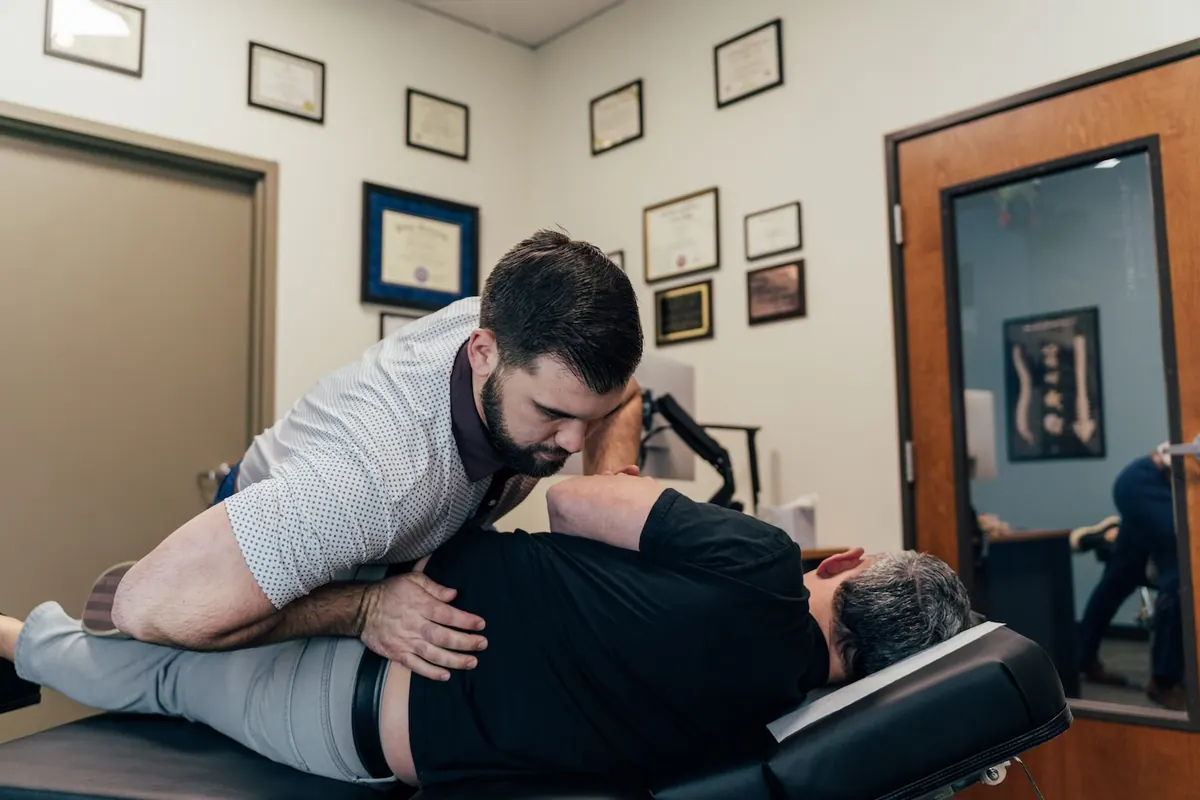
Spinal adjustments form the core of chiropractic care for sciatica. These precise, controlled movements help restore proper alignment and motion to spinal segments that may be contributing to nerve compression. When vertebrae move more freely and are better aligned, pressure on nerve roots often decreases, allowing inflammation to reduce and healing to occur.
The techniques we use vary depending on your specific condition and comfort level. Some patients respond well to manual adjustments, while others benefit from instrument-assisted techniques or specialized tables that provide gentle decompression. The goal is always the same: reduce nerve irritation and improve spinal function.
Beyond adjustments, chiropractic sciatica treatment often includes complementary therapies. Soft tissue work helps address muscle tension and trigger points that may contribute to nerve irritation. Therapeutic exercises strengthen supporting muscles and improve flexibility. Ergonomic counseling ensures you’re not undermining your progress with poor posture or movement patterns at work or home.
Research has shown that chiropractic care can be effective for sciatica management. A review in the European Spine Journal found that spinal manipulation provided significant pain relief for patients with acute and chronic sciatica. The American College of Physicians now recommends non-pharmacologic therapies, including spinal manipulation, as first-line treatment for low back pain and related conditions.
What sets chiropractic care apart is the individualized approach. Your sciatica treatment plan at Castle Hills Chiropractic will be tailored to your specific condition, symptoms, and goals. We’re not offering a one-size-fits-all solution—we’re partnering with you to find what works for your body.
Treatment frequency depends on severity and chronicity. Acute sciatica might respond quickly with several visits over a few weeks. Chronic cases may require a longer treatment plan with gradual improvement over months. We’ll be transparent about realistic expectations and monitor your progress closely, adjusting your care plan as needed.
Practical Tips for Managing Sciatica at Home
While professional sciatica treatment is important, what you do between appointments matters just as much. Here are practical strategies that complement your chiropractic care and help you manage symptoms day-to-day:
Pay attention to your sitting posture. Prolonged sitting is one of the biggest aggravators of sciatica. If your work requires sitting, make sure your chair supports your lower back properly. Your feet should rest flat on the floor with your knees at roughly a 90-degree angle. Avoid crossing your legs, which can rotate your pelvis and increase nerve compression. Stand up and move every 30-45 minutes, even if just for a minute or two.
Modify your sleeping position. How you sleep can either relieve or worsen sciatica. If you sleep on your side, place a pillow between your knees to keep your pelvis aligned. Back sleepers often benefit from a pillow under their knees to reduce lumbar curve stress. Avoid sleeping on your stomach, which can twist your spine and aggravate symptoms.
Apply ice or heat appropriately. In the acute phase when inflammation is high, ice can help reduce swelling around the nerve. Apply for 15-20 minutes several times daily. After the initial inflammation subsides, heat may feel more beneficial, helping relax tight muscles and improve blood flow. Some people find alternating between ice and heat provides the best relief.
Stay gently active. Complete bed rest used to be recommended for sciatica, but we now know this often makes things worse. Gentle movement helps reduce inflammation and prevents muscles from becoming too tight or weak. Walking is often well-tolerated and beneficial. Start with short distances and gradually increase as symptoms allow.
Practice gentle stretching. Certain stretches can help relieve sciatic nerve tension, but it’s important to do them correctly and stop if they increase pain. Knee-to-chest stretches, piriformis stretches, and gentle spinal twists may provide relief. We’ll demonstrate appropriate stretches during your visits to Castle Hills Chiropractic.
Avoid aggravating movements. Pay attention to what makes your symptoms worse and modify accordingly. Bending forward at the waist, twisting while lifting, and high-impact activities often aggravate sciatica. Lift with your legs, not your back. Avoid sudden movements that jar the spine.
Maintain a healthy weight. Excess body weight, particularly around the midsection, places additional stress on your lower back and can contribute to disc problems and nerve compression. Even modest weight loss can significantly reduce pressure on your spine.
Stay hydrated. Your spinal discs are largely composed of water. Proper hydration helps maintain disc height and integrity, which can reduce the likelihood of nerve compression.
When to See a Chiropractor for Sciatica
Many people try to “tough out” sciatica symptoms, hoping they’ll resolve on their own. While some mild cases do improve without intervention, seeking professional care often leads to faster recovery and prevents the condition from becoming chronic.
Consider scheduling an appointment at Castle Hills Chiropractic if your sciatica pain persists for more than a week despite home care measures. Early intervention often leads to better outcomes and shorter recovery times.
You should definitely seek care if the pain is severe enough to interfere with your daily activities, work, or sleep. Sciatica shouldn’t prevent you from living your life, and effective sciatica treatment options are available.
Progressive symptoms warrant prompt attention. If your pain is getting worse rather than better, if numbness is spreading, or if weakness is developing or worsening, these signs suggest the nerve compression may be increasing.
Symptoms affecting both legs simultaneously could indicate a more serious condition and require immediate evaluation. This is less common but shouldn’t be ignored.
Certain “red flags” indicate you should seek medical evaluation urgently. These include loss of bladder or bowel control, progressive leg weakness, numbness in the saddle area (inner thighs and buttocks), and symptoms following significant trauma. These could indicate cauda equina syndrome, a rare but serious condition requiring emergency treatment.
For most sciatica cases, though, chiropractic care provides an excellent conservative first option. Here in Castle Hills, TX, we work collaboratively with other healthcare providers when needed, ensuring you receive comprehensive care appropriate for your specific situation.
Even if your symptoms are mild, an evaluation can identify contributing factors you might not be aware of. Addressing poor movement patterns, postural issues, or spinal dysfunction early can prevent minor problems from becoming major ones.
Treatment Approaches Comparison
| Treatment Approach | How It Works | Best For | Considerations |
|---|---|---|---|
| Chiropractic Care | Addresses spinal alignment and mobility to reduce nerve pressure | Most sciatica cases; those seeking non-invasive, drug-free options | Requires multiple visits; results vary by individual |
| Physical Therapy | Strengthens muscles and improves flexibility through exercises | Muscle weakness and deconditioning; rehabilitation | Requires patient commitment to home exercises |
| Medication | Reduces pain and inflammation temporarily | Symptom management; acute flare-ups | Doesn’t address underlying cause; potential side effects |
| Epidural Injections | Delivers anti-inflammatory medication directly to affected area | Severe pain not responding to conservative care | Invasive; temporary relief; risks include infection |
| Surgery | Removes source of nerve compression (disc, bone) | Severe cases with progressive neurological deficits | Most invasive; recovery time; reserved for when conservative care fails |
Myths vs. Facts About Sciatica
Myth: Sciatica always requires surgery
Fact: The vast majority of sciatica cases resolve with conservative care like chiropractic treatment, physical therapy, and lifestyle modifications. According to research, approximately 80-90% of sciatica patients improve without surgical intervention. Surgery is typically reserved for severe cases with progressive neurological deficits or when conservative approaches haven’t provided adequate relief after an extended period.
Myth: Bed rest is the best treatment for sciatica
Fact: While rest may feel necessary during acute flare-ups, prolonged bed rest can actually worsen sciatica by causing muscles to weaken and stiffen. Evidence indicates that staying gently active promotes healing and faster recovery. Movement helps reduce inflammation, maintains muscle strength, and prevents the fear-avoidance cycle that can develop when people become too cautious about activity.
Myth: Chiropractic adjustments will make sciatica worse
Fact: When performed by a licensed chiropractor after proper evaluation, spinal adjustments are generally safe and often helpful for sciatica. Studies have shown that chiropractic care can reduce pain and improve function in sciatica patients. At Castle Hills Chiropractic, we tailor our approach to your specific condition and comfort level, using gentle techniques when appropriate.
Myth: Sciatica is just normal aging and nothing can be done
Fact: While age-related spinal changes can contribute to sciatica, the condition is not an inevitable part of aging that you must simply endure. Many effective sciatica treatment options exist, and people of all ages can experience significant improvement with appropriate care. Taking proactive steps to address sciatica can prevent it from becoming a chronic, limiting condition.
Myth: If you have sciatica, you should avoid all exercise
Fact: Appropriate exercise is actually beneficial for most sciatica cases. While certain high-impact or extreme movements should be avoided during acute phases, gentle stretching, walking, and targeted strengthening exercises often help reduce symptoms and prevent recurrence. The key is choosing the right exercises for your specific situation—something we help patients with at our Castle Hills practice.
Final Thoughts
Living with sciatica doesn’t have to be your new normal. Understanding what’s happening in your body is the first step toward finding relief, and knowing your options for sciatica treatment empowers you to make informed decisions about your health. Whether you’re dealing with occasional discomfort or debilitating pain, conservative approaches like chiropractic care offer a safe, effective pathway to recovery for most people.
Here in Castle Hills, TX, we’ve helped countless patients overcome sciatica and return to the activities they love. Every case is unique, and that’s why personalized care matters so much. What works for one person may not be the best approach for another, which is why a thorough evaluation and individualized treatment plan are so important.
If you’re experiencing sciatic nerve pain, don’t wait for it to become unbearable. Early intervention often leads to faster recovery and better long-term outcomes. At Castle Hills Chiropractic, we’re here to help you understand your condition, address the underlying causes, and develop a realistic plan for getting you back to feeling your best. You don’t have to navigate sciatica alone—we’re your partners in health, committed to providing the compassionate, evidence-based care you deserve.
Frequently Asked Questions About Sciatica
How long does sciatica typically last?
Sciatica duration varies significantly depending on the underlying cause and treatment approach. Acute sciatica often improves within 4-6 weeks with appropriate care, though some improvement is usually noticed sooner. Chronic sciatica may persist longer, but symptoms typically decrease with consistent sciatica treatment and lifestyle modifications. Early intervention generally leads to faster resolution.
Can sciatica go away on its own without treatment?
Some mild cases of sciatica do resolve spontaneously as inflammation decreases and the body heals. However, without addressing underlying mechanical issues or contributing factors, recurrence is common. Professional sciatica treatment not only helps symptoms resolve faster but also addresses root causes, reducing the likelihood of future episodes and preventing the condition from becoming chronic.
Is sciatica the same thing as a pinched nerve?
Sciatica is a type of pinched nerve, but not all pinched nerves cause sciatica. Sciatica specifically involves compression or irritation of the sciatic nerve or the nerve roots that form it in the lower back. Other nerves throughout the body can also become pinched, causing different symptoms in different locations. The sciatic nerve’s large size and extensive distribution make sciatica particularly impactful when it occurs.
What’s the difference between sciatica and general low back pain?
Low back pain stays localized to the lumbar region and doesn’t typically involve nerve symptoms. Sciatica, in contrast, involves radiating pain, numbness, or tingling that travels from the lower back into the buttock and down the leg, following the sciatic nerve pathway. Sciatica may or may not include back pain—some people experience leg symptoms without significant back discomfort.
Will I need X-rays or an MRI to diagnose sciatica?
Many sciatica cases can be diagnosed based on history and physical examination without imaging. At Castle Hills Chiropractic, we may recommend imaging if symptoms are severe, progressive, or not improving as expected with conservative care. MRI is more useful than X-rays for visualizing soft tissues like discs and nerves, but it’s not always necessary for effective treatment.
Can stress or anxiety make sciatica worse?
Yes, stress and anxiety can intensify sciatica symptoms through muscle tension and heightened pain perception. When you’re stressed, muscles throughout your body—including those around your spine and pelvis—tend to tighten, which can increase nerve compression. Additionally, stress affects how your nervous system processes pain signals. Managing stress through relaxation techniques, adequate sleep, and appropriate physical activity often helps reduce symptom intensity.
TL;DR: Key Takeaways About Sciatica Treatment
- Sciatica is nerve pain caused by compression or irritation of the sciatic nerve, resulting in pain, numbness, or weakness that radiates from your lower back down your leg.
- Common causes include herniated discs, spinal stenosis, piriformis syndrome, and degenerative changes, though multiple factors often contribute to each case.
- Chiropractic care offers effective, non-invasive sciatica treatment by addressing spinal alignment and function, with research supporting its use for pain relief and improved mobility.
- Most sciatica cases improve with conservative care—surgery is rarely necessary and reserved for severe, progressive cases that don’t respond to other treatments.
- What you do at home matters: maintain good posture, stay gently active, practice appropriate stretching, and avoid movements that aggravate symptoms to support your recovery.