


If you’ve ever felt a sudden sharp pain in your back, a burning sensation down your leg, or a mysterious numbness in your foot, there’s a good chance a spinal disc injury may be involved. These injuries are far more common than most people realize, and here in San Antonio, Dr. Brent Johnson at Castle Hills Chiropractic sees patients dealing with them on a regular basis. The good news? Understanding what’s happening in your spine is the first step toward feeling better — and it doesn’t have to be confusing or scary.
This article is designed to walk you through exactly what spinal disc injuries are, what causes them, how to recognize the symptoms, and how chiropractic care may play a role in your recovery. Whether you’re currently experiencing back pain or just want to be informed, you’ll leave with a clearer picture of your spine and what to do next.
What Is a Spinal Disc Injury?
A spinal disc injury refers to any damage or dysfunction affecting the soft, cushion-like discs that sit between the bones (vertebrae) of your spine. These discs act as shock absorbers and allow your spine to move freely. When a disc becomes damaged — whether through wear and tear, a sudden injury, or prolonged stress — it can press on nearby nerves and cause a wide range of symptoms, from localized back pain to radiating discomfort down the arms or legs.
What Are Spinal Discs and What Do They Do?
Your spine is made up of 33 vertebrae stacked on top of one another, and between most of those vertebrae sit intervertebral discs. Think of each disc like a jelly donut — it has a tough, fibrous outer layer called the annulus fibrosus and a soft, gel-like center called the nucleus pulposus. Together, these two components allow the disc to absorb the forces your spine encounters throughout the day, whether you’re sitting at a desk, lifting groceries, or going for a walk.
These discs also help create space between vertebrae, which is critically important because nerve roots exit the spinal canal through those spaces. When discs are healthy and well-hydrated, everything functions as it should. But when a disc is compromised — even slightly — that space can shrink, and nearby nerves can become irritated or compressed. That’s when pain, tingling, and other symptoms begin to appear.
It’s worth noting that discs don’t have a strong blood supply, which is part of why they can be slow to heal on their own. They rely primarily on movement and surrounding fluids for nutrition. This is one reason why staying active — safely — matters so much when it comes to disc health.
Types of Spinal Disc Injuries
Not all disc injuries are the same, and understanding the differences can help you make sense of what a doctor or chiropractor tells you. Here are the most common types that Dr. Brent Johnson evaluates at Castle Hills Chiropractic in the San Antonio area.
Disc Bulge
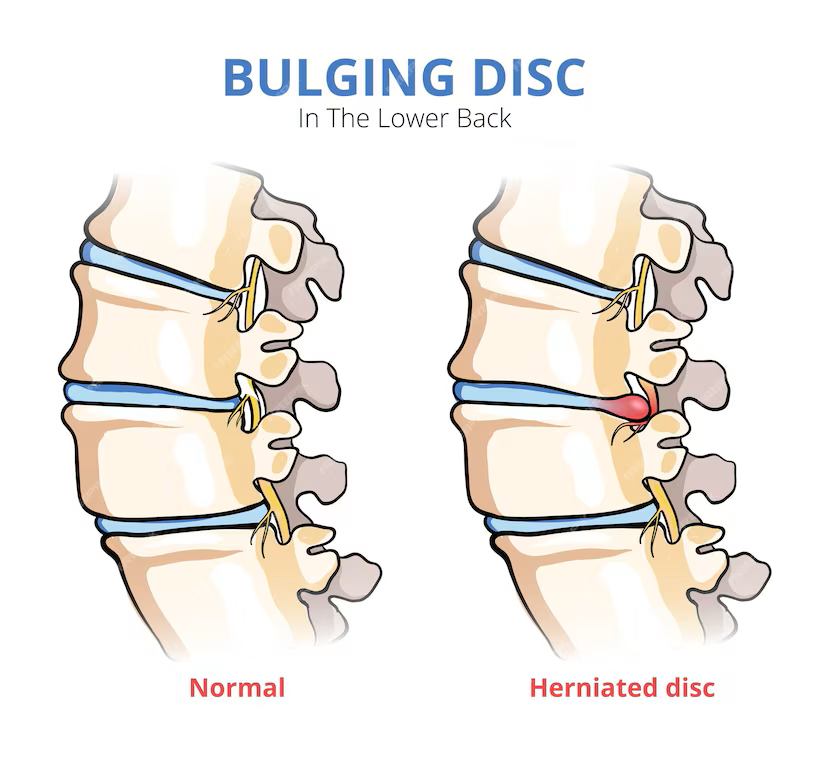
A disc bulge occurs when the outer layer of the disc extends outward beyond its normal boundary, but the inner nucleus has not broken through. This is often the earliest stage of disc injury and can be caused by years of poor posture, repetitive movement, or gradual wear. Many people have bulging discs and don’t even know it — but when the bulge presses against a nerve root, symptoms can develop quickly.
Herniated Disc
A herniated disc, sometimes called a “slipped disc” or “ruptured disc,” happens when the gel-like nucleus pushes through a tear in the annulus fibrosus. This is typically more serious than a bulge because the disc material is actively protruding and is more likely to make direct contact with a spinal nerve. Herniated discs are one of the most frequent causes of sciatica — that sharp, shooting pain that travels from the lower back down through the buttock and into the leg.
Disc Degeneration
Degenerative disc disease (despite the name, it isn’t technically a disease) refers to the gradual breakdown of disc material over time. As we age, discs lose water content and become thinner and less flexible. This is a normal part of aging, but in some individuals, it progresses faster or causes more significant symptoms. In San Antonio, Dr. Brent Johnson often sees this condition in patients over 40 who have physically demanding jobs or a history of repetitive spinal stress.
Disc Protrusion vs. Disc Extrusion
These two terms describe degrees of herniation. A protrusion means the disc material has pushed outward but is still contained. An extrusion means the nucleus has broken through the annular wall entirely. In extreme cases, a fragment of disc material can separate and float freely in the spinal canal — this is called a sequestered disc and typically requires urgent medical attention.
Common Causes of Spinal Disc Injuries
Spinal disc injuries rarely happen from a single dramatic event — though that certainly can occur. More often, they develop gradually as a result of accumulated stress on the spine. Understanding the root causes can help you take steps to protect yourself going forward.
Repetitive bending, twisting, and lifting motions place ongoing stress on the annular fibers of the disc. Over time, small tears can form in the outer layer, weakening the disc’s structural integrity. This is particularly common in people with physically demanding jobs, athletes, and those who perform the same movements day after day without proper recovery.
Prolonged sitting is another significant contributor. When you sit — especially with poor posture — the pressure inside your spinal discs increases substantially. Many of the patients Dr. Brent Johnson sees in the San Antonio area are desk workers who spend eight or more hours a day seated, often with a forward-hunched posture that places uneven load on the lower lumbar discs.
Acute trauma, such as a car accident, a fall, or a sports injury, can also cause a disc to herniate suddenly. In these cases, the force applied to the spine exceeds what the disc can absorb, causing the annular fibers to tear. Even if pain doesn’t appear immediately after an injury, disc damage can become symptomatic in the days or weeks that follow.
Finally, genetics play a role. Some individuals are simply predisposed to disc degeneration based on inherited factors that affect disc composition and resilience. If disc problems run in your family, being proactive about spinal health is especially important.
Signs and Symptoms to Watch For
The symptoms of a spinal disc injury vary widely depending on which disc is affected and whether any nerves are involved. Some people have structurally compromised discs and feel nothing at all. Others experience debilitating pain from even a minor disc issue. Here’s what to look out for.
Localized back or neck pain is often the first sign. This can range from a dull, achy stiffness to a sharp, stabbing pain that worsens with certain movements. In the lumbar spine (lower back), pain is often felt most acutely when bending forward, sitting for long periods, or standing up after sitting. In the cervical spine (neck), pain may radiate into the shoulders or upper arms.
Radiculopathy — the clinical term for nerve-related symptoms — is a hallmark of more significant disc involvement. When a disc presses on a nerve root, it can cause pain, numbness, tingling, or weakness that travels along the nerve’s pathway. In the lower back, this often manifests as sciatica. In the neck, it may cause symptoms down the arm into the fingers. These radiating symptoms are important to report to your chiropractor because they help identify which disc and nerve are involved.
Muscle weakness in the arms or legs, difficulty walking normally, or loss of bladder and bowel control are serious warning signs that require immediate medical evaluation. These symptoms suggest significant nerve compression and should not be ignored or attributed to a minor muscle strain.
How Chiropractic Care Fits Into Your Recovery
Chiropractic care is widely recognized as a safe, non-invasive, and drug-free approach to managing spinal disc injuries — particularly in the early and intermediate stages. Organizations like the American College of Physicians (ACP) and the National Institutes of Health (NIH) have acknowledged spinal manipulation and conservative care as reasonable first-line options for many cases of back pain and disc-related conditions.
At Castle Hills Chiropractic, Dr. Brent Johnson takes a thorough, individualized approach to each patient. Before any treatment begins, a detailed evaluation is performed to assess the nature and severity of the disc injury. This may include a review of your health history, a physical and neurological examination, and in some cases, a referral for imaging if needed.
Chiropractic adjustments — also called spinal manipulation — work by restoring proper motion and alignment to the vertebrae surrounding the affected disc. When joints are stiff or misaligned, they can place uneven pressure on the disc and surrounding structures. Gentle, targeted adjustments help relieve that pressure, reduce muscle guarding, and improve overall spinal mechanics. For disc injuries specifically, low-force techniques are often used to ensure the treatment is both effective and comfortable.
In addition to adjustments, Dr. Brent Johnson may incorporate soft tissue work, rehabilitative exercises, posture correction guidance, and ergonomic recommendations to support healing from multiple angles. The goal is not just to reduce pain in the short term, but to address the underlying mechanical issues that contributed to the disc problem in the first place.
Practical Tips for Protecting Your Spine
Whether you’re recovering from a disc injury or trying to prevent one, there are meaningful steps you can take in your daily life to support your spinal health. These aren’t complex or time-consuming — they’re simple habits that add up over time.
Pay close attention to how you sit. Keep your feet flat on the floor, your hips at or slightly above knee level, and your lower back gently supported. Avoid slouching or rounding your shoulders forward, especially if you work at a computer. Getting up and moving for a few minutes every hour can dramatically reduce the cumulative pressure on your discs throughout the day.
When lifting, use your legs — not your back. Bend at the knees, keep the load close to your body, and avoid twisting your torso while carrying something heavy. This simple technique protects the annular fibers of your discs from the type of rotational stress that commonly causes tears.
Staying hydrated matters more than most people realize. Spinal discs are largely made up of water, and they rely on adequate hydration to maintain their height and shock-absorbing capacity. Drinking sufficient water each day supports disc health in a very literal, physical way.
Core strengthening is also a key protective factor. A strong, well-conditioned core provides muscular support to the spine, reducing the load placed on the discs themselves. Talk with Dr. Brent Johnson or a qualified professional before beginning any core exercise program if you’re already dealing with a disc injury.
When to See a Chiropractor
If you’re experiencing back or neck pain that has persisted for more than a few days, it’s a good idea to get a professional evaluation. Many San Antonio residents put off seeking care because they assume the pain will resolve on its own — and sometimes it does. But when disc involvement is present, delayed treatment can sometimes allow the problem to worsen or become more chronic.
You should consider making an appointment with Dr. Brent Johnson at Castle Hills Chiropractic if you’re experiencing any of the following: persistent lower back or neck pain that doesn’t improve with rest, pain that radiates down your leg or arm, numbness or tingling in your extremities, or stiffness that limits your daily activities.
There are also situations where chiropractic care alone may not be sufficient, and a referral to another healthcare provider is the most responsible course of action. If you experience sudden loss of bladder or bowel control, severe progressive weakness in a limb, or intense pain following a trauma, please seek emergency medical care right away. At Castle Hills Chiropractic, the team is always willing to refer patients to the appropriate specialist when that is in the patient’s best interest.
Spinal Disc Injury Types at a Glance
Type |
What Happens |
Common Symptoms |
Typical Causes |
|---|---|---|---|
|
Disc Bulge |
Outer disc wall extends beyond normal boundary |
Localized pain, possible mild nerve irritation |
Poor posture, repetitive stress, aging |
|
Herniated Disc |
Nucleus pushes through a tear in the outer wall |
Radiating pain, numbness, tingling, sciatica |
Trauma, heavy lifting, chronic disc stress |
|
Degenerative Disc Disease |
Gradual breakdown and thinning of disc material |
Chronic aching, stiffness, reduced flexibility |
Aging, genetics, repetitive physical demands |
|
Disc Protrusion |
Nucleus bulges out but remains contained |
Variable — may include nerve-related symptoms |
Injury, degeneration, postural stress |
|
Disc Extrusion / Sequestration |
Nucleus breaks fully through or separates |
Severe pain, significant nerve compression symptoms |
Significant trauma, advanced degeneration |
Myths vs. Facts About Spinal Disc Injuries
Myth: A herniated disc always requires surgery.
Fact: The vast majority of herniated disc cases resolve or improve significantly with conservative, non-surgical care. Evidence suggests that chiropractic treatment, physical therapy, and time are effective for most patients. Surgery is typically considered only when conservative approaches have been exhausted or when there are serious neurological deficits present.
Myth: If you have a disc injury, you should rest in bed and avoid all movement.
Fact: Extended bed rest is generally not recommended for spinal disc injuries. Research consistently shows that staying gently active — within a pain-tolerable range — supports recovery better than prolonged inactivity. Movement encourages fluid exchange in the disc and prevents the muscle weakening that comes with extended rest.
Myth: Disc injuries only happen to older people.
Fact: While degenerative changes do become more common with age, disc injuries can and do occur at any age. Younger adults and even teenagers can experience disc herniations, particularly from sports injuries, accidents, or repetitive physical strain. Dr. Brent Johnson sees patients of all ages at Castle Hills Chiropractic in the San Antonio area.
Myth: A “slipped disc” means the disc has moved out of place.
Fact: The term “slipped disc” is a colloquial expression and somewhat misleading. Discs do not actually slip or slide out of position — they are anchored firmly to the vertebrae above and below. What actually occurs is a bulge or herniation of the disc material itself, not a displacement of the entire disc.
Myth: If the pain goes away, the disc has fully healed.
Fact: Pain relief and structural healing are not the same thing. It’s possible for symptoms to subside while the underlying disc abnormality remains. This is why addressing the root mechanical causes — posture, movement patterns, joint function — is so important even after the acute pain resolves.
Final Thoughts from Castle Hills Chiropractic
Spinal disc injuries can be intimidating to think about, but they are also among the most manageable conditions in musculoskeletal care when addressed early and appropriately. Understanding what’s happening in your body is empowering — it shifts the experience from fear and uncertainty to clarity and action.
Here in the San Antonio community, the team at Castle Hills Chiropractic is committed to helping patients navigate these challenges with honest, evidence-informed, compassionate care. Dr. Brent Johnson brings both experience and a genuine dedication to patient education, ensuring that you understand your condition and your options every step of the way.
You don’t have to live with back pain, and you don’t have to figure it out alone. Whether you’re in Castle Hills, the greater San Antonio area, or anywhere nearby, reaching out for a professional evaluation is a straightforward and positive step toward a healthier spine. The sooner you understand what’s going on, the sooner you can start moving in the right direction.
Frequently Asked Questions
Can a chiropractor treat a herniated disc in San Antonio?
Yes, chiropractic care is a commonly recommended conservative treatment for herniated discs. Dr. Brent Johnson at Castle Hills Chiropractic evaluates each patient individually to determine the most appropriate and safe approach. Many patients experience meaningful improvement in pain and function through chiropractic care without the need for surgery or medications.
How long does it take to recover from a spinal disc injury?
Recovery time varies significantly depending on the type and severity of the disc injury, the patient’s overall health, and how consistently they follow their care plan. Some patients see noticeable improvement within a few weeks, while others with more significant injuries may require several months of care. There is no universal timeline, and your chiropractor can give you a more personalized estimate after a thorough evaluation.
Is it safe to get a chiropractic adjustment if I have a disc injury?
In most cases, yes — chiropractic adjustments performed by a trained and licensed chiropractor are considered safe for disc injuries. The techniques used are carefully selected based on your specific condition, and low-force methods are commonly used when disc involvement is present. A thorough examination before treatment helps ensure that care is appropriate for your individual situation.
What is the difference between a bulging disc and a herniated disc?
A bulging disc occurs when the outer disc wall extends beyond its normal boundary but remains intact, while a herniated disc involves the inner nucleus breaking through a tear in the outer wall. Herniated discs are generally considered more serious and are more likely to cause significant nerve-related symptoms. Both conditions can be evaluated and often managed conservatively with chiropractic care.
Can disc injuries come back after they’ve healed?
Yes, there is a risk of recurrence, particularly if the underlying factors — such as poor posture, weak core muscles, or repetitive strain patterns — are not addressed. This is why ongoing spinal wellness care, ergonomic adjustments, and rehabilitative exercise are often recommended even after a patient has recovered from the initial injury.
Should I get an MRI before seeing a chiropractor for disc pain?
An MRI is not always necessary before beginning chiropractic care, especially for mild to moderate disc-related symptoms. A skilled chiropractor can perform a thorough physical and neurological evaluation to guide initial treatment. However, if there are concerning neurological signs or if the condition doesn’t respond as expected, your chiropractor may recommend imaging to get a clearer picture of what’s happening.
TL;DR Summary
-
Spinal disc injuries include bulges, herniations, and degenerative changes — each with different causes, severity levels, and symptoms.
-
Common causes include poor posture, repetitive strain, prolonged sitting, trauma, and genetics — not just sudden injuries.
-
Symptoms can range from localized back pain to radiating nerve pain, numbness, and tingling in the arms or legs.
-
Chiropractic care is a well-recognized, non-surgical option for managing disc injuries — Dr. Brent Johnson at Castle Hills Chiropractic in San Antonio provides individualized evaluation and conservative treatment.
-
Most disc injuries improve with proper conservative care, good movement habits, core support, and early professional evaluation.