

You wake up, swing your legs over the side of the bed, and — ouch. That deep, achy discomfort in your hip makes the first few steps of the morning feel like a real challenge. If this sounds familiar, you are not alone. Waking up with hip pain is one of the most common complaints we hear from older adults here in Castle Hills, TX, and it deserves a thoughtful, honest conversation. The good news is that morning hip pain, while frustrating, is often very manageable — especially when you understand what is causing it and what steps you can take to address it.
What does it mean to wake up with hip pain?
Morning hip pain refers to discomfort, stiffness, or achiness in or around the hip joint that is present or worsens upon waking. It may ease as the day goes on, or it may linger. For older adults, this type of pain is often linked to changes in the joints, muscles, or surrounding soft tissues — and it is worth paying attention to.
Why Mornings Are Harder on Your Hips
There is actually a very logical reason why hip pain tends to peak in the morning. When you sleep, your body is relatively still for several hours. During that time, joint fluid — called synovial fluid — settles and becomes less evenly distributed throughout the joint space. This fluid acts as a natural lubricant, and when it is not moving, your joints can feel stiff and sore when you first get up.
Beyond joint fluid, your muscles and soft tissues can also tighten during sleep. If you sleep in a position that puts sustained pressure on the hip — like lying on your side without proper support — those surrounding muscles may be in a shortened or compressed state by morning. Add in the natural changes that come with aging, such as reduced cartilage thickness and decreased muscle elasticity, and it becomes easier to understand why those first morning steps can feel so uncomfortable.
Here in Castle Hills, TX, many of the older adults who visit Castle Hills Chiropractic describe this exact experience. They feel okay during the day but dread getting out of bed in the morning. Understanding the “why” behind that pain is the first step toward feeling better.

Common Causes of Morning Hip Pain in Older Adults
Morning hip pain is not a diagnosis on its own — it is a symptom that can stem from a variety of underlying issues. Some of the most common causes we see in older patients include the following.
Osteoarthritis is one of the leading causes of hip pain in adults over 50. As the cartilage in the hip joint gradually wears down, the bones can begin to rub against each other, causing inflammation, stiffness, and pain. This type of pain is often worse in the morning and after periods of inactivity, and it may gradually improve with gentle movement.
Bursitis is another frequent culprit. The hip has small fluid-filled sacs called bursae that cushion the joint and reduce friction between bones, tendons, and muscles. When these become inflamed — often from repetitive motion, prolonged pressure, or an awkward sleeping position — it can cause a deep ache or sharp pain on the outer side of the hip.
Muscle imbalances and tightness are often overlooked but can significantly contribute to morning hip discomfort. The hip flexors, glutes, piriformis, and IT band all play a role in how the hip joint moves and feels. When these muscles are chronically tight or unbalanced, they can pull on the joint and surrounding structures in ways that cause pain — especially after hours of inactivity.
Lumbar spine issues are also worth mentioning. The lower back and hips are closely connected through the nervous system and surrounding musculature. A misalignment or disc issue in the lumbar spine can refer pain into the hip and buttock region, which is sometimes mistaken for true hip joint pain. Dr. Brent Johnson at Castle Hills Chiropractic is trained to help identify whether hip pain is originating from the hip itself or from the spine.
Sleeping position plays a bigger role than most people realize. Side sleepers who do not have proper pillow or mattress support may experience prolonged compression on the hip they sleep on, leading to inflammation and soreness by morning.
Signs and Symptoms to Pay Attention To
Not all hip pain looks the same, and knowing what to watch for can help you communicate more clearly with your healthcare provider. Morning hip pain in older adults often presents as a deep, dull ache in the groin, outer hip, or buttock. It may come with stiffness that takes 15 to 30 minutes to ease up once you start moving around.
Some people notice a grinding or clicking sensation in the hip as they move, especially in the morning. Others describe the pain as radiating down the outer thigh or into the knee. Pain that is localized to the outer hip and worsens when you lie on that side is a classic sign of hip bursitis. Pain in the groin that worsens with walking or stair climbing may point more toward the hip joint itself.
If your morning hip pain is accompanied by significant swelling, redness, fever, or a sudden inability to bear weight, those are signs that something more serious may be going on, and you should seek medical attention promptly. Dr. Brent Johnson and the team at Castle Hills Chiropractic take a thorough approach to evaluating these symptoms to ensure every patient receives the right care — or the appropriate referral when needed.
How Chiropractic Care May Help
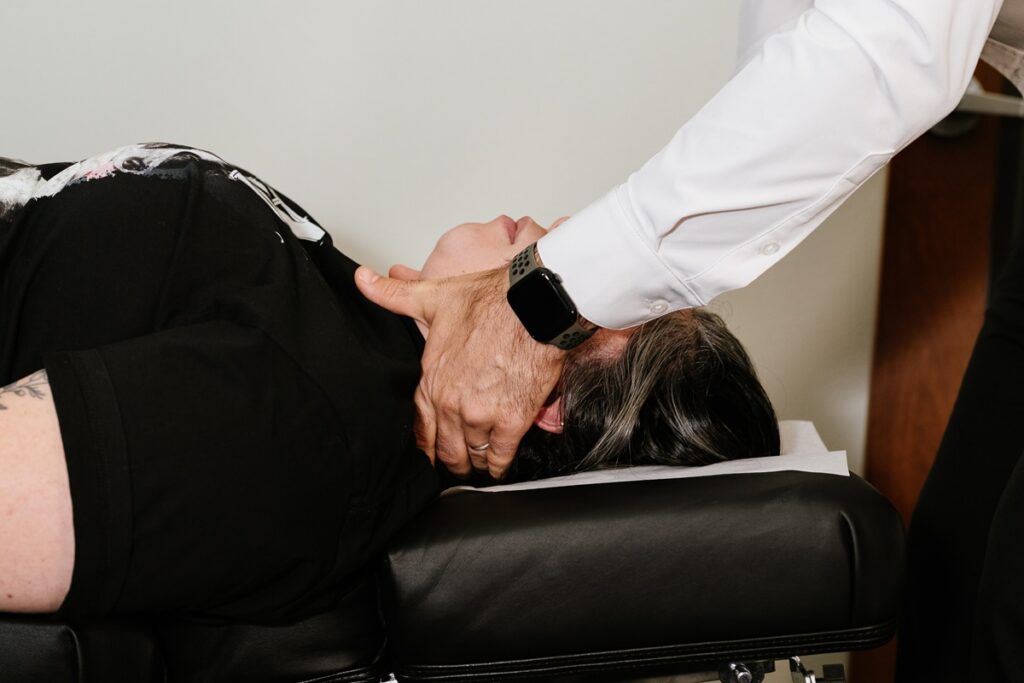
Chiropractic care offers a non-invasive, drug-free approach to addressing musculoskeletal pain — including the kind of hip pain that makes mornings miserable. Research suggests that chiropractic adjustments and manual therapy techniques can be effective tools for reducing pain and improving function in patients with musculoskeletal hip complaints.
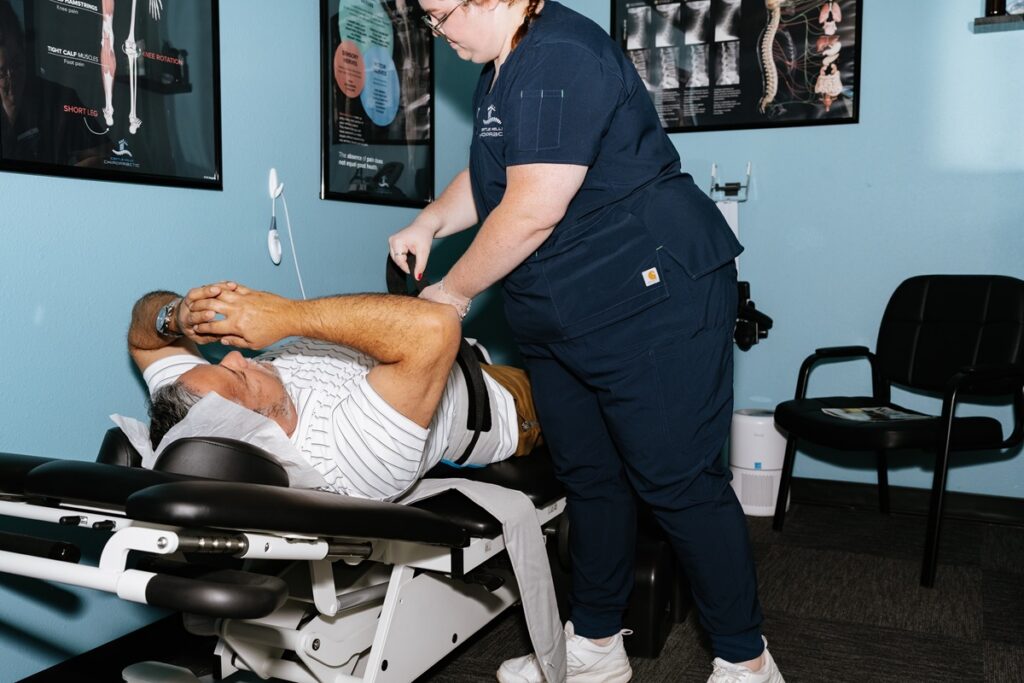
At Castle Hills Chiropractic, Dr. Brent Johnson evaluates the whole picture — not just the hip in isolation. Because the hip, pelvis, and lumbar spine all function as an interconnected system, misalignments or restrictions in one area can affect the others. A comprehensive evaluation may include assessing your posture, your gait, the range of motion in your hip, and the alignment of your lower spine.
Chiropractic adjustments to the lumbar spine and pelvis may help restore normal movement patterns, reduce nerve irritation, and take unnecessary stress off the hip joint. Soft tissue techniques — such as myofascial release or trigger point therapy — may be used to address tight muscles around the hip that are contributing to your discomfort. Dr. Brent Johnson may also provide guidance on stretching, sleeping positions, and movement habits that can make a meaningful difference in how you feel each morning.
Chiropractic care is not a quick fix or a cure, but it can be an important part of a conservative care plan that helps older adults in the Castle Hills community stay active, mobile, and comfortable.
Practical Tips to Ease Morning Hip Pain
There are several simple, safe strategies that may help reduce morning hip stiffness and discomfort. These are not substitutes for professional evaluation, but they can complement your care and give you more control over how you feel.
Your sleeping position matters. If you are a side sleeper, try placing a pillow between your knees to keep your hips in a more neutral, aligned position. This takes some of the rotational stress off the hip joint during the night. If you sleep on your back, a pillow under your knees can help reduce tension in the hip flexors and lower back.
Before you even get out of bed, consider doing a few gentle movements. Slowly bending and straightening your knees, rotating your ankles, and gently drawing one knee at a time toward your chest can help get the synovial fluid moving and ease stiffness before your feet hit the floor. These small warm-up movements can make a noticeable difference in how your hips feel when you stand.
Throughout the day, avoid sitting for prolonged periods. Long stretches of sitting can tighten the hip flexors and compress the joint. Getting up and moving for a few minutes every 30 to 45 minutes is a simple habit that pays real dividends for hip health over time. Gentle walks, water exercises, and stretching routines that target the hips and lower back are all worth discussing with Dr. Brent Johnson to find what works best for your individual situation.
Your mattress and sleep surface also deserve consideration. A mattress that is too soft can cause your hips to sink unevenly, while one that is too firm may create pressure points. If your mattress is older than seven to ten years, it may be contributing to your morning discomfort.
When to See a Chiropractor
If your morning hip pain has been going on for more than a few weeks, is getting worse over time, or is starting to limit what you can do during the day, it is a good time to get a professional evaluation. Waiting and hoping it will go away on its own is a common approach — but for many people, untreated hip pain gradually worsens and becomes harder to address.
Chiropractic care is generally considered appropriate when pain is musculoskeletal in nature and is not associated with infection, fracture, or serious systemic disease. If you have recently had a fall, if your hip pain came on suddenly and severely, or if you are experiencing symptoms like unexplained weight loss, fever, or night sweats alongside your hip pain, please see your primary care physician or visit an urgent care center right away. These could be signs of something that goes beyond chiropractic scope.
For the many older adults in Castle Hills, TX, whose morning hip pain is rooted in muscle tension, joint stiffness, postural imbalances, or spinal issues, chiropractic care through Castle Hills Chiropractic can be a genuinely helpful first step.
Hip Pain at a Glance: Common Causes Compared
|
Cause |
Where Pain Is Felt |
Morning Stiffness? |
Worsens With |
May Improve With |
|---|---|---|---|---|
|
Osteoarthritis |
Groin, inner hip, front of thigh |
Yes, often 15-30 minutes |
Activity after rest, cold weather |
Gentle movement, warmth |
|
Hip Bursitis |
Outer hip, lateral thigh |
Yes, especially after lying on side |
Lying on affected side, walking stairs |
Rest, position changes |
|
Muscle Tightness / Imbalance |
Buttock, outer hip, groin |
Moderate, eases with movement |
Prolonged sitting, inactivity |
Stretching, movement, soft tissue care |
|
Lumbar Spine Referral |
Hip, buttock, may radiate to leg |
Yes, often with low back stiffness |
Bending, twisting, prolonged sitting |
Spinal adjustment, movement |
|
Sleeping Position Strain |
Outer hip, pressure point areas |
Yes, worst immediately on waking |
Sleeping on hard surface, wrong position |
Pillow support, position adjustment |
Myths vs. Facts About Hip Pain in Older Adults
Myth: Hip pain is just a normal part of aging that you have to live with.
Fact: While certain changes in the joints are part of aging, significant pain that limits your daily life is not something you simply have to accept. Many older adults experience meaningful improvement in hip pain through conservative care such as chiropractic treatment, targeted movement, and lifestyle adjustments. Pain is a signal worth addressing, not ignoring.
Myth: If it hurts, you should rest completely and avoid all movement.
Fact: Complete rest is rarely the answer for most types of hip pain. Evidence consistently suggests that gentle, appropriate movement helps maintain joint lubrication, prevents muscle weakening, and supports recovery. The key is moving wisely — not pushing through sharp pain, but also not becoming entirely sedentary.
Myth: Morning hip pain always means you need surgery or medication.
Fact: Many cases of morning hip pain respond well to conservative, non-invasive care. Chiropractic care, physical therapy, and lifestyle modifications are often recommended as first-line approaches before more invasive options are considered. Guidelines from organizations like the American College of Physicians support non-pharmacological, conservative care as a starting point for musculoskeletal pain.
Myth: Chiropractic care is only for back pain — it cannot help with hips.
Fact: Chiropractors are trained in the assessment and management of the entire musculoskeletal system, including the hip joint and the structures surrounding it. Because the spine, pelvis, and hips are so interconnected, chiropractic care can directly and indirectly address many of the factors that contribute to hip pain.
Myth: Hip pain that starts in the morning will always be worse as you age.
Fact: The progression of hip pain is not inevitable or predetermined. With the right care plan, many older adults are able to stabilize their symptoms and even significantly reduce their discomfort over time. Early attention and proactive management can make a meaningful difference in your long-term quality of life.
Final Thoughts From Castle Hills Chiropractic
Waking up with hip pain can take the joy out of mornings — but it does not have to define your days. Here at Castle Hills Chiropractic in Castle Hills, TX, Dr. Brent Johnson is deeply committed to helping older adults in this community understand what is going on in their bodies and find real, lasting relief through honest, individualized care.
We believe that every patient deserves a thorough evaluation, a clear explanation, and a care plan that respects their goals and their lifestyle. Whether your morning hip pain turns out to be related to your sleeping position, your lumbar spine, your muscle balance, or something else entirely, understanding the root cause is always the right first step.
If you are waking up with hip pain and wondering what is going on, we warmly invite you to reach out to Castle Hills Chiropractic. You deserve mornings that start with energy and ease — not discomfort and dread. Our team is here to help.
Frequently Asked Questions
Is it normal to have hip pain every morning as I get older?
Some degree of morning stiffness can occur with age, but regular, significant hip pain every morning is not something you should simply accept. It is worth having a professional evaluation to identify the underlying cause and explore your options for relief.
Can my sleeping position really cause hip pain?
Yes, absolutely. Sleeping on your side without proper support can place sustained pressure on the hip joint and surrounding bursae, leading to inflammation and soreness by morning. Using a pillow between your knees and ensuring your mattress provides adequate support can make a real difference.
How does a chiropractor evaluate hip pain?
A chiropractor will typically take a detailed health history and perform a physical examination that includes assessing your posture, range of motion, gait, and spinal alignment. This helps determine whether the pain is originating from the hip joint itself, the surrounding muscles, or the lumbar spine.
How many chiropractic visits will it take to see improvement in my hip pain?
This varies depending on the cause and severity of the pain, as well as the individual patient. Some people notice improvement within a few visits, while others with more complex or long-standing issues may need a longer course of care. Dr. Brent Johnson will provide a realistic assessment based on your specific situation.
Should I see a chiropractor or my regular doctor first for hip pain?
Either is a reasonable starting point for most musculoskeletal hip pain. If you have red flags — such as sudden severe pain after a fall, fever, swelling, or inability to bear weight — see a physician right away. For gradual-onset morning stiffness and aching, a chiropractic evaluation is a sensible and conservative first step.
Are there exercises I can do at home to help with morning hip pain?
Gentle in-bed movements, such as knee-to-chest stretches and ankle circles before getting up, can help ease morning stiffness. Throughout the day, gentle hip flexor stretches and short walks are often beneficial. Always consult with Dr. Brent Johnson or another qualified provider before starting a new exercise routine for hip pain.
TL;DR — Key Takeaways
-
Morning hip pain in older adults is common and often stems from osteoarthritis, bursitis, muscle tightness, lumbar spine issues, or poor sleeping position — not simply “old age.”
-
Synovial fluid settles during sleep, which is why joints feel stiffest first thing in the morning and often ease up with gentle movement.
-
Chiropractic care offers a non-invasive, drug-free approach to evaluating and addressing the musculoskeletal causes of morning hip pain.
-
Simple habits — like using a pillow between your knees, doing gentle warm-up movements before getting out of bed, and avoiding prolonged sitting — can help reduce morning discomfort.
-
If morning hip pain is persistent, worsening, or limiting your daily life, it is time to get a professional evaluation at Castle Hills Chiropractic in Castle Hills, TX.