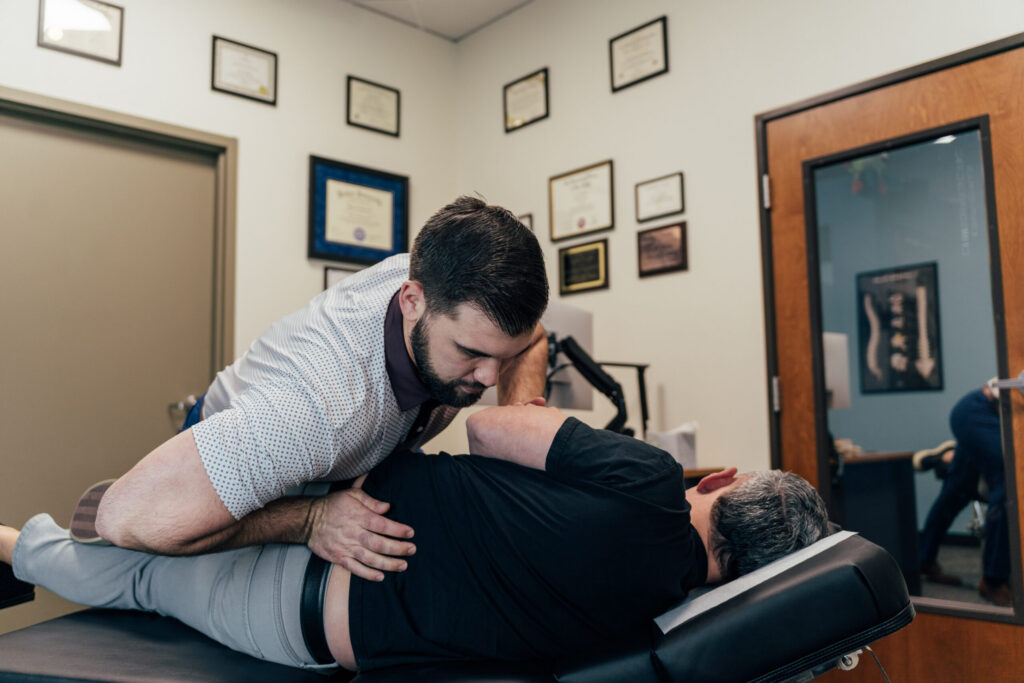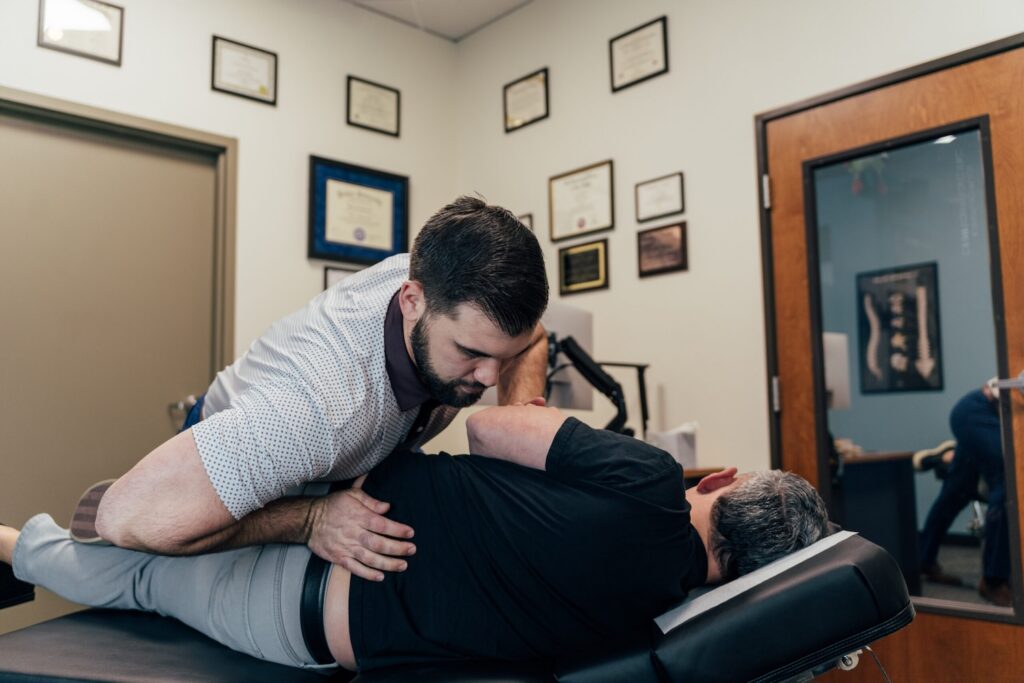

If you’ve ever felt a sharp, shooting pain down your leg or a deep ache in your lower back that just won’t quit, there’s a good chance a disc injury may be involved. Disc injuries are one of the most common — and most misunderstood — causes of back and neck pain, and they can genuinely disrupt every part of your daily life. The good news is that chiropractic care for disc injuries has helped countless people find real, lasting relief without surgery or dependency on pain medications. Here at Castle Hills Chiropractic in Castle Hills, TX, Dr. Brent Johnson works with patients every week who come in frustrated, in pain, and unsure what to do next. This article is for you — to help you understand what’s happening in your spine, what your options are, and how conservative chiropractic care may be able to help.
What Is a Disc Injury? A disc injury refers to damage or displacement of one of the cushioning pads — called intervertebral discs — that sit between the bones of your spine. These discs act as shock absorbers and allow your spine to move. When a disc is injured, it may bulge, herniate, or degenerate, potentially putting pressure on nearby nerves and causing pain, numbness, or weakness in the back, neck, arms, or legs.
Understanding Disc Injuries: Types and Causes
Your spine is made up of 33 vertebrae, and between most of them sits a disc — a tough outer ring called the annulus fibrosus with a soft, gel-like center called the nucleus pulposus. Think of it like a jelly donut. When that donut gets compressed unevenly, pushed, or worn down over time, problems begin to develop. Not all disc injuries are the same, and understanding the differences can help you have more informed conversations with your care provider.
A bulging disc occurs when the disc extends beyond its normal boundary but hasn’t ruptured. This is one of the most common types and can often go unnoticed until it begins pressing on a nerve. A herniated disc — sometimes called a slipped or ruptured disc — happens when the outer layer tears and the inner gel pushes through. This type tends to be more painful and is more likely to irritate nearby nerve roots. Degenerative disc disease is a bit of a misleading name; it’s not really a “disease” but rather a gradual breakdown of disc material over time, often associated with aging, repetitive motion, or previous injury.
As for what causes these injuries, the list is wide-ranging. Poor posture held for long periods, repetitive bending or twisting motions, heavy lifting with improper form, car accidents, sports injuries, and even prolonged sitting can all contribute to disc damage. Here in Castle Hills, TX, many of the patients Dr. Brent Johnson sees spend long hours at a desk or behind the wheel — two situations that put sustained, uneven pressure on the lumbar discs and set the stage for problems down the road.
Signs and Symptoms You Shouldn’t Ignore
Disc injuries don’t always announce themselves with dramatic, sudden pain. In fact, some people have disc abnormalities on imaging without any symptoms at all. But when symptoms do show up, they can range from mildly annoying to completely debilitating. Knowing what to look for is important so you can seek care before things get worse.
The most common symptom is localized pain in the lower back or neck, depending on which region of the spine is affected. When a disc is pressing on a nerve root, you may experience pain that radiates — meaning it travels — along the path of that nerve. In the lower back, this often feels like pain shooting down one leg, which many people recognize as sciatica. In the cervical spine (neck), a compressed nerve can send pain, tingling, or numbness down the arm and into the fingers.
You might also notice that certain positions make things worse. Sitting for long stretches, bending forward, sneezing, or coughing can all increase disc pressure and temporarily intensify your symptoms. On the flip side, walking or lying down in a specific position may bring some relief. Muscle weakness in the arm or leg supplied by the affected nerve is another red flag that warrants professional evaluation sooner rather than later.
How Chiropractic Care Helps with Disc Injuries
One of the most common concerns patients bring to Castle Hills Chiropractic is whether chiropractic care is safe for disc injuries. It’s a fair question, and the answer — when care is delivered by a qualified chiropractor who has thoroughly evaluated your condition — is yes, for the majority of disc-related cases. Chiropractic care is recognized by organizations like the American College of Physicians (ACP) and the National Institutes of Health (NIH) as a first-line, conservative treatment option for spinal pain.
The core goal of chiropractic care for disc injuries is to restore proper alignment and movement to the spine, reduce nerve irritation, and support the body’s natural healing process. When spinal joints are misaligned or restricted in their movement, surrounding muscles compensate, posture shifts, and abnormal stress accumulates on the discs. By addressing these movement restrictions, Dr. Brent Johnson helps take pressure off the affected disc and the nerves it may be irritating.
It’s also worth understanding what chiropractic care does not claim to do. It does not “push the disc back in place” in one dramatic moment. Rather, consistent, targeted care helps create an environment in which the disc tissue can gradually decompress, inflammation can calm, and the surrounding structures can begin functioning more normally. Research published in peer-reviewed sources, including the Spine Journal, suggests that spinal manipulation and conservative chiropractic care can meaningfully reduce pain and improve function in patients with disc-related conditions.
Chiropractic Techniques Used for Disc Injuries
Not every disc injury is treated the same way. A good chiropractor doesn’t apply a one-size-fits-all adjustment. Instead, the techniques used are tailored to the specific type of disc injury, the location in the spine, the severity of symptoms, and the patient’s overall health. Dr. Brent Johnson takes a thorough, individualized approach to each patient’s care at Castle Hills Chiropractic — and that begins with a detailed history and examination before any treatment begins.
One of the most well-known techniques used for disc injuries is the flexion-distraction technique. This is a gentle, low-force approach performed on a specially designed table that creates a slow, rhythmic pumping motion in the lumbar spine. Rather than delivering a high-velocity thrust, this method gently stretches and decompresses the disc, which may help reduce intradiscal pressure and encourage the retraction of herniated material away from the nerve. Many patients find this technique particularly comfortable, even when they’re in significant pain.
Another approach is spinal decompression, either manual or mechanical, which applies a carefully controlled traction force to the spine. This creates negative pressure within the disc, which can help draw the herniated nucleus material back toward the center while promoting the influx of nutrients, oxygen, and fluids the disc needs to heal. For certain patients, low-force adjusting techniques using a handheld instrument — sometimes called the Activator method — provide precise, gentle correction without the rotational movement that some disc patients find uncomfortable early in their care. Soft tissue therapies, rehabilitative exercises, and postural coaching are also commonly incorporated into a complete care plan.
Practical Tips for Supporting Your Disc Health
Chiropractic care works best when it’s supported by smart daily habits. What you do between appointments matters just as much as the care you receive in the office. Dr. Brent Johnson regularly coaches patients at Castle Hills Chiropractic on how to protect their spines outside of the treatment room — and these recommendations are grounded in biomechanics and common sense.
Your sitting posture is one of the most important factors. When seated, your hips should be at roughly the same height as your knees, your feet flat on the floor, and your lower back should have a gentle inward curve — not a slumped C-shape. If you work at a desk, consider a lumbar support cushion or an ergonomic chair. Stand up and take a short walk at least once every 45 to 60 minutes to relieve sustained disc pressure.
When lifting anything — whether it’s a heavy box or a bag of groceries — bend at the hips and knees rather than the waist. Keep the load close to your body and avoid twisting while carrying weight. Staying well-hydrated also matters more than most people realize. The discs depend on adequate hydration to maintain their height and shock-absorbing properties. Gentle movement like walking or swimming is generally better for disc health than remaining sedentary, as motion helps circulate fluids through disc tissue.
When to See a Chiropractor for Disc Pain
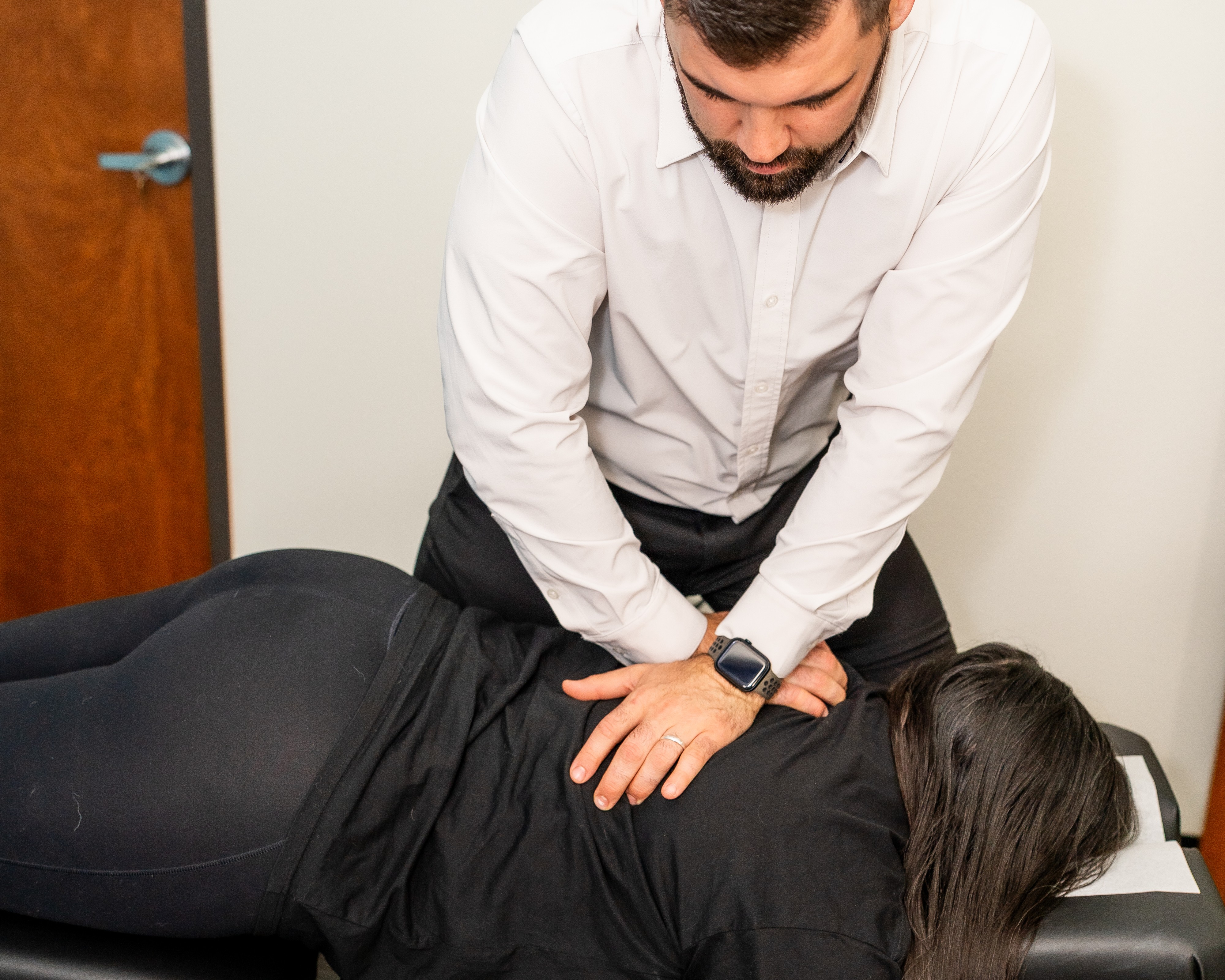
If your back or neck pain has lasted more than a few days, is getting progressively worse, or is accompanied by radiating pain, numbness, or tingling in an arm or leg, it’s time to get evaluated. Many people wait too long, hoping the pain will just go away on its own — and sometimes it does. But when it doesn’t, early intervention tends to produce better outcomes than waiting until the problem becomes severe.
Chiropractic care is generally most appropriate for mild to moderate disc injuries where nerve involvement is present but there’s no significant loss of motor function. If you notice sudden, severe weakness in a limb, or if you experience any loss of bladder or bowel control — a condition called cauda equina syndrome — these are medical emergencies that require immediate hospital care, not chiropractic treatment. Dr. Brent Johnson is trained to recognize these red flags and will refer patients to the appropriate medical provider when necessary.
|
Situation |
Recommended Action |
|---|---|
|
Mild to moderate back or neck pain lasting more than a few days |
Schedule a chiropractic evaluation |
|
Radiating pain, numbness, or tingling in arm or leg |
Chiropractic evaluation; imaging may be recommended |
|
Pain worsened by sitting, bending, or coughing |
Likely disc-related; conservative care is a good first step |
|
Significant limb weakness or muscle wasting |
Prompt medical evaluation; may need co-management |
|
Loss of bladder or bowel control |
Emergency — go to the ER immediately |
|
Post-surgical back pain without emergency symptoms |
Discuss with chiropractor — many post-surgical patients can receive modified care |
Myths vs. Facts About Disc Injuries and Chiropractic
Myth: Chiropractic adjustments will make a herniated disc worse.
Fact: When performed by a qualified chiropractor after a thorough evaluation, chiropractic care for disc injuries is considered safe and appropriate for the majority of patients. Techniques like flexion-distraction are specifically designed to be gentle and are routinely used for herniated discs. A competent chiropractor will not perform high-velocity manipulation when it isn’t indicated.
Myth: Once a disc herniates, surgery is the only real fix.
Fact: Research consistently shows that the majority of disc herniations improve with conservative care over time. Evidence from sources like the Cochrane Library and the American College of Physicians supports non-surgical approaches — including chiropractic care — as first-line treatment for most disc-related conditions. Surgery is typically considered only when conservative methods have been tried and there’s significant, ongoing neurological compromise.
Myth: A bulging disc always causes pain.
Fact: Many people have disc bulges that show up on MRI without ever causing any symptoms. Imaging findings don’t always correlate directly with pain levels. This is why a thorough clinical examination is just as important as any scan — the goal is to understand how the disc issue relates to your specific symptoms, not just what the image shows.
Myth: Rest is the best treatment for a disc injury.
Fact: While a brief period of relative rest can sometimes help in the acute phase, prolonged bed rest is generally not recommended and may actually slow recovery. Controlled movement, gentle activity, and targeted chiropractic care tend to support healing far better than staying completely still. Dr. Brent Johnson helps patients at Castle Hills Chiropractic understand which movements to avoid and which ones to encourage during each stage of recovery.
Myth: Disc injuries only happen to older people.
Fact: While degenerative changes in discs do become more common with age, disc herniations actually peak in people between 30 and 50 years old. Active adults, athletes, and desk workers of any age can experience disc injuries. The good news is that younger, healthier discs often have more healing potential when proper care is initiated early.
Final Thoughts from Castle Hills Chiropractic
Living with disc pain doesn’t have to be your new normal. Here in Castle Hills, TX, many people are surprised to learn how much relief is possible through a careful, conservative approach — one that doesn’t involve surgery, steroid injections, or a lifetime of pain medication. At Castle Hills Chiropractic, Dr. Brent Johnson is committed to providing thorough, individualized care that addresses the root cause of your disc problem, not just the symptoms on the surface.
Whether you’re dealing with a recent injury, a longstanding disc condition that flares up periodically, or you’re just trying to understand your diagnosis better, this practice is here to help. The community of Castle Hills, TX deserves straightforward, honest healthcare — and that’s exactly what we aim to deliver. If you’ve been putting off getting evaluated because you’re worried about what the answer might be, please don’t wait. The earlier a disc injury is addressed, the more options you typically have, and the better your long-term outcomes tend to be.
We welcome you to reach out to Castle Hills Chiropractic and take that first step toward understanding your spine and feeling like yourself again.
Frequently Asked Questions
Can chiropractic care actually help a herniated disc?
Yes, for many patients, chiropractic care is an effective conservative option for managing herniated disc symptoms. Techniques like flexion-distraction and spinal decompression are designed to reduce disc pressure and nerve irritation. Evidence from peer-reviewed sources supports chiropractic as a viable first-line approach for most disc-related conditions.
How many chiropractic visits will I need for a disc injury?
The number of visits varies depending on the severity of the injury, how long you’ve had symptoms, and how well you respond to care. Some patients notice improvement within a few weeks, while others with more significant injuries may require a longer course of treatment. Dr. Brent Johnson will outline a realistic care plan after your initial evaluation at Castle Hills Chiropractic.
Is it safe to get adjusted if I have a bulging or herniated disc?
In most cases, yes — particularly when low-force techniques are used and the chiropractor has thoroughly evaluated your condition. A chiropractor will review your history, perform an examination, and may recommend imaging before beginning treatment to ensure the approach is appropriate for your specific situation.
Will I need an MRI before starting chiropractic care?
Not always. Many disc injuries can be identified and initially treated based on a thorough clinical examination. If your symptoms suggest a more complex problem, or if you’re not responding as expected to care, Dr. Brent Johnson may recommend imaging to get a clearer picture of what’s happening in your spine.
What’s the difference between a bulging disc and a herniated disc?
A bulging disc extends beyond its normal boundary but the outer layer remains intact, while a herniated disc involves a tear in the outer layer with the inner gel pushing through. Both can cause nerve-related symptoms, but herniations tend to produce more intense and localized symptoms. Both conditions can often be managed effectively with conservative chiropractic care.
Can disc injuries come back after chiropractic treatment?
Disc conditions can recur, especially if underlying postural habits, ergonomic issues, or movement patterns aren’t addressed. That’s why Dr. Brent Johnson emphasizes patient education and long-term spinal health strategies alongside hands-on treatment. Maintaining spinal health through regular movement, good posture, and periodic chiropractic check-ins can help reduce the risk of reinjury.
TL;DR Summary
-
Disc injuries — including bulges, herniations, and degenerative changes — are a common cause of back, neck, and radiating limb pain that can often be addressed without surgery.
-
Chiropractic care for disc injuries uses techniques like flexion-distraction, spinal decompression, and low-force adjustments to reduce disc pressure and nerve irritation.
-
Daily habits like proper sitting posture, safe lifting mechanics, and staying hydrated play a significant role in supporting disc health between appointments.
-
Most disc injuries respond well to conservative care when addressed early — don’t wait for symptoms to become severe before seeking evaluation.
-
At Castle Hills Chiropractic in Castle Hills, TX, Dr. Brent Johnson provides individualized, evidence-informed care designed to address the root cause of your disc problem.