
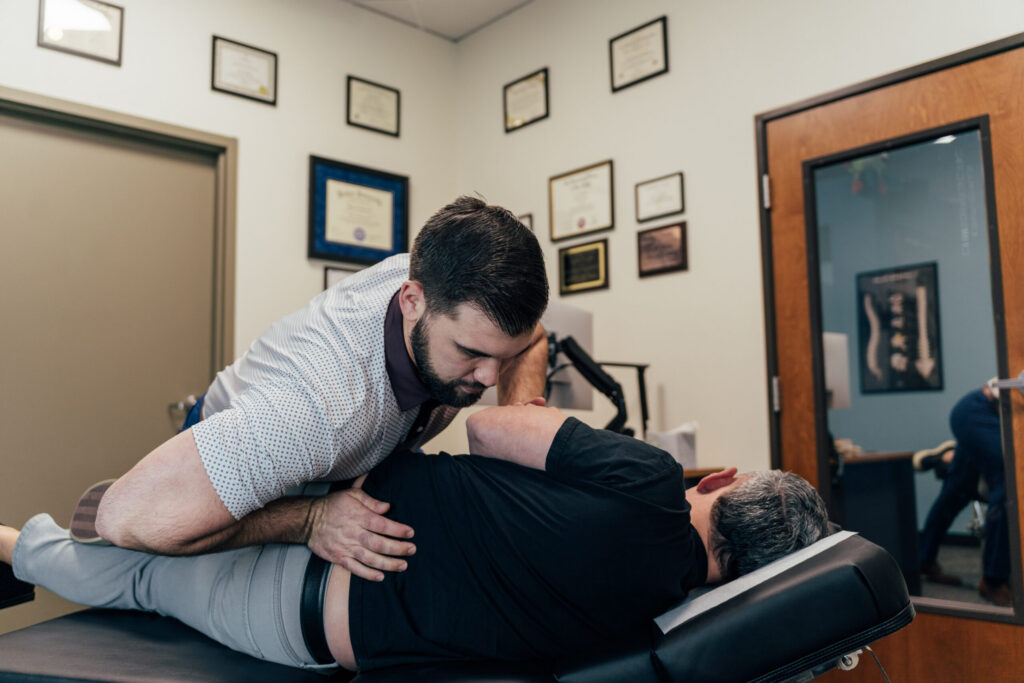

Hip pain when walking or sitting is one of those problems that sneaks up on you. Maybe it started as a dull ache after a long day on your feet, or perhaps you noticed stiffness when getting up from your chair in the morning. Whatever your experience, hip pain can seriously disrupt your daily routine — and it’s far more common than most people realize. Here in San Antonio, many patients come to Castle Hills Chiropractic frustrated and confused about why their hips hurt and what they can actually do about it. The good news is that most hip pain has identifiable causes, and there are real, non-invasive ways to find relief.
What is hip pain when walking or sitting?
Hip pain when walking or sitting refers to discomfort, stiffness, or achiness in or around the hip joint that worsens with movement or prolonged positioning. It can stem from the joint itself, surrounding muscles, nerves, or even the lower spine. Because the hip is a complex structure, pinpointing the source requires a careful evaluation — not just a guess.
What Causes Hip Pain When Walking or Sitting?
Hip pain doesn’t always mean something is wrong with the hip joint itself. In fact, a significant number of patients who come to see Dr. Brent Johnson at Castle Hills Chiropractic in San Antonio are surprised to learn their hip discomfort is connected to their lower back, pelvis, or surrounding soft tissue — not the hip socket at all. Understanding the range of possible causes helps frame the right approach to treatment.
One of the most common culprits is hip flexor tightness or strain. The hip flexors are a group of muscles that connect your lower spine to your thigh. If you spend long hours sitting at a desk — which is increasingly common for San Antonio professionals — these muscles can shorten and tighten over time. When you stand up and walk, those tight muscles pull unevenly, creating pain in the front of the hip or groin area.
Bursitis is another frequent cause. Bursae are small fluid-filled sacs that cushion the bones, tendons, and muscles near your joints. When the bursa around the hip becomes inflamed — often from repetitive movement or prolonged pressure — it creates a sharp or burning pain on the outside of the hip. This type of pain is typically worse when walking, climbing stairs, or lying on the affected side.
Osteoarthritis of the hip is especially prevalent in older adults in the San Antonio area. As the cartilage in the hip joint gradually wears down, bones begin to rub against each other. This creates stiffness, grinding sensations, and deep aching pain that often worsens with activity and improves with rest — at least in the early stages.
Sacroiliac (SI) joint dysfunction is a frequently overlooked source of hip-like pain. The SI joint connects the pelvis to the lower spine, and when it becomes misaligned or inflamed, it can produce pain that radiates into the hip, buttock, and even down the leg. Many patients describe it as deep hip pain, but the true source is slightly higher up.
Other causes include labral tears, piriformis syndrome, nerve impingement from the lumbar spine, and referred pain from tight glute muscles. Because so many structures overlap in this region of the body, accurate diagnosis is essential before any treatment begins.

Understanding the Hip: A Quick Anatomy Breakdown
The hip is a ball-and-socket joint — one of the most stable and mobile joints in the entire body. The ball (the head of the femur) fits into a cup-shaped socket in the pelvis called the acetabulum. This design allows you to move your leg forward, backward, sideways, and rotationally. It’s remarkable engineering, but it also means that a lot of muscles, tendons, ligaments, and nerves are working together in close proximity.
The hip is surrounded by several important muscle groups: the hip flexors in the front, the gluteal muscles in the back, the adductors along the inner thigh, and the abductors on the outer hip. When any of these muscles become imbalanced — too tight, too weak, or both — the joint itself begins to bear uneven loads. Over time, that imbalance creates the wear and inflammation that leads to pain.
The sciatic nerve also passes very close to the hip. When it becomes irritated — whether from a herniated disc in the lower spine or a tight piriformis muscle pressing against it — the resulting pain can feel almost identical to a hip problem. This is why Dr. Brent Johnson carefully evaluates both the spine and the hip during a patient’s assessment at Castle Hills Chiropractic. Treating the wrong area leads to frustration and delayed recovery.
Signs and Symptoms to Pay Attention To
Hip pain can present in many different ways depending on the underlying cause. Some people feel a sharp pinch deep inside the joint when they lift their leg or rotate it outward. Others experience a dull, persistent ache on the outer hip or in the groin. Still others notice that their hip pain is worst first thing in the morning or after sitting for an extended period — and then gradually loosens up as they move around.
Pain that radiates down the leg, especially past the knee, may indicate nerve involvement and should be evaluated promptly. Clicking, locking, or grinding sensations in the hip joint can suggest labral damage or cartilage wear. If you notice swelling around the joint, visible changes in how you walk, or significant pain at rest, those are important signals that something needs attention sooner rather than later.
It’s also worth noting where exactly you feel the discomfort. Pain on the outside of the hip often points to bursitis or IT band tightness. Groin pain frequently involves the hip joint itself or the hip flexors. Buttock pain may suggest SI joint issues or piriformis involvement. And pain that seems to shift around — sometimes in front, sometimes in back — is often related to functional imbalances across the pelvis and lumbar spine.
How Chiropractic Care Can Help Hip Pain
Chiropractic care takes a whole-body, non-invasive approach to hip pain — and that’s one of the reasons so many San Antonio residents seek it out as a first step before considering more aggressive interventions. Rather than masking symptoms with medication, chiropractic care focuses on identifying and addressing the underlying mechanical issues contributing to your pain.
At Castle Hills Chiropractic, Dr. Brent Johnson begins with a thorough evaluation of your posture, gait, spinal alignment, and hip mobility. This assessment helps distinguish between hip pain that originates within the joint itself and pain that’s referred from the lumbar spine, pelvis, or surrounding soft tissue — which, as mentioned, is very common.
Chiropractic adjustments to the lumbar spine and pelvis can help restore proper alignment and reduce the mechanical stress placed on the hip. When the spine and pelvis are aligned correctly, the hip joint is better positioned to distribute load evenly during movement. Research published in chiropractic and musculoskeletal journals suggests that spinal and pelvic manipulation can be effective in reducing hip-related pain, particularly when the source involves the SI joint or lumbar nerve roots.
Beyond adjustments, chiropractic care may also incorporate soft tissue therapy to address tight hip flexors, piriformis muscles, or gluteal tension. Rehabilitative guidance — including targeted stretches and movement recommendations — plays an important role in helping patients maintain the progress made during treatment. The goal isn’t just temporary relief. It’s equipping you with a better understanding of your body so you can protect your hips long-term.
Practical Tips for Managing Hip Pain Day to Day
While professional care is the most reliable path to recovery, there are meaningful steps you can take at home to support your healing and reduce the likelihood of flare-ups. These aren’t gimmicks — they’re straightforward adjustments that align with sound biomechanical principles.
First, pay attention to your sitting posture. Sitting with your legs crossed or with your weight shifted to one side creates asymmetrical pressure through the pelvis and hip joints. Try to sit with both feet flat on the floor, hips level, and a small curve maintained in your lower back. If your chair doesn’t support this position well, a lumbar support cushion can make a significant difference — especially if you work a desk job in San Antonio’s bustling downtown or suburban office corridors.
Second, avoid prolonged static positions. Sitting for more than 45 to 60 minutes without moving tightens the hip flexors and reduces circulation to the joint. Set a reminder to stand, walk briefly, or do a gentle hip stretch at regular intervals throughout your day. Movement is medicine for hip joints — it keeps the cartilage nourished and the surrounding muscles supple.
Third, consider the surface you’re sleeping on. Many people are surprised to learn that their hip pain is significantly worse after sleeping on a mattress that’s too soft or too firm. Side sleepers in particular may benefit from placing a pillow between the knees to keep the hips in a more neutral alignment overnight.

When to See a Chiropractor for Hip Pain
If your hip pain has been lingering for more than a week or two without improvement, that’s a reasonable point to seek a professional evaluation. Pain that persists through rest, wakes you up at night, or is affecting the way you walk deserves attention — not just a “wait and see” approach.
Chiropractic care is particularly well-suited for hip pain that is related to muscle imbalance, poor posture, spinal misalignment, SI joint dysfunction, or early-stage joint degeneration. It’s also an excellent option for patients who want to explore conservative, drug-free care before turning to injections or surgery.
However, there are situations where chiropractic care alone is not the appropriate first step. If you’ve experienced a fall or direct trauma to the hip, if you have significant swelling or bruising, if you’re unable to bear weight on the affected leg, or if you have a history of osteoporosis, you should see your primary care physician or an orthopedic specialist first to rule out fracture or serious structural damage. At Castle Hills Chiropractic, Dr. Brent Johnson is committed to appropriate referrals when the clinical situation calls for it — your safety always comes first.
Hip Pain Causes at a Glance
|
Cause |
Common Location of Pain |
Worse With |
Common in |
|---|---|---|---|
|
Hip Flexor Tightness |
Front of hip / groin |
Walking, standing up from a chair |
Desk workers, sedentary adults |
|
Trochanteric Bursitis |
Outer hip |
Walking, lying on side, stairs |
Active adults, runners |
|
Osteoarthritis |
Deep in joint, groin, or thigh |
Activity, morning stiffness |
Adults 50+ |
|
SI Joint Dysfunction |
Lower back, buttock, hip area |
Sitting, rising from seated position |
All ages, post-pregnancy |
|
Piriformis Syndrome |
Deep buttock, sometimes radiating down leg |
Sitting, climbing stairs |
Runners, cyclists |
|
Lumbar Nerve Referral |
Hip, buttock, sometimes into leg |
Certain movements, prolonged sitting |
All ages |
Myths vs. Facts About Hip Pain
Myth: Hip pain only happens to older people.
Fact: While osteoarthritis is more common with age, hip pain from muscle imbalances, bursitis, SI joint dysfunction, and nerve referral affects people of all ages — including young adults and even teenagers who are physically active. At Castle Hills Chiropractic, Dr. Brent Johnson sees hip pain across a wide range of age groups throughout the San Antonio area.
Myth: If you can still walk, your hip pain isn’t serious enough to treat.
Fact: The ability to walk doesn’t indicate that a problem is minor. Many underlying causes of hip pain worsen gradually if left unaddressed. Early intervention typically leads to better outcomes and a shorter recovery timeline than waiting until the pain becomes unbearable.
Myth: Hip pain always means you need surgery or injections.
Fact: The majority of hip pain cases respond well to conservative care — including chiropractic adjustments, soft tissue therapy, and rehabilitative exercises. Evidence-based guidelines from organizations like the American College of Physicians generally recommend exhausting non-invasive treatment options before escalating to more aggressive interventions.
Myth: Stretching alone will fix hip pain.
Fact: Stretching can certainly help, especially for tight hip flexors or piriformis muscles. But if the underlying cause is spinal misalignment, SI joint dysfunction, or a structural issue within the hip, stretching alone won’t resolve the root problem. A comprehensive evaluation helps identify exactly what your hip needs.
Myth: Rest is always the best remedy for hip pain.
Fact: While rest can be appropriate immediately after an injury, prolonged inactivity often makes hip pain worse. The surrounding muscles weaken, joints stiffen, and patterns of compensatory movement develop. Controlled, appropriate movement — guided by a qualified provider — is usually a key component of recovery.
Final Thoughts from Castle Hills Chiropractic
Hip pain when walking or sitting doesn’t have to be something you simply accept as part of your life. Whether you’ve been dealing with it for a few weeks or several months, there’s real value in getting a thorough, professional assessment to understand what’s actually driving your discomfort.
Here at Castle Hills Chiropractic, serving both the Castle Hills community and the greater San Antonio area, Dr. Brent Johnson takes the time to listen carefully to your history, examine your movement patterns, and develop a care plan that makes sense for your individual situation. The approach is always conservative, respectful, and rooted in what the evidence says works.
If you’ve been searching for hip pain relief in San Antonio and want to explore a non-invasive path forward, we encourage you to take that first step. Understanding your body better is always empowering — and it’s the foundation of lasting relief.
Frequently Asked Questions
Can a chiropractor help with hip pain?
Yes, chiropractic care can be an effective option for many types of hip pain — particularly those related to spinal misalignment, SI joint dysfunction, muscle imbalances, and nerve referral from the lumbar spine. A proper evaluation helps determine whether chiropractic care is the right fit for your specific situation.
How do I know if my hip pain is from my back or my hip?
This is a common and excellent question. Pain originating from the lumbar spine or SI joint often presents in a way that feels like hip pain but may also include back stiffness, buttock pain, or symptoms that travel down the leg. A thorough clinical exam — including assessment of both the spine and the hip — is the most reliable way to differentiate the two sources.
Is hip pain when sitting normal?
Mild stiffness after prolonged sitting can be common, especially if your posture isn’t well-supported. However, consistent or worsening pain when seated is not something to ignore. It often points to hip flexor tightness, SI joint irritation, or early joint changes that benefit from professional evaluation.
What’s the difference between hip bursitis and hip arthritis?
Hip bursitis involves inflammation of the fluid-filled sacs (bursae) that cushion the hip joint, and it typically produces pain on the outer hip that worsens with direct pressure or activity. Hip arthritis involves degeneration of the cartilage within the joint itself, causing deep, aching pain that often accompanies stiffness and a gradual loss of mobility. Both conditions can be evaluated and addressed through conservative care.
How long does hip pain typically last?
Duration varies significantly depending on the cause, severity, and how early care is initiated. Mild muscle-related hip pain may resolve within a few weeks with appropriate care. Chronic conditions like osteoarthritis or recurring SI joint dysfunction may require ongoing management. Early intervention generally leads to faster and more complete recovery.
Can poor posture cause hip pain?
Absolutely. Poor posture — especially prolonged forward-leaning seated posture — places uneven stress on the pelvis and hip joints. Over time, this contributes to muscle imbalances and joint strain that manifest as hip pain. Addressing posture is one of the foundational elements of chiropractic care for hip pain in San Antonio patients.
TL;DR Summary
-
Hip pain when walking or sitting can stem from many sources, including hip flexor tightness, bursitis, osteoarthritis, SI joint dysfunction, and lumbar nerve referral — not always the hip joint itself.
-
Accurate diagnosis is essential because different causes require different treatment approaches; treating the wrong structure delays recovery.
-
Chiropractic care offers a non-invasive, drug-free option for addressing many common causes of hip pain through spinal and pelvic adjustments, soft tissue therapy, and rehabilitative guidance.
-
Simple day-to-day habits — including correcting seated posture, avoiding prolonged stillness, and sleeping with proper hip alignment — can meaningfully support your recovery.
-
If your hip pain has persisted for more than a week or two, is affecting your gait, or is disrupting your sleep, it’s worth getting a professional evaluation at Castle Hills Chiropractic in San Antonio.