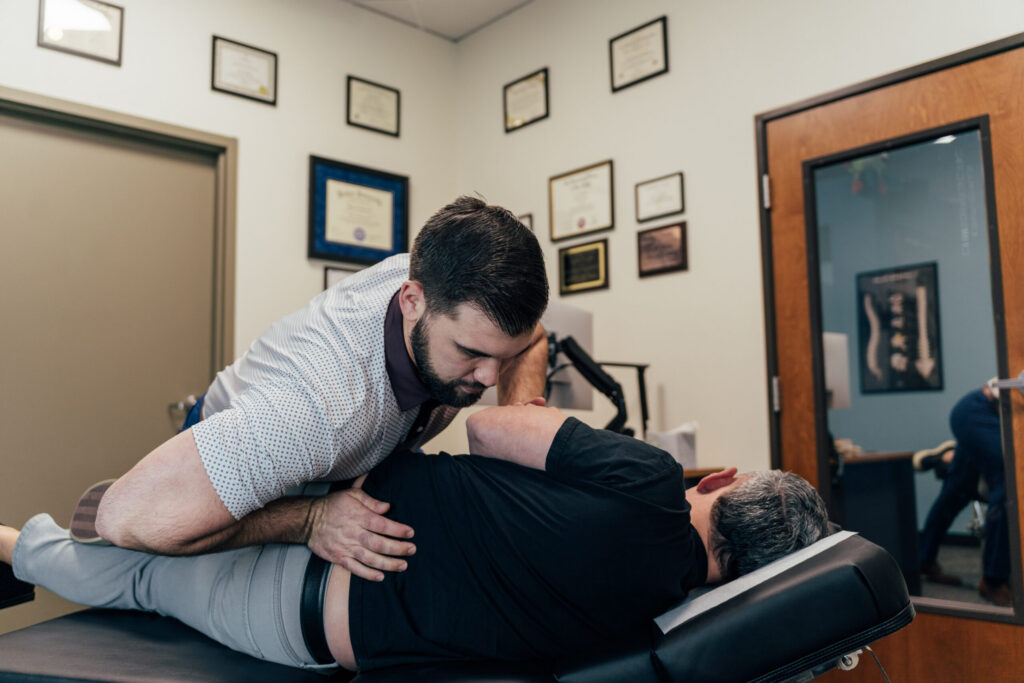
As a local chiropractor, I want to emphasize the crucial role posture plays in the treatment of back pain—something that is often overlooked. Many people don’t realize that poor posture can place unnecessary strain on your spine and the surrounding muscles, which can exacerbate discomfort. By recognizing the link between your posture and pain levels, you can take significant steps toward your recovery.
It’s important to identify common postural mistakes you may be making in your daily life. For example, slouching while sitting or standing can lead to misalignments in your spine. Correcting these habits can lead to better outcomes and relief from pain.
Let’s take some time to explore this important relationship between posture and back pain. Together, we can work on strategies to improve your posture, which can enhance your overall healing process and help you feel your best.
The Anatomy of Posture and Its Role in Spinal Health
As your local chiropractor, I want to emphasize that posture is more than just how you sit or stand; it’s a crucial aspect of your spinal health. Maintaining good posture helps align your spine correctly, which can significantly reduce strain on your muscles and ligaments.
When your spine is aligned, it can support your body’s weight more effectively, and this alignment also promotes the optimal function of your nervous system.
Your spine is made up of vertebrae, discs, and muscles that work in harmony to keep you upright. However, when you slouch or lean forward, you disrupt this delicate balance, putting unnecessary pressure on your spine. This misalignment can lead to discomfort and, over time, may develop into more serious issues.
By understanding the importance of good posture, you can take proactive steps to protect your spinal health. Regular chiropractic adjustments, along with being mindful of your posture, can help restore and maintain this balance, allowing your body to function at its best.
Common Postural Mistakes That Contribute to Back Pain
As a local chiropractor dedicated to helping you achieve optimal health, I want to shed some light on common postural mistakes that many people make, often without realizing the impact they’ve on their back health.
One of the most prevalent issues is slouching while sitting. This habit places significant strain on your spine, leading to discomfort and pain over time. If you catch yourself hunching over your desk or phone, it’s crucial to make adjustments to your seating posture.
Another mistake that many individuals make is crossing their legs while seated. This position can create imbalances in your hips and lower back, potentially leading to further complications.
Additionally, standing for extended periods without shifting your weight can contribute to discomfort as well. When you find yourself in a standing position, be mindful of keeping your shoulders back and aligned with your hips to maintain a neutral spine.
Improper lifting techniques are another area of concern; bending at the waist instead of using your knees can result in serious strain on your back. I encourage you to adopt a proper lifting posture by bending at the knees and keeping the load close to your body.
Finally, don’t overlook the importance of supportive footwear. The right shoes can play a significant role in maintaining good posture and reducing strain on your back.
By becoming aware of these common postural mistakes, you can take proactive steps to improve your posture, alleviate discomfort, and enhance your overall well-being.
The Impact of Ergonomics on Posture and Pain Relief
As a local chiropractor, I want to share how prioritizing ergonomics in your workspace can significantly enhance your posture and alleviate pain. When you create an ergonomic environment, you’re not just making your space more comfortable; you’re actively reducing strain on your body. This involves adjusting your chair, desk, and computer setup to better suit your individual needs.
For example, your chair should offer excellent lumbar support, and your computer screen should be positioned at eye level. This proper alignment is essential for keeping your spine in a neutral position, which can help minimize discomfort and ward off long-term pain.
In addition to these adjustments, incorporating ergonomic tools like keyboard trays and footrests can greatly improve your posture. These modifications allow you to maintain better body mechanics, thereby decreasing the likelihood of muscle strain.
With a thoughtfully designed workspace, you may find that you experience less fatigue and discomfort, ultimately enhancing your productivity throughout the day.
Remember, prioritizing ergonomics isn’t just about comfort; it’s a vital part of pain relief and overall well-being. By making small changes to your environment, you can significantly improve how you feel, making your daily tasks much easier and more enjoyable.
As your chiropractor, I encourage you to take these steps for a healthier, pain-free life.
Techniques for Improving Posture in Daily Life
As a local chiropractor, I want to share some essential techniques to help you enhance your posture and overall well-being. Creating an ergonomic workspace is just the starting point; maintaining good posture throughout your daily activities is crucial.
Begin by being aware of how you sit, stand, and move. When seated, ensure your feet are flat on the floor and your back is aligned against the chair. If needed, use a cushion to support the natural curve of your lower back.
When you’re standing, aim to distribute your weight evenly across both feet and avoid locking your knees. It’s important to break up long periods of sitting or standing—try to incorporate regular breaks into your routine. Stand up, stretch, or take a brief walk every hour to relieve any built-up tension. Simple movements like shoulder rolls and chest openers can make a significant difference in how you feel.
When using your phone, remember to raise it to eye level rather than bending your neck down. This small adjustment can help prevent strain.
Additionally, engaging in core-strengthening exercises is vital, as a strong core supports good posture and alleviates back strain over time.
As a local chiropractor, I want to share how integrating posture correction into your back pain treatment plan can significantly boost your recovery and overall health.
By focusing on improving your posture, you can reduce the strain on your spine and the surrounding muscles, leading to better comfort and function.
Let’s start by identifying habits that may contribute to poor posture, such as slouching when sitting or standing.
Many of us are unaware of how these everyday habits can impact our spinal health.
Incorporating specific exercises that strengthen your core and back muscles is essential, as a strong foundation supports proper alignment.
Activities like yoga and Pilates are fantastic for enhancing flexibility and raising your awareness of posture.
I highly recommend working with a physical therapist or a chiropractor who can customize exercises to fit your unique needs and monitor your progress.
Additionally, setting reminders throughout the day to check your posture—especially during long periods of sitting or certain activities—can be incredibly helpful.
Embracing these changes can pave the way for a healthier spine and a pain-free life!
Conclusion
As a local chiropractor, I want to emphasize the crucial role that posture plays in managing back pain. Many people may not realize that poor posture can significantly strain your spine and the muscles surrounding it. By identifying and correcting common postural errors, you can begin to alleviate discomfort and improve your overall well-being.
Incorporating ergonomic adjustments in your workspace and daily activities is vital. Simple changes, such as adjusting your chair height or using supportive cushions, can make a big difference. Additionally, practicing techniques to improve your posture, like mindful sitting and standing, can lead to substantial pain relief.
Integrating these posture-enhancing strategies into your treatment plan can not only speed up your recovery but also promote long-term spinal health. As you prioritize good posture, you’ll likely notice an improvement in how you feel and your ability to move freely. Remember, taking care of your posture is a natural way to support your body’s healing process.
Dr. Brent Johnson is a renowned chiropractor who provides an expert level of skill and passion to deliver the best care in San Antonio. He is highly trained and has significant experience in the field. He is well known for his masterful skill of adjusting the spine.
His primary technique scientifically applies a comprehensive solution to your health and well-being. This is accomplished by first discovering the underlying cause of your condition; and more importantly, discovering how to prevent this and other conditions from occurring in the future.
Spinal disc injuries cause back pain, leg burning, and numbness more often than you think. Learn the causes, symptoms, and types — and how to start feeling better.
The total staff is courteous and focus on helping you receive your diagnosed treatment. The treatments have helped my lower back in a short period of time.
Very satisfying experience .
An absolute 5-star experience! The doctor and staff here are incredible, friendly, and deeply knowledgeable. They completely knocked out my pain and helped resolve my drop foot, which I didn't think was possible. I am so thankful for this place and highly recommend them to anyone looking for real relief!
Excellent Dr., Staff and place. I was welcomed with a Candid Warmth with a great smile. Dr. Johnson took the necessary steps to examine my back problems and explained everything in details. Staff gave me the tour and showed me the steps to follow during my visit. If I can give 10 Stars I would have.
I'm very satisfied with my experience at Castle Hills Chiropractor. Before treatment, I used to wake up frequently with lower back pain—it was affecting my sleep and daily life. Since starting care with Dr. Johnson, I've noticed a significant improvement. I now rarely wake up with that pain, which has made a real difference in my quality of life.
Dr. Johnson is very professional and knowledgeable. He takes time to explain what's going on and answer any questions I have. The entire staff is incredibly friendly and welcoming, making each visit enjoyable. I hardly ever have to wait—they're efficient and respectful of your time.
I'd definitely recommend Castle Hills Chiropractor to anyone looking for quality chiropractic care.
Awesome chiropractic experience. Everything was explained in detail, and Dr made me feel like a new man. Staff is extremely friendly and accommodating.
This place is honestly Top Tier. Whether you've been to a chiropractor before, or have never experienced the joys of having a healthy spine, i could not recommend castle hills chiropractic more highly than I already do. Extremely professional, very friendly, flexible with scheduling, and they offer amazing deals during customer appreciation. Personally, I have experienced subpar chiropractic work in the past, and I was skeptical to go back into this type of care, but Dr Johnson has been absolutely phenomenal, and his team matches that high expectation of care. If I could give them seven stars, I could!
I cannot say enough wonderful things about Castle Hills Chiropractic! The service is absolutely superb, and Dr. Johnson and the entire staff are truly amazing. Everyone is friendly, attentive, professional, and genuinely cares about making each patient feel comfortable and welcomed.
Every visit is smooth and efficient, I’m always seen promptly and able to get in and out without feeling rushed. Most importantly, I leave feeling amazing every single time! Dr. Johnson takes the time to listen, addresses my concerns, and provides exceptional care.
If you’re looking for a chiropractic team that truly cares about its patients and consistently delivers an outstanding experience, I highly recommend Castle Hills Chiropractic. They deserve every one of these five stars!
-Marilyn
I have several pinched nerves in my spine and the treatment I’m getting from the Castle Hills Chiropractor is helping me function like before, THANK YOU‼️🙏🥰
Laura Ramirez
My experience at Castle Hills Chiropractic has been nothing short of exceptional. I originally came in after years of neck and upper back discomfort. The pain had begun affecting my mobility, making it difficult to turn my head and causing frequent headaches. It even got to the point where picking up my 3 year old was becoming a challenge.
After seeing the practice's outstanding Google reviews, I decided to give them a call. From the very first interaction, Nicole was welcoming, compassionate, and understanding of my situation. She made the onboarding process seamless. When I arrived for my appointment, both Nicole and Claire made me feel comfortable and well cared for. Claire took the time to walk me through the preparation process before I met with Dr. Johnson.
During my initial consultation, Dr. Johnson conducted a thorough evaluation and clearly explained his findings and treatment approach. He was transparent about what he could do to help and developed a realistic game plan, so I knew exactly what to expect. His optimism, professionalism, and positive attitude immediately put me at ease.
Now, a little over a month into treatment, the level of care and consistency from Dr. Johnson, Nicole, and Claire has remained outstanding. I've experienced noticeable improvements in both my mobility and overall quality of life. My headaches have become less frequent, and I'm able to pick up and play with my toddler without the struggles I was experiencing before. That alone is priceless.
I look forward to continuing my treatment journey with Dr. Johnson and highly recommend Castle Hills Chiropractic to anyone seeking compassionate, professional, and effective chiropractic care.
Dr. Johnson helped me detect all injuries that occurred from my vehicle accident and within days of treatments, I begin to feel relief.
Castle Hill Chiropractor is equipped with new state of the art facilities to assist with non invasive treatments for all back and spine issues and injuries. They helped treat bulging discs, herniated discs and any degenerated discs in the spine with their activator adjustments and flexor distraction decompression techniques. They have an amazing staff as well and they are always available to answer any questions. Dr. Johnson, Nicole and Claire are an amazing team! Dr. Johnson listens to all my questions and is ready to put you first. Castle Hills Chiropractic any day 100%. This is a clinic and doctor that will fix your spine issues and more and even make you feel like family then this is where you need to go.
Thanks again.
Dr. Johnson and his team were amazing! My initial appointment went smoothly and was very thorough. They made me feel completely comfortable right away. Dr. Johnson worked his magic and had me feeling better before I even walked out the door. I’m looking forward to my upcoming visits and getting healthier with their help. I would highly recommend Dr. Johnson and his team to anyone needing chiropractic care!
⭐⭐⭐⭐⭐
I can’t recommend Castle Hills Chiropractic enough. After being involved in three car accidents—one on November 25, 2025, and two more on May 30 and June 1—I was dealing with constant back pain, herniated discs, severe stiffness, and discomfort that made everyday life difficult.
Since starting treatment with Dr. Johnson, I’ve noticed an incredible improvement. My pain has decreased, my mobility has improved, and I finally feel like I’m getting my life back. Every visit has been professional, welcoming, and focused on helping me recover the right way.
Dr. Johnson is an outstanding chiropractor who truly cares about his patients. He takes the time to listen, explains the treatment process, and is committed to helping you heal. His knowledge, attention to detail, and dedication have made a huge difference in my recovery.
I also want to give a special thank you to Nicole and Claire. From the moment I walked in, they made me feel welcomed and cared for. They’re always friendly, professional, and genuinely compassionate. They also helped guide me through my decompression table treatments, making sure I was comfortable every step of the way. Their kindness and positive attitudes make every visit a great experience.
If you’re looking for a chiropractor after an accident or need help with chronic back pain, I highly recommend Castle Hills Chiropractic. The entire team truly cares about their patients, and because of Dr. Johnson, Nicole, and Claire, I feel like I’ve gotten my life back. Thank you all for helping me heal and improving my quality of life.
⭐⭐⭐⭐⭐
I can’t recommend Castle Hills Chiropractic enough. After being involved in three car accidents—one on November 25, 2025, and two more on May 30 and June 1—I was dealing with constant back pain, herniated discs, severe stiffness, and discomfort that made everyday life difficult. Even before the accidents, I struggled with back issues, but everything became much worse afterward.
Since starting treatment with Dr. Johnson, I’ve noticed an incredible improvement. My pain has decreased, my mobility has improved, and I finally feel like I’m getting my life back. Every visit has been professional, welcoming, and focused on helping me recover the right way.
Dr. Johnson is an outstanding chiropractor who truly cares about his patients. He takes the time to listen, explains the treatment process, and is committed to helping you heal. His knowledge, attention to detail, and dedication have made a huge difference in my recovery.
I also want to give a special thank you to Nicole and Claire. From the moment I walked in, they made me feel welcomed and cared for. They’re always friendly, professional, and genuinely compassionate. They also helped guide me through my decompression table treatments, making sure I was comfortable every step of the way. Their kindness and positive attitudes make every visit a great experience.
If you’re looking for a chiropractor after an accident or need help with chronic back pain, I highly recommend Castle Hills Chiropractic. The entire team truly cares about their patients, and because of Dr. Johnson, Nicole, and Claire, I feel like I’ve gotten my life back. Thank you all for helping me heal and improving my quality of life.
I came in with low back pain as a result of an injury from working out. When the injury initially occurred, I took a few weeks off of working out and it seemed to get better but then one wrong move at work and it was bad again. My first visit Dr. Johnson did X-rays and walked me through the treatments that would work best for my diagnosis. He explained everything in great detail so I knew everything to expect with my treatment plan going forward. After just 4 sessions my low back pain is significantly better as a whole!!
At the time I was attending another chiropractors office and for years I always had success. When I learned about Castle Hills Chiropratic being closer to me. I wanted to see if that would be a good fit for convience and comfort. Goes without saying that Dr. Brent and his staff are not just people that corral a patient through. They give a personal feeling when you arrive. From the treatments till the completion. They are there offering great advice and treatments to give every patient a better life through adjustments. I feel better after visiting them for the health care I was given than I was at the P.T. I was sent to after a car accident. Dr. Johnson gave me more feeling back in to my legs than the therapist. I highly recommend visiting them to see if they can fit your needs.
Dr. Johnson, Nicole and Claire are an amazing team! Dr. Johnson listens to all your needs and is ready to put you first. My husband and I will recommend Castle Hills Chiropractic any day 100%. If you want a clinic and doctor that will fix your spine issues and more and even make you feel like family then this is where you need to be.
Dr. Johnson helped me detect all injuries that occurred from my vehicle accident and within days of treatments, I begin to feel relief.
Castle Hill Chiropractor is equipped with new state of the art facilities to assist with non invasive treatments for all back and spine issues and injuries. They helped treat bulging discs, herniated discs and any degenerated discs in the spine with their activator adjustments and flexor distraction decompression techniques. They have an amazing staff as well and they are always available to answer any questions. Thanks again.
I was having a lot of neck problems that I felt were leading to neurological symptoms. Dr. Johnson was able to identify the issue and within just a couple visits I’ve had seen improvement. Can’t wait to see where I am at the end of my personalized protocol.
very amazing people ! always felt so welcomed here! Claire and nicole are always on top of everything! and lastly Dr.Johnson was always so sweet and helped me feel so much better after my car accident!! I highly recommend it!
Dr. Johnson and his staff are amazing at what they do. I have seen and felt an improvement in my posture, pain, and sleep! I was apprehensive about seeing a chiropractor, but after my first meeting w Dr. J I was sure that he could help alleviate my hip and back pain I was having. I highly recommend! 10/10.
Top notch customer service. Dr. Johnson and his team were great. Dr. Johnson took his time to explain my current health situation in a manner that was easy to understand. My treatment was very good and I left feeling and walking better.
Dr. Johnson is the best in San Antonio! Honestly staff is amazing always good vibes all around! I honestly forgot about my sciatica and that bulging disk is HEALED!!!
This is how a medical office should be run (giving grace to the fact that not all medical practices are predictable)!! The staff is efficient but still care enough to know each patient. I was skeptical and nervous about adjustments and Dr. Johnson took the time to explain everything and made sure that I was comfortable with anything that we were doing. I have never been kept waiting and they are flexible and kind.
I came into Castle Hills Chiropractic two months ago, because of an issue with dizziness and vomiting. I learned after being hospitalized I had a severe vertigo. After seeing Dr Johnson and setting up a plan to work on fixing the issue. The treatments I started all my issues improved. I'm glad I chose to come here. The staff is amazing always friendly and helpful they are the best keep up the good work.
I like this place because they are helping me heal, and the staff is very attentive. They have a very professional team. In addition, the people are very well-prepared to care for you—truly the best.
After 3 visits I felt so good I went home and repotted all my plants!! The doctor and staff are amazing and I highly recommend this office to anyone experiencing hip pain!
Very thorough and adjusting my treatment to my unique situation is exactly what I want in a treatment professional. Best practitioner in SA for sure and the staff are equally as helpful!
If you’re dealing with the aftermath of an accident, do yourself a favor and come here. The staff is amazing and they’ve been so supportive throughout my entire treatment. They are attentive, kind, and really know their stuff. I went from constant discomfort to feeling great, and I felt supported every step of the way. Dr Johnson is the GOAT! Truly a five-star experience.
Just finished up with my last appointment, for my first ever chiropractor care, employees made it super easy to work with my schedule, and always warm/welcoming each visit. Machines also worked wonders.
My experience with this clinic has been so amazing! I deal with scoliosis and all the pain that’s associated with it. Chiropractic care is one of the only things that’s given me relief. They have been so kind to me here and I recommend them to everyone I know.
Now you're working with professionals !<br>I came in with pain level of 10. In less than a months time, I'm at 4. Thanks to you and your staff, I'm getting back to doing the things I enjoy. All the helpful tips on posture, diet and exercise have paid off. With the picture wall full of satisfied costumers smiles you would think this is a dental office. 😀<br>Keep up the great work .<br>James
My visit was a great experience. My concerns and questions were answered . I was helped when needed help and very patient with me .<br>I received a call to check up on my discomfort due to my injury .<br>I was sent good informative tools to help my progress .Very kind and professional. Highly recommended.
I’ve had an amazing experience at this chiropractor’s office. The entire team is welcoming, attentive, and truly committed to great customer service. They take the time to listen, explain everything clearly, and make sure I’m comfortable every step of the way. Most importantly, I’ve experienced real pain relief and noticeable improvement. I’m grateful for their care and highly recommend them
Dr Brent Johnson is one of the most personable and caring people and he treats each of us individually and precisely with the least amount of pain. I just know he will get me on my horse again soon. He really listens and gets to the source of the pain, right away
Receptionist was really, really nice and sweet. Doctor was very thorough and explained everything to us.So we could understand great doctor great service.
Had my first visit for back pain and tingling, and it was a great experience. Dr. Johnson was knowledgeable and took the time to explain everything. The office is modern, clean, and very welcoming. Highly recommend!
I had a great experience at Castle Hills Chiropractic! Dr. Johnson was wonderful—he took time to explain everything clearly and made me feel at ease. The staff, Nicole and Claire were friendly and welcoming from the moment I walked in. The office is clean, modern, and well set up, and having digital X-rays made the process so efficient. I highly recommend them and I look forward to continuing my treatment with them.~
I cant recommend this place enough. I came in almost in tears from pain stumbling on crutches barely able to move or stand. They were kind, helpfull, courteous, non-judgemental and all around wonderful and amazing people! Ive been seeing them for about 8 weeks and im now able to go back to work and use a cane just for 'incase' as I continue to heal. They have helped me soooo much I cannot thank them enough!
My experience has been exceptional from the first phone call back I received from Dr. Johnson to when I first walked in and was greeted by Claire :) The most friendly, kind and compassionate care I have ever received from everyone at this chiropractic care. I have recommended this practice to every person I know. I greatly appreciate y’all being so flexible and patient with my schedule.<br>Thank you so much for listening to my concerns and helping me with my neck and back issues.
I cannot say enough wonderful things about Dr. Johnson and the entire team here. I came in yesterday not feeling my best — definitely not my finest moment — and they took such incredible care of me from the moment I walked in.<br><br>Claire and the front office staff went above and beyond to make sure I was comfortable, and Dr. Johnson tailored my adjustment specifically to how I was feeling that day so I could get real relief. I left feeling so much better than when I came in. This is what truly exceptional patient care looks like. They don’t just treat your spine — they treat YOU as a person. I am so grateful for this team and would recommend them to absolutely anyone. Five stars isn’t enough!
Castle Hills Chiropractic is a business that I'm really thankful for. Dealing with sciatica for almost a whole year, I appreciate Dr. Johnson and his staff for everything that they had to offer with treatment. They are welcoming and very friendly every time. Every session was comfortable and at ease, I can appreciate that.
My experience with this practice was exceptional from start to finish. The administrative staff is professional and welcoming, and Dr. Johnsondemonstrated a high level of clinical expertise. Despite my initial apprehension regarding my first adjustment, the team ensured I felt completely comfortable throughout the process. I highly recommend their services to anyone seeking quality chiropractic care. Book your consultation today!
Dr. Johnson and staff are very friendly, helpful and very knowledgeable. With just a few visits ive had alot more progress and less pain than I have with other chiropractors.
Friendliest staff. Dr. Johnson is such a light. Very attentive to your needs and answers all your questions. I'm so glad I found them, I'm a very skeptical person when it comes to pain relief on my back, I suffer from sciatic pain, and arthritis on my neck, and I've been to quite a few chiropractors, massages even to the point of injections. He offers a cervical decompression and lumbar decompression- I HIGHLY RECOMMEND!<br>I can honestly say with weekly visits, I'm starting to feel normal. Dr. Brent Johnson is so humble, and very gentle and truly cares about your overall health. Very reasonable prices plus price is not an option if I'm pain free!
If you want a great chiropractic experience see Dr Brent Johnson at Castle Hills Chiropractic. Erin and Claire are great too. Always friendly and helpful!
I have been a patient of Dr.Johnson for a year, my back issues have improved significantly. Erin is amazing and I would have to say the best part about this practice besides their amazing personality is how fast I am in and out of the office but still getting the best care. Dr. Johnson and Erin keep up the amazing work! I am blessed to have found Castle Hills Chiropractic!!