If you’ve ever experienced sciatica, you know it’s not just a minor ache. It’s that sharp, burning, sometimes electric pain that shoots from your lower back down through your buttock and into your leg — and it can stop you in your tracks. Many people here in Castle Hills, TX come through our doors at Castle Hills Chiropractic frustrated, exhausted, and wondering if they’ll ever feel normal again. The good news is that you don’t have to choose between different types of conservative care. In fact, combining chiropractic and physical therapy for sciatica is one of the most effective, well-rounded approaches available today.
What is sciatica? Sciatica is not a diagnosis in itself — it’s a symptom. It describes pain that travels along the path of the sciatic nerve, which runs from your lower back through your hips and buttocks and down each leg. It typically affects one side of the body and can range from a mild ache to severe, debilitating discomfort.
- What Causes Sciatica?
- Recognizing the Signs and Symptoms
- How Chiropractic Care Addresses Sciatica
- The Role of Physical Therapy in Sciatica Recovery
- Why a Combined Approach Works Best
- Practical Tips for Managing Sciatica Day to Day
- When to See a Chiropractor for Sciatica
- Myths vs. Facts About Sciatica
What Causes Sciatica?
Understanding where sciatica comes from is the first step to addressing it. The sciatic nerve is the longest nerve in the human body, and when it becomes compressed or irritated, the resulting pain can be intense. There are several common reasons this compression can occur.
One of the most frequent culprits is a herniated or bulging disc in the lumbar spine. The discs between your vertebrae act as cushions, and when one bulges or ruptures, it can press directly on the sciatic nerve roots. Another common cause is lumbar spinal stenosis — a narrowing of the spinal canal that creates pressure on the nerves passing through it. This tends to affect older adults more frequently.
Piriformis syndrome is another cause that’s often overlooked. The piriformis muscle sits deep in the buttock, and when it tightens or spasms, it can irritate or compress the sciatic nerve that runs nearby or, in some people, directly through the muscle. Poor posture, prolonged sitting, muscle imbalances, and even pregnancy can all contribute to sciatic nerve irritation. Here in Castle Hills, TX, we frequently see patients whose sciatica has developed gradually from sedentary work habits or repetitive physical strain.
Recognizing the Signs and Symptoms
Sciatica has a pretty recognizable pattern, but it can present differently from person to person. The hallmark symptom is pain that radiates from the lower back or buttock down into one leg — sometimes all the way to the foot. It often follows a specific path that corresponds to where the sciatic nerve travels.
Beyond the classic radiating pain, many people also experience numbness or tingling in the leg or foot. Some describe it as a pins-and-needles sensation, while others feel muscle weakness in the affected leg. The pain itself can feel sharp, burning, shooting, or like a jolt of electricity. It may be constant or come and go, and certain activities like sitting for long periods, bending forward, or coughing can intensify it.
At Castle Hills Chiropractic, Dr. Brent Johnson takes the time to listen carefully to how a patient describes their pain. Pinpointing the exact nature, location, and pattern of symptoms is crucial to identifying the underlying cause and creating the most effective care plan.
How Chiropractic Care Addresses Sciatica
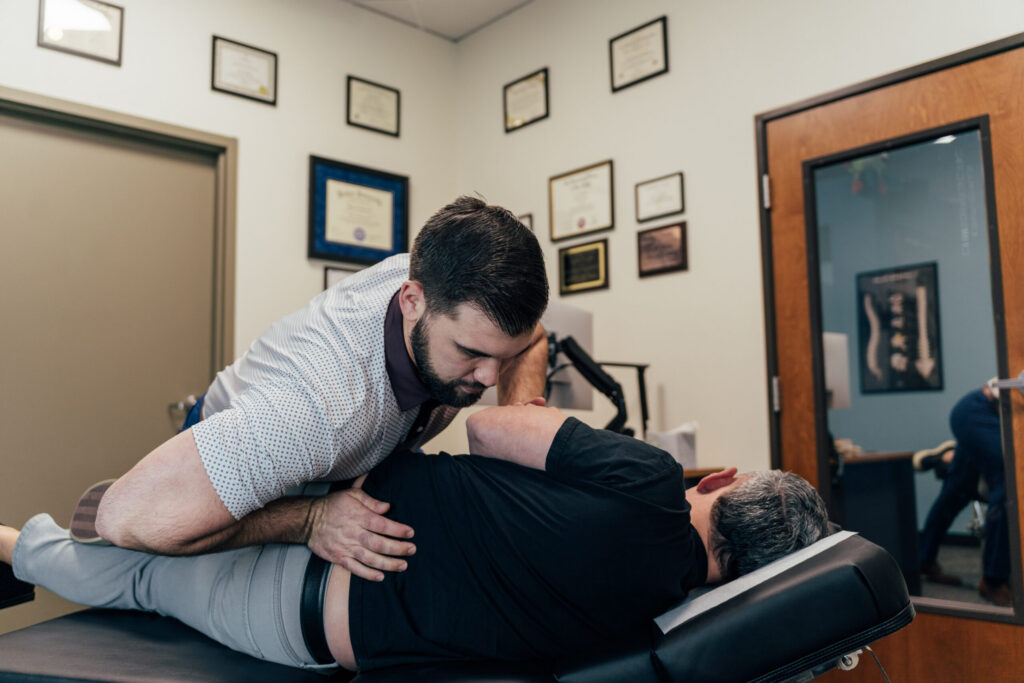
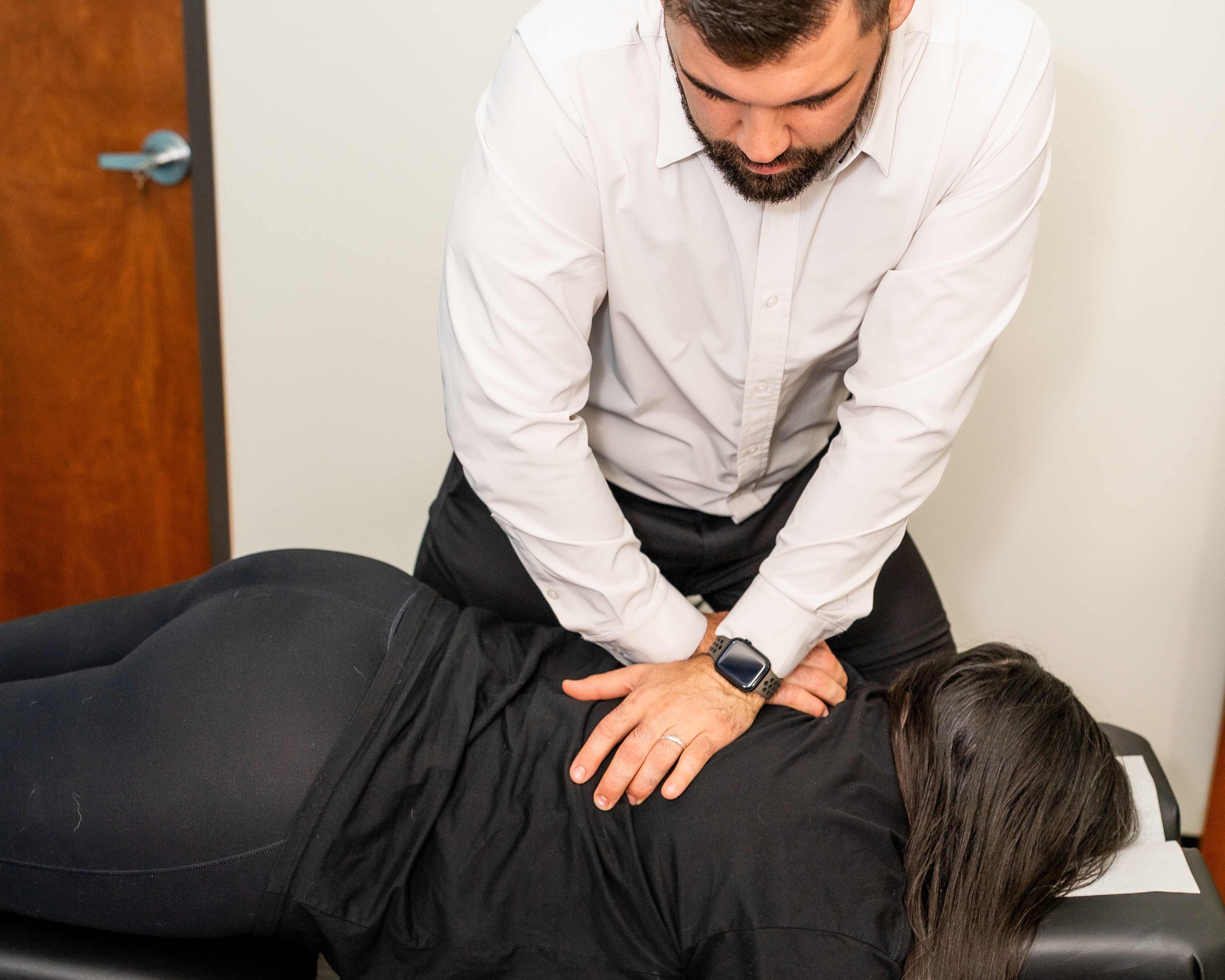
Chiropractic care for sciatica focuses on restoring proper alignment to the spine and pelvis, reducing pressure on the irritated nerve, and improving overall spinal function. It’s a non-invasive, drug-free approach that aims to address the root cause of the problem — not just mask the pain.
Spinal manipulation, often called an adjustment, is one of the primary tools in chiropractic care. When the vertebrae in the lumbar spine are misaligned or restricted in their movement, it can contribute to disc pressure and nerve irritation. A precise chiropractic adjustment helps restore proper joint motion, which in turn may relieve some of the compression on the sciatic nerve. Research suggests that spinal manipulation can be helpful in reducing sciatica-related pain and improving function in appropriate candidates.
Beyond spinal adjustments, Dr. Brent Johnson also addresses the surrounding structures. Soft tissue work, flexion-distraction technique, and targeted therapies can help reduce muscle tension and inflammation in the lower back and gluteal region. Flexion-distraction in particular is a gentle, low-force technique that creates negative pressure within the disc, which may help draw a herniated disc back into position and reduce nerve compression.
Chiropractic care also emphasizes thorough assessment. Before any treatment begins at Castle Hills Chiropractic, a proper evaluation is conducted to understand the full picture — including posture, gait, spinal alignment, and neurological signs. This helps ensure that care is safe, appropriate, and tailored to the individual.
The Role of Physical Therapy in Sciatica Recovery
Physical therapy brings a different but equally valuable dimension to sciatica care. While chiropractic care tends to focus on joint alignment and nervous system function, physical therapy zeros in on strengthening the muscles that support the spine, improving flexibility, and retraining movement patterns that may have contributed to the problem in the first place.
Core strengthening is a cornerstone of physical therapy for sciatica. The muscles of the core — including the deep stabilizers of the lumbar spine — play a major role in protecting the discs and joints of the lower back. When these muscles are weak or imbalanced, the spine is less supported and more vulnerable to injury. A structured strengthening program can create lasting stability that helps prevent future flare-ups.
Stretching and mobility work are also essential. Tightness in the hip flexors, hamstrings, and piriformis muscle can all increase tension along the sciatic nerve pathway. Physical therapy uses targeted stretches and movement exercises to address these restrictions and reduce the mechanical tension pulling on the nerve. Techniques like nerve gliding exercises — which gently mobilize the sciatic nerve within its surrounding tissue — can also be highly beneficial.
Education is another major component. Understanding proper body mechanics, lifting techniques, and how to move without aggravating the nerve gives patients the tools to protect themselves outside of the clinic. That knowledge is empowering and plays a big role in long-term recovery.
Why a Combined Approach Works Best
When chiropractic care and physical therapy are used together, they complement each other in meaningful ways. Think of it this way: chiropractic adjustments help restore proper joint function and reduce nerve irritation, creating a better environment for healing. Physical therapy then builds the muscular support and movement patterns needed to maintain that improvement and prevent the problem from returning.
Evidence from conservative care research indicates that patients with lower back pain and sciatica tend to do better with multimodal treatment approaches — ones that address the problem from more than one angle. The American College of Physicians (ACP) recommends non-pharmacological, conservative care as a first-line approach for low back pain, and chiropractic care is explicitly included in those recommendations.
At Castle Hills Chiropractic, Dr. Brent Johnson works collaboratively to ensure patients receive well-rounded care. Whether that means integrating therapeutic exercises into a chiropractic care plan, coordinating with other providers, or providing guidance on at-home rehabilitation strategies, the goal is always the same: help you feel better and keep you better.
The combined approach also tends to shorten recovery time. When two complementary strategies are working in tandem, progress can happen more efficiently. Patients often report that they begin to feel meaningful improvement faster when both joint function and muscle strength are being addressed simultaneously.
| Treatment Approach | Primary Focus | Key Techniques | Best For |
|---|---|---|---|
| Chiropractic Care | Spinal alignment, joint function, nerve decompression | Spinal adjustments, flexion-distraction, soft tissue therapy | Reducing nerve pressure, restoring joint motion, pain relief |
| Physical Therapy | Muscle strength, flexibility, movement re-education | Core strengthening, stretching, nerve gliding, posture training | Building stability, improving mobility, preventing recurrence |
| Combined Approach | Comprehensive, whole-body recovery | Integration of both modalities, personalized care plan | Faster recovery, longer-lasting results, reduced risk of relapse |
Practical Tips for Managing Sciatica Day to Day
While professional care is the most important part of sciatica recovery, there are several things you can do at home to support your healing and avoid making things worse. Small, consistent habits can make a real difference over time.
Avoid prolonged sitting whenever possible. Sitting for long stretches places significant pressure on the lumbar discs and can aggravate sciatic nerve irritation. If you work at a desk, set a reminder to stand up and walk around for a few minutes every 30 to 45 minutes. This simple habit can meaningfully reduce pressure on the lower spine throughout the day.
Pay attention to your sleep position. Sleeping on your side with a pillow between your knees is often more comfortable and spinal-friendly than sleeping on your stomach. If you prefer sleeping on your back, a pillow under your knees can help take pressure off the lumbar spine.
Gentle movement is almost always better than complete rest. While it’s tempting to stay still when you’re in pain, prolonged bed rest can actually slow recovery. Light walking and gentle movement — within your pain tolerance — help keep circulation moving, reduce inflammation, and prevent the muscles from stiffening up further. Always check with your care provider before starting any new exercise routine.
Be mindful of how you lift. Bending at the waist to pick up objects puts enormous strain on the lumbar discs. Instead, bend your knees, keep your back straight, and hold the object close to your body. This is one of the most protective habits you can develop for long-term spinal health.
When to See a Chiropractor for Sciatica
You don’t need to wait until you’re completely disabled by pain to seek care. In fact, reaching out early — when symptoms are just beginning — often leads to faster resolution and a lower risk of the condition becoming chronic. If you’ve been experiencing sciatic-type pain for more than a week or two without improvement, it’s worth getting a professional evaluation.
If your pain is significantly impacting your ability to work, sleep, or perform daily activities, that’s another strong signal to seek care sooner rather than later. The same applies if you’re noticing numbness, tingling, or weakness in your leg or foot alongside the pain.
There are certain red flags, however, that warrant immediate medical attention rather than chiropractic care as a first step. These include loss of bladder or bowel control, severe or progressive leg weakness, or saddle area numbness (the area you’d contact when sitting on a saddle). These symptoms could indicate a serious condition called cauda equina syndrome, which is a medical emergency. At Castle Hills Chiropractic, Dr. Brent Johnson is trained to recognize these warning signs and will always refer patients appropriately when needed.
Myths vs. Facts About Sciatica
Myth: Sciatica always requires surgery to get better.
Fact: The vast majority of sciatica cases resolve with conservative care alone. Surgery is typically considered only when symptoms are severe, progressive, or haven’t responded to a substantial period of non-surgical treatment. Chiropractic care and physical therapy are both well-supported conservative options that help many people avoid surgery altogether.
Myth: Rest is the best treatment for sciatica.
Fact: While rest may be appropriate immediately after an acute flare, prolonged inactivity can actually make sciatica worse over time. Research consistently shows that staying gently active, combined with professional care, leads to better outcomes than extended bed rest.
Myth: Chiropractic adjustments are dangerous for sciatica.
Fact: When performed by a licensed, trained chiropractor following a thorough evaluation, spinal manipulation is considered a safe and appropriate treatment for many causes of sciatica. At Castle Hills Chiropractic, every care plan is individualized, and different techniques — including very gentle, low-force options — are available based on the patient’s specific needs and condition.
Myth: Sciatica is just a normal part of aging and nothing can be done about it.
Fact: While certain age-related changes like disc degeneration or spinal stenosis can contribute to sciatica, the pain itself is not something you simply have to accept. Many older adults experience significant relief and improved function through conservative care, lifestyle modifications, and targeted exercise.
Myth: If the pain goes away on its own, you don’t need to address the underlying cause.
Fact: Sciatica that resolves without treatment may return if the underlying cause — such as a misalignment, muscle imbalance, or disc issue — is never addressed. Identifying and correcting the root problem is key to reducing the likelihood of recurrence.
Final Thoughts from Castle Hills Chiropractic
Sciatica can feel overwhelming, especially when the pain is severe or has been lingering for weeks. But you have more options than you might realize — and you don’t have to navigate this alone. Here at Castle Hills Chiropractic in Castle Hills, TX, Dr. Brent Johnson is passionate about helping patients in our community get back to living their lives without chronic pain holding them back.
A combined approach to sciatica — one that brings together the spine-focused benefits of chiropractic care with the strength-building, movement-restoring benefits of physical therapy principles — offers a thorough, well-rounded path to recovery. It’s the kind of care that doesn’t just treat your pain today, but helps protect your spine for the long road ahead.
If you’re dealing with sciatic pain and you’re looking for compassionate, effective, conservative care near Castle Hills, TX, we encourage you to reach out to our team. The first step is simply starting the conversation — and we’re here to help.
Frequently Asked Questions
How long does it take for sciatica to improve with chiropractic care?
Recovery time varies depending on the underlying cause and severity of the condition. Some patients notice improvement within a few weeks of consistent care, while others with more chronic or complex cases may take longer. Dr. Brent Johnson will discuss realistic expectations with you during your evaluation based on your specific situation.
Can chiropractic care and physical therapy be done at the same time?
Yes, and they often work very well together. Chiropractic adjustments can improve joint function and reduce nerve irritation, while physical therapy exercises build the muscular support that sustains those improvements. Many patients find that integrating both approaches accelerates their recovery.
Is sciatica the same as lower back pain?
Not exactly. Lower back pain and sciatica can occur together, but sciatica specifically refers to pain that travels along the sciatic nerve pathway — from the lower back or buttock into the leg. Lower back pain without that radiating pattern is not considered sciatica, though both conditions can sometimes have overlapping causes.
Are chiropractic adjustments painful when you have sciatica?
Many patients are surprised to find that chiropractic care is gentle and well-tolerated, even during a sciatica flare. Dr. Brent Johnson uses a range of techniques and always selects approaches that are appropriate for your current level of pain and sensitivity. Some temporary soreness after an adjustment is normal, but the goal is always to reduce your discomfort, not increase it.
Can sciatica come back after treatment?
Sciatica can recur, particularly if the underlying causes — such as disc weakness, muscle imbalances, or poor posture habits — aren’t fully addressed. This is one of the key reasons why combining chiropractic care with rehabilitative exercises and lifestyle modifications is so valuable. Building long-term spinal health reduces your risk of future flare-ups.
How does Castle Hills Chiropractic approach sciatica differently from just medication?
Medication can help manage pain, but it doesn’t address the structural or mechanical issues driving sciatic nerve irritation. At Castle Hills Chiropractic, the focus is on finding and treating the root cause — whether that’s a misaligned vertebra, a disc problem, or muscle dysfunction — so that relief is not just temporary but supported by real, lasting change.
TL;DR — Key Takeaways
- Sciatica is nerve pain caused by compression or irritation of the sciatic nerve, most commonly from disc problems, spinal misalignment, or muscle tightness.
- Chiropractic care addresses spinal alignment and nerve pressure, while physical therapy builds the muscle strength and flexibility needed to support long-term recovery.
- Combining both approaches offers more comprehensive, lasting results than either method alone — and is supported by conservative care guidelines.
- Most sciatica cases respond well to non-surgical, drug-free care, especially when treatment begins early and is tailored to the individual.
- Dr. Brent Johnson and the team at Castle Hills Chiropractic in Castle Hills, TX are here to help you understand your options and work toward a pain-free life.