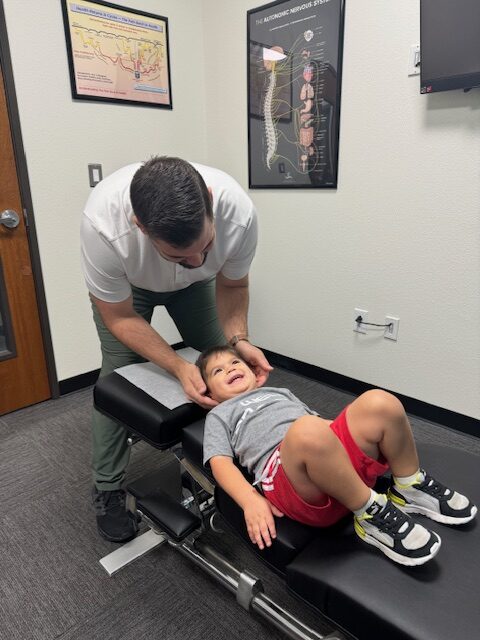

Chiropractic Back Pain Adjustments in Castle Hills: What to Expect
Back pain can make even simple tasks feel hard. If you’re considering a chiropractic back pain adjustment here in Castle Hills, you might be wondering what actually happens during the visit and which chiropractic techniques we use. At Castle Hills Chiropractic, our goal is to make your experience clear, comfortable, and effective—so you know exactly what to expect and how we approach relief and long-term spinal health.
What Is a Chiropractic Back Pain Adjustment?
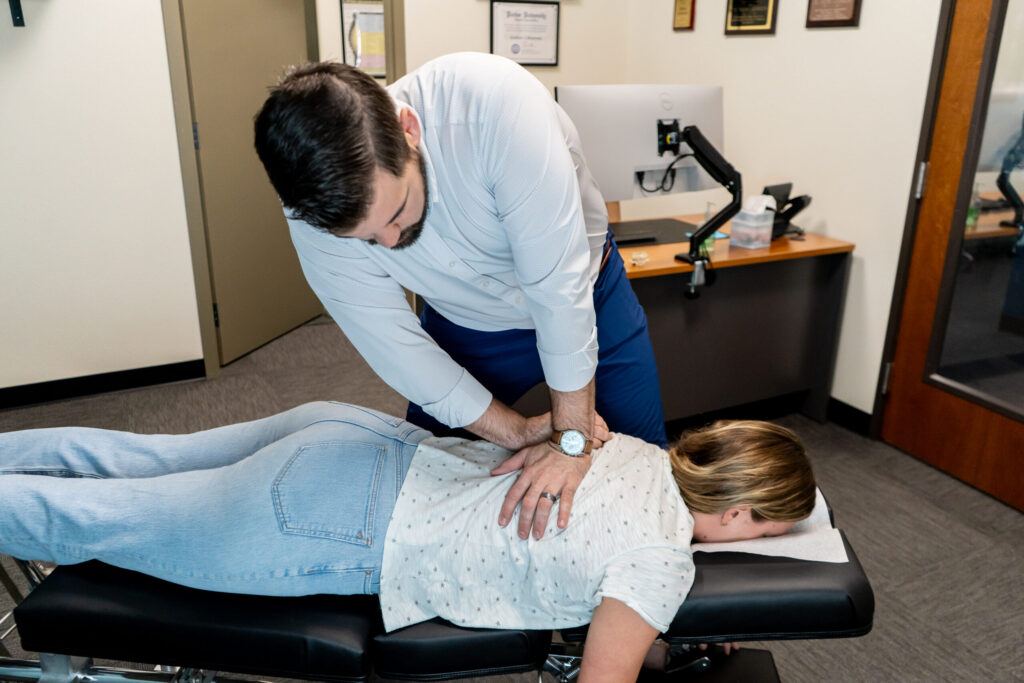
A chiropractic adjustment is a precise, hands-on technique to restore normal motion to a restricted spinal joint in your back. By improving joint movement, we help reduce irritation, ease muscle tension, and support your body’s natural healing.
Table of Contents
Why Back Pain Adjustments Matter
Back pain affects sleep, work, mood, and your ability to stay active. When spinal joints don’t move well, the surrounding muscles have to work harder to protect the area. That extra guarding can raise pain levels and slow healing. A back pain adjustment aims to restore healthy motion so your body can settle, function, and move the way it’s designed.
Here in Castle Hills, we see everyone from weekend golfers to busy parents and desk workers. Each person’s back pain story is unique, but the principle is the same: improving spinal mechanics helps reduce stress on tissues and can make daily life easier.
Evidence-based guidelines recognize spinal manipulation as a first-line, noninvasive option for low back pain. Organizations such as the American College of Physicians recommend spinal manipulation as part of initial care for both acute and chronic low back pain, before considering medications or invasive procedures (see ACP guideline summary: acponline.org). The National Center for Complementary and Integrative Health also notes that spinal manipulation can help some people with low back pain (nccih.nih.gov).
What Happens During Your First Visit and Evaluation
Your first visit at Castle Hills Chiropractic focuses on understanding your back pain and ruling out red flags. We start with a detailed health history, then perform a targeted exam to identify which joints, muscles, and movement patterns are involved.
We check posture, flexibility, and how your spine moves through simple ranges. Orthopedic and neurological screens are used when needed. We palpate—gently feel—the spine and surrounding tissues to locate areas of restriction or tenderness.
Imaging, like X-rays or MRI, is not always necessary for back pain. Current guidelines generally reserve imaging for specific situations such as trauma, suspected serious conditions, or when symptoms do not respond as expected. If imaging is appropriate, we’ll explain why and coordinate it for you.
After the assessment, we discuss your findings in plain language. You’ll know which areas are restricted, what’s contributing to your pain, and which chiropractic techniques fit your body and goals. We outline a plan so you understand how we’ll proceed—step by step.
Chiropractic Techniques We Use for Back Pain Adjustments
Chiropractic offers a range of safe, effective ways to adjust the spine. We personalize the approach based on your comfort, age, history, and the nature of your back pain. Below are techniques we commonly use for lumbar and mid-back care at Castle Hills Chiropractic.
| Technique | What It Feels Like | Why We Use It |
|---|---|---|
| Manual Diversified (HVLA) | A quick, precise hand contact; you may hear a gentle pop | Restores motion in a restricted joint and reduces local irritation |
| Mobilization | Slow, rhythmic movements within a joint’s comfort range | Improves motion when a lighter approach is best |
| Drop-Table Adjusting | A cushioned table section drops slightly as we adjust | Adds gentle momentum to help joints move with less force |
| Instrument-Assisted (e.g., Activator-style) | A small handheld instrument delivers a controlled, quick impulse | Very targeted, low-force option for sensitive areas or certain patients |
| Flexion-Distraction | You lie on a segmented table that gently flexes and glides | Reduces pressure in the lumbar spine and promotes disc and joint motion |
We may complement adjustments with brief muscle or fascia work to reduce guarding around a restricted joint. The primary goal always remains the same: restore healthy spinal motion so your back can function as it should.
What You May Feel and Hear During an Adjustment
Many people notice an immediate sense of ease or relief. Others feel gradual improvement over a few visits as the body adapts. Mild soreness—similar to how you might feel after trying a new workout—can happen and usually settles within a day or two.
If you hear a popping sound, that’s called cavitation. It’s simply gas releasing from the joint fluid when a tight joint opens up. It’s not bones rubbing or breaking. Relief can occur with or without that sound—the key is restoring motion, not making a noise.
We encourage normal activity afterward unless we advise otherwise. Gentle movement, hydration, and good posture help your adjustment “hold” as your body integrates the new motion.
Safety, Comfort, and Personalization
Your safety is our priority. Before any adjustment, we screen for conditions that would change our approach, such as recent trauma, osteoporosis risk, inflammation from certain arthritides, or neurological findings. If a lighter force is better, we choose it. If a specific level should not be adjusted, we avoid it.
We tailor care for each person—young adults, older adults, athletes, expecting mothers, and those with prior surgeries or unique health needs. You’ll always know what we’re doing and why. Your consent matters. If something doesn’t feel right, tell us and we’ll modify it.
How Chiropractic Adjustments Help Back Pain, Biomechanically
Back pain often involves a mix of joint restriction, muscle guarding, and irritated local tissues. When a spinal joint doesn’t move well, the body tries to stabilize the area by tightening surrounding muscles. Over time, that protective pattern can raise pain signals and stress neighboring joints.
An adjustment helps “reset” that pattern by restoring motion at the restricted joint. Improved motion can lower local sensitivity, ease muscle spasm, and reduce mechanical strain on discs and ligaments. Better joint mechanics also support more natural movement during the day—walking, sitting, and lifting start to feel smoother and less guarded.
As mobility improves, the nervous system receives different input from the area. Many patients notice they can stand or sit longer with less discomfort, or return to favorite activities with more confidence. The adjustment is a catalyst that helps your body function the way it’s designed to function.
Practical Tips to Support Your Adjustment at Home
Small daily habits go a long way. These tips help your back hold its gains between visits and reduce the chances of flare-ups.
- Move every 30–45 minutes if you sit for work. Stand, walk, or stretch for 1–2 minutes to give your spine variety.
- Sleep on your side with a pillow between your knees, or on your back with a pillow under your knees to reduce lumbar strain.
- When lifting, keep the load close, hinge at the hips, and avoid twisting as you stand.
- Take short walks daily. Gentle, consistent movement supports circulation and joint nutrition.
- Stay hydrated and notice your posture. Tall through the chest, relaxed shoulders, and even weight on both feet.
If we suggest simple mobility drills, we’ll show you how to perform them safely and comfortably. Consistency—more than intensity—usually makes the biggest difference for back pain.
When to See a Chiropractor in Castle Hills
Consider chiropractic care if your back pain is limiting work, family time, exercise, or sleep. If pain lasts more than a few days, keeps returning, or started after a minor strain that hasn’t improved, a focused evaluation can help. Early care often means faster recovery and fewer compensations elsewhere.
Chiropractic is also appropriate if you feel “stuck,” stiff, or notice your back tenses up during routine tasks. The sooner we restore motion and calm irritation, the sooner you can get back to what you enjoy.
Red Flags: When We Refer for Medical Care
While most back pain is mechanical and responds well to chiropractic care, certain symptoms need prompt medical evaluation. If you ever experience the following, seek urgent care or emergency attention:
- New bowel or bladder control problems, numbness in the groin/saddle area, or rapidly worsening leg weakness
- Back pain with fever, unexplained weight loss, or a history of cancer
- Severe pain after significant trauma, suspected fracture, or a major fall
- Progressive neurological symptoms such as worsening foot drop
At Castle Hills Chiropractic, we watch for these signs and coordinate referrals when needed. Your health and safety come first.
Myths vs. Facts About Back Pain Adjustments
Myth: “Chiropractic adjustments crack bones.” Fact: The sound sometimes heard is gas releasing from the joint fluid, not bones breaking. The adjustment is a precise, controlled movement.
Myth: “Once you start, you have to go forever.” Fact: Many patients choose periodic check-ins because they like how they feel and move, but care plans are always individualized. You control your goals and frequency.
Myth: “Adjustments hurt.” Fact: Most people find adjustments comfortable and relieving. If an area is tender, we can use lighter-force options or different techniques.
Myth: “Chiropractic is only for severe pain.” Fact: Adjustments help with back pain, but they also support mobility, posture, and overall spinal function—even when pain is mild or occasional.
A Local Note from Castle Hills Chiropractic
Our team is proud to care for the Castle Hills community. Whether your back pain is new, recurring, or limiting the activities you love, we’re here to provide clear answers and hands-on care. Chiropractic is a frontline, conservative solution for many kinds of back pain, and we tailor every plan to the person in front of us.
If you have questions about a back pain adjustment—or you’re ready to find out what’s driving your discomfort—reach out. We’ll listen, examine, and explain your options in plain language.
FAQs: Back Pain Adjustments in Castle Hills
Are chiropractic adjustments safe for back pain?
For most people, yes. We screen for conditions that would change our approach, and we select techniques that fit your health history and comfort level.
Will I need X-rays before an adjustment?
Not usually. Imaging is used when there’s a clinical reason, such as trauma, certain red flags, or when symptoms don’t progress as expected.
How many visits will it take to feel better?
Responses vary. Some feel relief right away; others improve over several visits. We’ll outline a plan and check progress at each step.
Does a back pain adjustment hurt?
Most adjustments are comfortable. If an area is sensitive, we can use gentler methods like mobilization, drop-table, instrument-assisted, or flexion-distraction.
Will I be adjusted on the first visit?
Often, yes—if your exam indicates it’s appropriate and safe. We always review findings and obtain your consent before treating.
Can chiropractic help with sciatica-type leg pain?
Chiropractic adjustments can help when sciatica is related to mechanical irritation in the lower back. We evaluate you to determine the best approach.
TL;DR
- A chiropractic back pain adjustment restores motion to restricted joints, easing irritation and muscle guarding.
- We tailor techniques—manual, mobilization, drop-table, instrument-assisted, and flexion-distraction—to your needs.
- Mild soreness can occur, but most people find adjustments comfortable and relieving.
- See a chiropractor if back pain lingers or limits your life; seek urgent care for red flags like bowel/bladder changes or severe trauma.
- Here in Castle Hills, Castle Hills Chiropractic provides evidence-based, hands-on care to help you move and feel better.
References
- American College of Physicians — Clinical Practice Guideline: Noninvasive Treatments for Acute, Subacute, and Chronic Low Back Pain. https://www.acponline.org/
- National Center for Complementary and Integrative Health — Spinal Manipulation for Low-Back Pain. https://www.nccih.nih.gov/