

If you’re dealing with shoulder pain, you’re not alone. Shoulder discomfort affects millions of people every year, limiting everyday activities like reaching overhead, lifting groceries, or even getting dressed. Whether your pain stems from poor posture, overuse, previous injury, or gradual wear and tear, the good news is that simple at-home exercises can often provide significant relief. Here at Castle Hills Chiropractic in Castle Hills, TX, we work with patients every day who are looking for practical, effective ways to manage shoulder pain without relying solely on medication or invasive procedures. In this article, we’ll walk you through safe, evidence-based exercises you can do at home to help reduce shoulder pain, improve mobility, and support long-term shoulder health.
What Are At-Home Exercises for Shoulder Pain?
At-home exercises for shoulder pain are gentle, targeted movements designed to improve shoulder strength, flexibility, and stability. These exercises help reduce discomfort by addressing muscle imbalances, improving range of motion, and supporting proper shoulder mechanics. When performed consistently and correctly, they can complement chiropractic care and other conservative treatment approaches.
Table of Contents
- Understanding Shoulder Pain and Why Movement Matters
- Benefits of Exercise for Shoulder Pain Relief
- Safe and Effective At-Home Shoulder Exercises
- How Chiropractic Care Fits In
- Practical Tips for Starting Your Exercise Routine
- When to See a Chiropractor
- Myths vs. Facts About Shoulder Pain Exercises
- Final Thoughts
Understanding Shoulder Pain and Why Movement Matters
The shoulder is one of the most mobile and complex joints in the human body. It’s made up of three bones—the humerus, scapula, and clavicle—along with muscles, tendons, ligaments, and a fluid-filled capsule that allows smooth movement in multiple directions. This incredible range of motion comes with a tradeoff: the shoulder is also vulnerable to injury and instability.
Shoulder pain can arise from many sources. Rotator cuff strains, tendonitis, bursitis, impingement, frozen shoulder, and poor posture are among the most common culprits. For many people in Castle Hills, TX, prolonged sitting at a desk, repetitive overhead activities, or even sleeping in awkward positions can contribute to discomfort.
Here’s why movement matters: the shoulder thrives on balanced, controlled motion. When we avoid moving the shoulder due to pain, muscles can weaken, joints can stiffen, and scar tissue can form. This creates a downward spiral where pain leads to inactivity, which leads to more pain. Gentle, progressive exercise helps break that cycle by restoring function, improving blood flow, and encouraging healing.
Research suggests that therapeutic exercise is a cornerstone of conservative shoulder pain management. Organizations like the American Chiropractic Association and clinical guidelines from the American College of Physicians emphasize movement-based care as a safe, effective first-line approach for many musculoskeletal conditions, including shoulder pain.
Benefits of Exercise for Shoulder Pain Relief
When done properly, at-home exercises offer multiple benefits for people struggling with shoulder pain. Understanding these benefits can help motivate you to stick with your routine, even when progress feels slow.
Improved Range of Motion
Shoulder pain often limits how far you can reach, lift, or rotate your arm. Gentle stretching and mobility exercises help restore normal joint movement, making everyday tasks easier and less painful.
Increased Strength and Stability
Weak shoulder muscles—especially the rotator cuff and scapular stabilizers—can lead to poor mechanics and increased stress on the joint. Strengthening exercises build resilience and help protect the shoulder from future injury.
Reduced Inflammation and Tension
Exercise promotes circulation, which helps deliver oxygen and nutrients to injured tissues while clearing away inflammatory byproducts. This can reduce swelling, ease muscle tension, and speed recovery.
Better Posture and Alignment
Many shoulder problems are linked to forward head posture, rounded shoulders, and weak upper back muscles. Targeted exercises can help correct these imbalances, reducing stress on the shoulder joint and supporting better overall alignment.
Enhanced Confidence and Function
Pain can make you hesitant to move. As exercises gradually restore function, you regain confidence in your shoulder’s ability to handle daily activities without fear of re-injury.
Safe and Effective At-Home Shoulder Exercises
Before starting any exercise program, it’s important to understand your body’s signals. These exercises are designed to be gentle and progressive. If any movement causes sharp pain, stop immediately and consult a healthcare provider. Mild discomfort or stretching sensations are normal, but pain is a warning sign.
Pendulum Swings
This is one of the gentlest exercises for shoulder pain and is often recommended in the early stages of recovery. Pendulum swings help improve circulation and gently mobilize the shoulder without placing stress on the joint.
Stand next to a table or chair and lean forward slightly, resting your unaffected hand on the surface for support. Let your painful arm hang down naturally. Gently swing your arm in small circles, first clockwise, then counterclockwise. You can also swing it forward and backward, or side to side. Let gravity do the work—don’t force the movement. Perform for one to two minutes, two to three times daily.
Wall Slides
Wall slides help improve shoulder mobility and strengthen the muscles that stabilize the scapula. This exercise is especially helpful for people with impingement or stiffness.
Stand with your back against a wall, feet about six inches away. Press your lower back, shoulders, and head gently against the wall. Raise both arms to shoulder height with elbows bent at 90 degrees, forearms pointing up. Slowly slide your arms up the wall as far as comfortable, then return to the starting position. Focus on keeping your back and shoulders against the wall throughout. Perform 10 to 15 repetitions, once or twice daily.
Doorway Stretch
Tight chest muscles can pull the shoulders forward and contribute to pain. The doorway stretch opens up the chest and improves shoulder alignment.
Stand in a doorway and place your forearms on the door frame, elbows bent at 90 degrees. Step one foot forward and gently lean into the stretch until you feel a comfortable pull across your chest and the front of your shoulders. Hold for 20 to 30 seconds, then relax. Repeat three to four times, once or twice daily.
Scapular Squeezes
Weak muscles between the shoulder blades often contribute to poor posture and shoulder pain. Scapular squeezes strengthen these stabilizers.
Sit or stand with good posture. Squeeze your shoulder blades together as if you’re trying to hold a pencil between them. Hold for five seconds, then relax. Avoid shrugging your shoulders up toward your ears. Perform 10 to 15 repetitions, two to three times daily.
External Rotation with Resistance Band
This exercise strengthens the rotator cuff muscles, which are critical for shoulder stability and function.
Attach a light resistance band to a sturdy object at waist height. Stand sideways to the anchor point and hold the band with your far hand. Keep your elbow bent at 90 degrees and tucked against your side. Slowly rotate your forearm away from your body, then return to the starting position with control. Perform 10 to 12 repetitions on each side, once daily. Start with very light resistance and progress gradually.
Shoulder Blade Rolls
This simple movement helps release tension and improve awareness of shoulder positioning.
Sit or stand in a comfortable position. Slowly roll your shoulders up, back, and down in a circular motion. Repeat 10 times, then reverse the direction. Focus on smooth, controlled movement and avoid rushing.
Cross-Body Arm Stretch
This stretch targets the posterior shoulder and can help relieve tightness in the rotator cuff.
Stand or sit upright. Bring one arm across your body at chest height. Use your opposite hand to gently pull the arm closer to your chest until you feel a stretch in the back of your shoulder. Hold for 20 to 30 seconds, then switch sides. Repeat two to three times per side, once or twice daily.
How Chiropractic Care Fits In
While at-home exercises are a powerful tool for managing shoulder pain, they work best when combined with professional guidance. At Castle Hills Chiropractic in Castle Hills, TX, we take a whole-body approach to shoulder pain, recognizing that the shoulder doesn’t function in isolation. Problems in the neck, upper back, and ribcage can all contribute to shoulder discomfort.
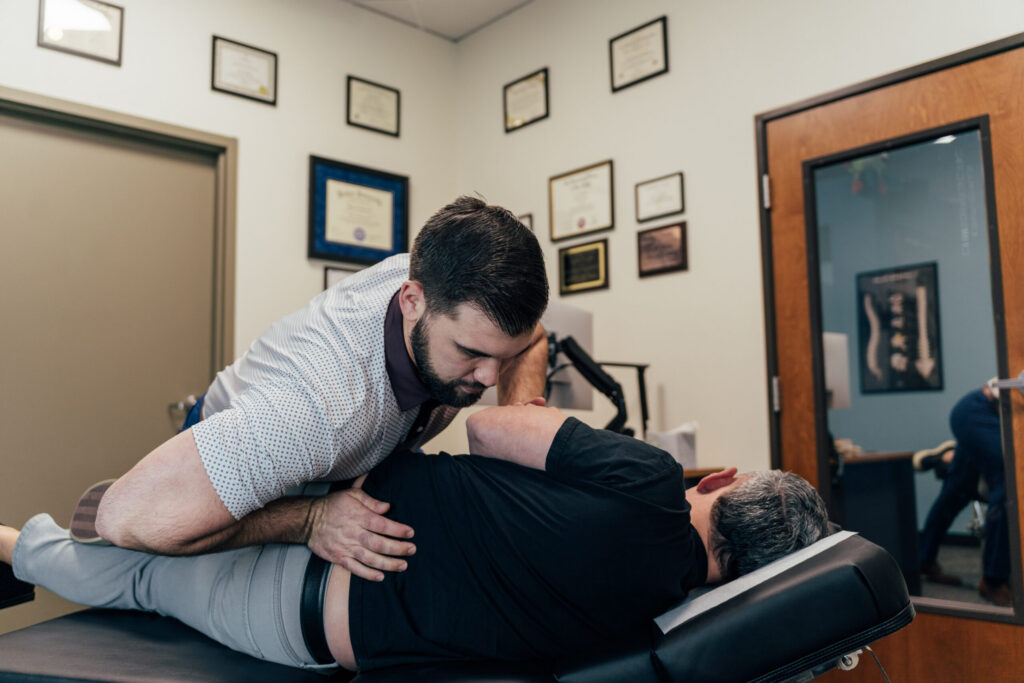
Chiropractic care for shoulder pain typically includes a thorough evaluation to identify the underlying cause of your symptoms. We assess joint mechanics, muscle balance, posture, and movement patterns to develop a personalized care plan. Treatment may include gentle spinal and extremity adjustments to restore proper alignment, soft tissue therapy to release tight muscles and adhesions, and specific exercises tailored to your needs.
Many patients find that chiropractic adjustments help reduce pain and improve mobility more quickly, allowing them to perform their home exercises more effectively. We also provide education on posture, ergonomics, and lifestyle modifications to help prevent future episodes of shoulder pain.
Chiropractic care is non-invasive, drug-free, and focuses on supporting your body’s natural healing processes. Evidence indicates that conservative care approaches, including chiropractic treatment and therapeutic exercise, can be effective for many common shoulder conditions.
Practical Tips for Starting Your Exercise Routine
Starting a new exercise routine can feel overwhelming, especially when you’re in pain. Here are some practical tips to help you succeed.
Start Slow and Progress Gradually
Don’t try to do too much too soon. Begin with one or two exercises and perform them gently. As your pain decreases and your strength improves, gradually add more exercises or increase repetitions.
Consistency Is Key
It’s better to do a few exercises every day than to do a long session once a week. Set aside 10 to 15 minutes daily for your shoulder exercises. Consistency leads to lasting results.
Listen to Your Body
Mild discomfort or a gentle stretching sensation is normal. Sharp, shooting pain is not. If an exercise hurts, stop and reassess. You may need to modify the movement or seek professional guidance.
Use Proper Form
Quality matters more than quantity. Focus on controlled, smooth movements rather than rushing through repetitions. Poor form can worsen shoulder mechanics and increase pain.
Track Your Progress
Keep a simple journal noting which exercises you do, how many repetitions, and how you feel afterward. This helps you identify what’s working and gives you motivation as you see improvement over time.
Combine Exercise with Other Healthy Habits
Stay hydrated, get adequate sleep, and manage stress. These factors all influence inflammation, healing, and pain perception. Good overall health supports better recovery.
Don’t Skip Warm-Up and Cool-Down
Before exercising, gently move your shoulder through its pain-free range of motion for a minute or two. After exercising, perform gentle stretches and take a few deep breaths. This prepares your body and helps prevent stiffness.
| Exercise Type | Primary Benefit | Best For |
|---|---|---|
| Pendulum Swings | Gentle mobilization | Early-stage pain, stiffness |
| Wall Slides | Improved range of motion | Impingement, limited overhead reach |
| Doorway Stretch | Chest and shoulder flexibility | Rounded shoulders, poor posture |
| Scapular Squeezes | Upper back strength | Postural imbalances, desk workers |
| External Rotation | Rotator cuff strength | Instability, weakness, previous injury |
| Cross-Body Stretch | Posterior shoulder flexibility | Tightness, limited internal rotation |
When to See a Chiropractor
While at-home exercises can be very effective, there are times when professional care is necessary. Knowing when to seek help can prevent minor issues from becoming chronic problems.
Consider scheduling an appointment at Castle Hills Chiropractic if your shoulder pain has lasted more than a few weeks despite rest and home care, if pain is severe or getting worse, or if you’re experiencing significant loss of range of motion. You should also seek care if you notice weakness in your arm or hand, numbness or tingling, or if the pain interferes with sleep or daily activities.
Certain red flags warrant immediate medical attention. If you experience sudden, severe shoulder pain after an injury, pain accompanied by chest discomfort or shortness of breath, or visible deformity of the shoulder joint, seek emergency care right away.
For most cases of shoulder pain, a thorough chiropractic evaluation can help identify the cause and guide appropriate treatment. We can determine if your exercises are appropriate, teach you proper form, and adjust your care plan as you progress. Many patients here in Castle Hills find that combining professional care with consistent home exercises leads to faster, more complete recovery.
Myths vs. Facts About Shoulder Pain Exercises
Myth: You Should Rest Your Shoulder Completely Until the Pain Goes Away
Fact: While rest is important immediately after an acute injury, prolonged inactivity can lead to stiffness, weakness, and prolonged recovery. Gentle, progressive movement is usually beneficial for most types of shoulder pain. The key is finding the right balance between activity and rest.
Myth: If an Exercise Hurts, You Just Need to Push Through the Pain
Fact: Pain is your body’s warning signal. Sharp or severe pain during exercise indicates that something is wrong, and pushing through it can cause further injury. Exercises should be challenging but not painful. Modify movements as needed and progress gradually.
Myth: Strengthening Exercises Are Only for Athletes or Younger People
Fact: People of all ages and activity levels benefit from shoulder strengthening exercises. In fact, older adults often experience the most dramatic improvements in function and pain relief when they consistently perform appropriate exercises. Age is not a barrier to improvement.
Myth: You Only Need to Exercise the Painful Shoulder
Fact: The body works as an integrated system. Weakness or dysfunction in the neck, upper back, or core can contribute to shoulder pain. A comprehensive approach that addresses posture and overall movement patterns is often more effective than isolated shoulder exercises alone.
Myth: Once Your Shoulder Feels Better, You Can Stop Exercising
Fact: Consistency is important for maintaining shoulder health long-term. Once your pain improves, continuing with maintenance exercises helps prevent recurrence and supports ongoing strength and mobility. Think of shoulder exercises as part of your regular wellness routine, not just a temporary fix.
Final Thoughts
Shoulder pain can be frustrating and limiting, but you don’t have to simply accept it as a permanent part of your life. With the right exercises, performed consistently and correctly, many people experience significant relief and improved function. The exercises outlined in this article are safe, evidence-based, and designed to address common causes of shoulder pain by improving strength, flexibility, and joint mechanics.
Here at Castle Hills Chiropractic in Castle Hills, TX, we’re committed to helping our community find natural, effective solutions for shoulder pain. Whether you’re dealing with a recent injury, chronic discomfort, or just want to maintain healthy shoulders as you age, we’re here to support you. Combining professional chiropractic care with a consistent at-home exercise routine gives you the best chance for lasting relief and improved quality of life.
If you have questions about which exercises are right for you, or if you’d like a personalized evaluation and care plan, don’t hesitate to reach out. We’re proud to serve the Castle Hills area and look forward to helping you move and feel better.
Frequently Asked Questions
How long does it take to see improvement from shoulder exercises?
Most people begin to notice some improvement within two to four weeks of consistent exercise. However, the timeline varies depending on the severity of your condition, your overall health, and how consistently you perform the exercises. Patience and persistence are important for lasting results.
Can I do these exercises if I have rotator cuff tendinitis?
Many of these exercises are appropriate for rotator cuff tendinitis, but it’s important to start gently and avoid movements that cause pain. Pendulum swings, scapular squeezes, and gentle stretches are usually well-tolerated. Always consult with a healthcare provider for personalized guidance based on your specific condition.
Should I use heat or ice before exercising my shoulder?
It depends on your specific situation. Ice is generally helpful for acute injuries or inflammation, while heat can be beneficial for chronic stiffness and muscle tension. Many people find that gentle heat before exercises helps loosen tight muscles, while ice afterward can reduce any post-exercise soreness. Discuss your individual needs with your chiropractor.
Are resistance bands necessary for shoulder exercises?
Resistance bands are helpful for strengthening exercises, but they’re not required for all shoulder exercises. Many effective movements, like pendulum swings, wall slides, and stretches, require no equipment at all. As you progress, adding light resistance can help build strength, but start with bodyweight exercises first.
Can poor posture really cause shoulder pain?
Yes. Forward head posture and rounded shoulders place excessive stress on the shoulder joints, muscles, and tendons. Over time, this can lead to impingement, muscle imbalances, and chronic pain. Correcting posture through exercises and ergonomic modifications is often a key part of shoulder pain management.
How do I know if my shoulder pain requires medical attention?
Seek professional care if your pain is severe, lasts more than a few weeks, interferes with daily activities or sleep, or is accompanied by weakness, numbness, or tingling. Sudden, severe pain after an injury or pain with chest symptoms requires immediate medical attention. When in doubt, it’s always better to get evaluated.
TL;DR: Key Takeaways
- At-home shoulder exercises can significantly reduce pain, improve mobility, and strengthen the muscles that support shoulder function when performed consistently and correctly.
- Safe, effective exercises include pendulum swings, wall slides, doorway stretches, scapular squeezes, resistance band rotations, and cross-body stretches.
- Combining home exercises with professional chiropractic care at Castle Hills Chiropractic in Castle Hills, TX, often leads to faster, more complete recovery.
- Start slowly, listen to your body, and prioritize proper form over quantity. Consistency is more important than intensity.
- Seek professional care if pain is severe, worsening, or lasting more than a few weeks, or if you experience weakness, numbness, or other concerning symptoms.